Tag Archives: not-in-my-back-yard

Keep it in Your Backyard Please! The Revolution against Recyclable Plastics

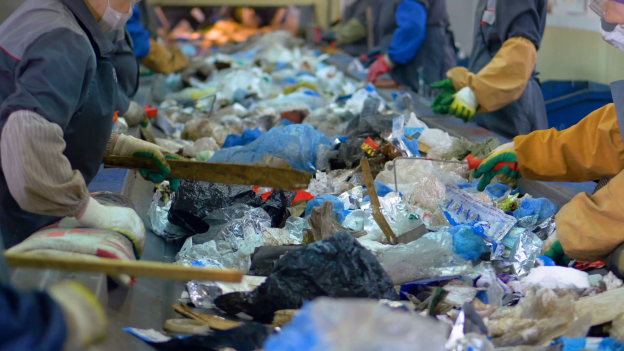
There is no point collecting recyclable waste unless someone is willing to buy it and actually do the recycling. Until late 2017 China was the world’s biggest importer of scrap by far.  All this came to a halt when the Chinese government banned the import of all but the purest scrap material in 2017, killing a trade worth $24bn a year. Waste dealers in the rich world had to scramble to find new buyers. South-East Asia soon emerged as the pre-eminent destination for foreign waste. Unfortunately, the region’s recycling industry is much smaller than China’s; its processing plants were quickly overwhelmed. Plastics from America and Europe have piled up in landfills. Lots of toxic rubbish has simply been torched.

South-East Asian governments are not pleased. They have begun to ban or crimp imports themselves, abruptly diminishing a booming business. On May 28th, 2919 Yeo Bee Yin, Malaysia’s environment minister, complaining that “garbage [was] being traded under the pretext of recycling”, announced that her government would be sending back 3,000 tonnes of foreign plastic. Much of it was of poor quality, she noted, and hence unrecyclable.  Thailand plans to ban plastic-waste imports by 2021. Vietnam’s government has similar ideas. Kate O’Neill of the University of California, Berkeley, reckons these bans are motivated not only by environmental concerns but also by pride: Asia does not want to be the world’s dumping ground.  Rodrigo Duterte, the president of the Philippines, recently threatened to go to war with Canada if it did not take back a shipment of plastic scrap. Canada agreed to take it away…

Excerpts from South-East Asian countries are banning imports of waste for recycling, Economist, June 15, 2019

Who Bears the Costs of Technology? Lynas and Hazardous Waste from Rare Earths

Companies and governments around the world are anxiously watching the fate of a sprawling industrial facility 30 kilometers north of this city on the east coast of peninsular Malaysia.The 100-hectare Lynas Advanced Materials Plant (LAMP) produces 10% of the world’s output of rare earth oxides (REOs), minerals needed in technologies including mobile phones, hard drives, fiber optic cables, surgical lasers, and cruise missiles. Lynas, an Australian company, imports concentrated ores from mines on Mount Weld in Australia and refines them in Malaysia, where costs are lower; it sells REOs—which include cerium compounds, used in catalytic converters, and neodymium, critical to permanent magnets—to Japan, the United States, and other countries. The plant produced almost 18,000 tons of REOs in 2018.

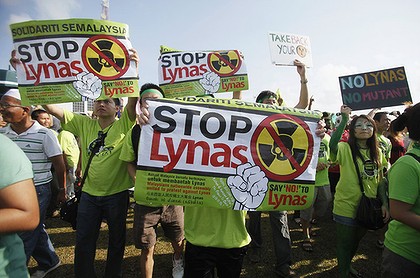
Now, the LAMP faces closure, barely 7 years after it opened. Environmental groups have long opposed the storage on the site of slightly radioactive waste from the extraction process, and they found a sympathetic ear in a new government elected in May 2018. In December 2018, the government demanded that the facility ship its radioactive waste back to Australia if it wants to renew its operating license, which expires on 2 September. On 12 March 2019overnment task force to help organize the shipments was announced. But the company says exporting the more than 451,000 tons of residue by the deadline is “unachievable.”

 A shutdown would be “a significant event with a ripple effect,” says Ryan Castilloux, a metals and minerals analyst at Adamas Intelligence in Amsterdam. For one thing, the shutdown would strengthen China’s position as the dominant supplier of REOs, which many countries deem a strategic risk. Japan’s electric vehicle industry, for instance, would lose its main supplier of REOs for permanent magnets; “it would have to reestablish a relationship with China after almost a decade of friction” in the REO trade, Castilloux says…. “Although rare earth oxides production worldwide is only worth several billions of dollars, it is essential for industries worth trillions,” Castilloux says.

Rare earth deposits themselves are not scare..Refining them takes lots of corrosive chemicals and generates huge amounts of residue. China was long the sole supplier; when it reduced exports in 2010, citing environmental concerns, prices jumped as much as 26-fold and major consumers scrambled for alternate sources. Lynas has become a “flagship” of REO production outside China, Castilloux says. The United States and Myanmar mine REEs as well, but they are processed in China, which today produces about 89% of the global REO output…

But in Malaysia, the waste has raised red flags. At the LAMP, concentrated ores are roasted with sulfuric acid to dissolve the rare earths and then diluted with water in a process called water leach purification, leaving a moist, pastelike residue. By September 2018, the LAMP had already produced 1.5 million tons of residue; because the ores contain thorium and uranium, almost 30% of it is slightly radioactive.  Some REO facilities elsewhere have built permanent, secure facilities to store such waste, says Julie Klinger, a geographer and expert in REO mining at Boston University; others are secretive about what they do with it.  Radioactivity isn’t the only risk…heavy metals as ickel, chromium, lead, and mercury could contaminate groundwater.

Excerpts by Yao-Hua, Radioactive waste standoff could slash high tech’s supply of rare earth elements, Science Magazine, Apr. 1, 2019
Nuclear Waste: Divided Europe

Germany, Poland and Sweden are all jumping on the bandwagon to criticise Denmark’s plans to safely dispose of its 5,000-10,000 cubic metres of nuclear waste. The main criticisms concern both the geographical areas being considered for the waste storage and the assessment of the type of waste that is being deposited, reports Ingeniøren.

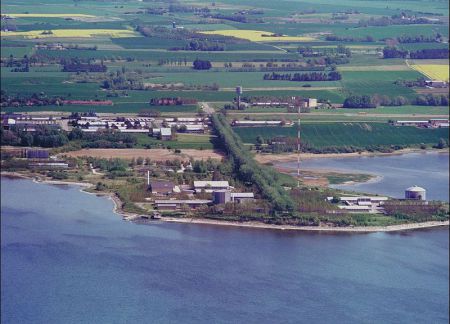
Currently, Denmark’s nuclear waste is stored in Risø, a town on the west Zealand coastline north of Roskilde, where the country’s DR3 reactor is located. The waste is piling up and is scheduled to be removed by 2023 and put in a final repository. [Note that Denmark doe s not produce nuclear energy.  The radioactive waste has been produced by research reactors at the Risø National Laboratory that are  in the process of being decommissioned].

Based on a report by Rambøll, an engineering consultancy group commissioned by the Ministry of Health to assess waste locations, Denmark is considering six possible locations for the waste site: Rødbyhavn on Lolland, Paradisbakkerne on Bornholm, Thyolm, Thise, Skive and Kertinge Mark Kerteminde. All six municipalities have declined to have the waste deposited on their lands.

German and Polish authorities have been particularly worried about locations near their borders as both countries have said Denmark’s final repository plans would be too close to the surface for nuclear waste and would be a real threat to groundwater contamination.

Umweltsinstitu München, a German environmental group, has said none of the six sites would be suitable for depositing such waste since they are all located in coastal zones, which are prone to danger due to rising sea levels.

The Danish plan is to bury the waste between 30 and 100 metres below the surface, though other nations are recommending the waste be buried between 300 and 800 metres.  Furthermore, the Swedish authorities have called into question Denmark’s classification of special waste.

Part of the waste at Risø includes 233 kilos of special waste, consisting mainly of spent fuel rods, which Sweden would classify as highly radioactive, but Denmark has not. The rods were classified as highly radioactive in 2003, but Dansk Dekommissionering, the group responsible for decommissioning the Risø reactor, later downgraded them.  The Polish and German authorities have also expressed concern over the Danish assessment, claiming greater demands need to be placed on safety for these highly radioactive rods. Denmark has tried to export the special waste over the last 15 years, but has yet to have any takers.

The Danish Parliament will consider three options for disposing of the waste: the final repository, intermediate storage and export, or a combination.

Excerpts from Dwayne Mamo, Neighbouring nations nail Denmark on nuclear waste plan, the Copenhagen Post, Feb. 5, 2015