Tag Archives: nuclear weapons justice and law

Back to 2030: Nuclear Race is Hot Again

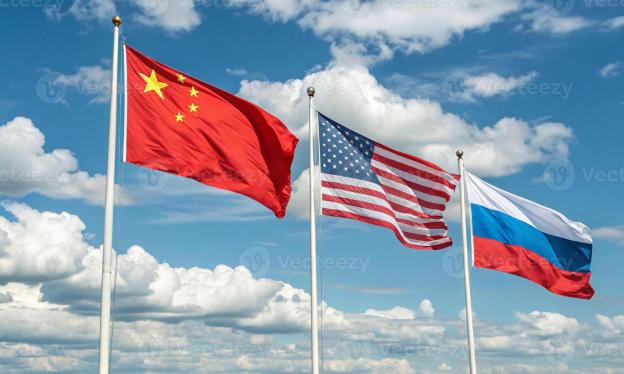
The new nuclear race has begun. But unlike during the Cold War, the U.S. must prepare for two peer rivals rather than one—at a time when it has lost its clear industrial and economic edge. China, which long possessed just a small nuclear force, is catching up fast, while Russia is developing a variety of new-generation systems aimed at American cities…Russian President Vladimir Putin has already used nuclear saber-rattling to throttle American support for Ukraine. He has deployed nuclear weapons to Belarus and, in 2025, tested a nuclear-powered missile and a nuclear-powered submarine drone that he claims are impervious to American defenses.

While Russia and the U.S. are still abiding by some arms-controls limit…China, unconstrained by any commitments, is quietly but rapidly leaping ahead. According to American estimates, Beijing will reach rough parity with the U.S. in deployed nuclear warheads by the mid-2030s.

Chinese leader Xi Jinping for the first time showcased China’s nuclear triad—its land, sea and air-launched ballistic nuclear missiles—at a Beijing parade honoring the 80th anniversary of victory over Japan in September 2025. Putin, sitting to his right atop the Gate of Heavenly Peace, took note. So did North Korea’s Kim Jong Un, sitting to his left.

Excerpt from Yaroslav Trofimov, The Nuclear-Arms Race Is Now a Three-Way Contest, WSJ, Nov. 16, 2025

If There is Hell, it Must Be Like This

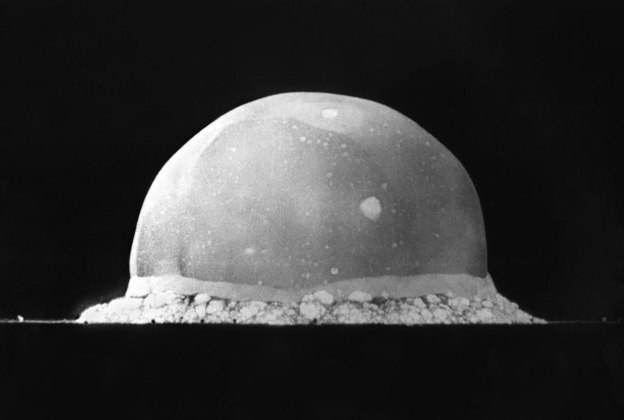
On 6 August 1945, the United States dropped an atomic bomb on the Japanese city of Hiroshima, killing 80,000 people in a single day, and tens of thousands more in the subsequent months. “If there is a hell,” survivor Ōiwa Kōhei recalled thinking of the aftermath, “it must be just like this.” Kōhei, 13-years-old at the time, was plagued for months by radiation poisoning, and forever by the psychological trauma. The hibakusha — the Japanese term for atomic-bomb survivors — “will not be with us for much longer, so it is essential that their irreplaceable living testimony should continue to be diligently and accurately recorded while it is still available”, writes historian Mordecai Sheftall. Their testimony must be preserved not for historical record, but so that current and future generations will take the lessons of their experiences to heart, says Sheftall.

Excerpt from Mordecai Sheftall, The Sun had fallen to Earth’ — a survivor’s recollection of the Hiroshima bombing, Nature, August 5, 2025

The Never-Ending Nuclear Arms Race

The United States Los Alamos National Laboratory (LANL) announced in October 2024 it had manufactured its first plutonium “pit”—used in the core of a thermonuclear warhead to initiate an nuclear explosion—since the United States largely halted such production in 1989. Under a nuclear arsenal modernization plan launched in 2008, the lab will scale up production to 30 pits per year, with an additional 50 to be produced annually starting in the mid-2030s at the Savannah River Site in South Carolina. But the work faces opposition from critics who say it could help fuel a new international nuclear arms race and also risks the health of workers and the environment. In September 30 2024, opponents won a ruling in federal district court in South Carolina when a judge ruled the U.S. Department of Energy failed to adequately consider other options for locating the production facilities. The judge is considering a request to pause production at LANL. The United States halted pit manufacturing in 1989 at the Rocky Flats Plant, near Denver, after an inspection revealed hazardous waste contamination.

Excerpt from U.S. resumes making nuke triggers, Science, Oct. 11, 2024

Back in Fashion: Mini-Nukes from the Seas

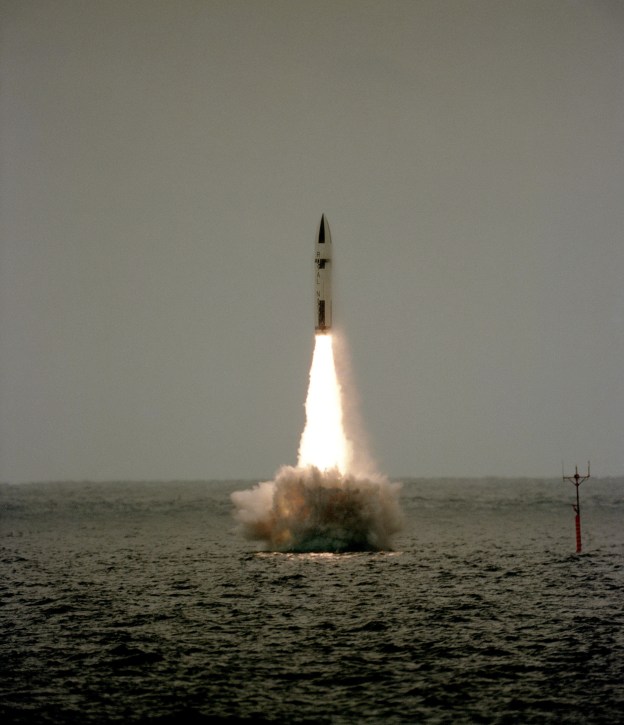
The Pentagon has completed initial draft plans (June 2018) for several emerging low-yield sea-launched nuclear weapons…–a low-yield sea-launched nuclear cruise missile and long-range sub-launched low-yield warhead still in development… The US Navy Plans to add a nuclear weapon to Virginia-Class Attack Submarines….

There are currently over 1,000 nuclear warheads in the US arsenal that have low-yield options. A yield is considered low if it’s 20 kilotons or less,” an essay from the Federation of American Scientists states….A massively smaller 5-or-6 kt warhead on a Trident would still bring the advantage of long-range attack, yet afford smaller scope, and therefore less destructive, attack possibilities….The 130,000-pound Trident II D5 missile can travel 20,000-feet per second, according to Navy figures. The missiles cost $30 million each…

Also, the now-in-development Air Force Long-Range Stand-Off (LRSO) weapon, an air launched nuclear cruise missile, will bring additional airborne attack options – particularly when it comes to areas well-defended by advanced, high-tech air defense systems, where stealth aircraft might have more difficulty operating.  The LRSO, which could also be launched at farther stand-off ranges, is also designed for extremely high-risk areas armed with advanced air defense systems….

Excerpts from Pentagon completes draft plans for new low-yield sea-launched nuclear weapon, Fox News, June 5, 2018