Tag Archives: nuclear weapons treaty

Back to 2030: Nuclear Race is Hot Again

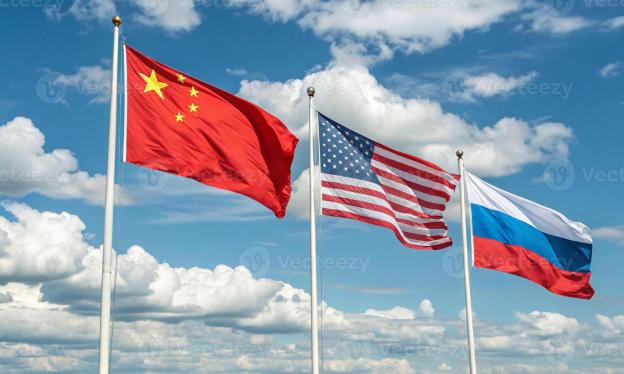
The new nuclear race has begun. But unlike during the Cold War, the U.S. must prepare for two peer rivals rather than one—at a time when it has lost its clear industrial and economic edge. China, which long possessed just a small nuclear force, is catching up fast, while Russia is developing a variety of new-generation systems aimed at American cities…Russian President Vladimir Putin has already used nuclear saber-rattling to throttle American support for Ukraine. He has deployed nuclear weapons to Belarus and, in 2025, tested a nuclear-powered missile and a nuclear-powered submarine drone that he claims are impervious to American defenses.

While Russia and the U.S. are still abiding by some arms-controls limit…China, unconstrained by any commitments, is quietly but rapidly leaping ahead. According to American estimates, Beijing will reach rough parity with the U.S. in deployed nuclear warheads by the mid-2030s.

Chinese leader Xi Jinping for the first time showcased China’s nuclear triad—its land, sea and air-launched ballistic nuclear missiles—at a Beijing parade honoring the 80th anniversary of victory over Japan in September 2025. Putin, sitting to his right atop the Gate of Heavenly Peace, took note. So did North Korea’s Kim Jong Un, sitting to his left.

Excerpt from Yaroslav Trofimov, The Nuclear-Arms Race Is Now a Three-Way Contest, WSJ, Nov. 16, 2025
Nuclear Weapons are Here to Stay

[D]espite the establishment in 2009 of [a process to] discuss multilateral disarmament, not much has happened. The main reason is the chilling of relations between Russia and the West, which predated Russia’s annexation of Crimea. An offer by Mr Obama in 2013 of new negotiations to reduce each side’s stock of warheads by a third was met with stony silence.

More recently Russia has, according to America, violated both the 1987 Intermediate Nuclear Forces treaty, by testing a banned missile, and the Budapest Memorandum of 1994 that guaranteed Ukraine’s security when it gave up the nuclear weapons it had inherited on the break-up of the Soviet Union. The Russians are also refusing to attend next year’s Nuclear Security Summit, a meeting to prevent fissile material falling into the wrong hands.

Without further cuts in American and Russian nuclear forces (which account for more than 90% of the world’s nuclear weapons), China, the most opaque of the P5 power (US, UK, Russia, China, France), will block attempts to get multilateral disarmament talks going. However, Rose Gottemoeller, America’s under-secretary of state for arms control, praises China for its leading role in producing a common glossary of nuclear terminology. This may not sound much, but it is seen within the P5 as essential for future negotiations.

Ms Gottemoeller is also keen to stress that, despite the Russian impasse, America has tried to meet its obligations. It is eliminating “excess” warheads at the rate of almost one a day and closing down old bits of nuclear infrastructure. …It is doubtful whether these modest, incremental efforts will cut much ice with the Humanitarian Impacts of Nuclear Weapons Initiative, a movement supported by civil-society groups and championed by Austria, Norway and Mexico. Faced with what they see as foot-dragging by the P5 (which are modernising their nuclear forces to maintain their long-term effectiveness), the initiative’s backers, some of which want to make nuclear weapons illegal, may question whether working through the NPT serves any purpose…

Another source of friction is the failure to hold the conference on creating a WMD-free zone in the Middle East that was promised in 2010. Israel,…insists that regional security arrangements must precede any talks on disarmament, whereas Egypt says the first step is for Israel to accede to the NPT—a non-starter.

Excerpts from Nuclear weapons: Fractious, divided but still essential, Economist, May 2, 2015, at 54