Tag Archives: oil cartel

The New Underworld Order: Invincible Cartels

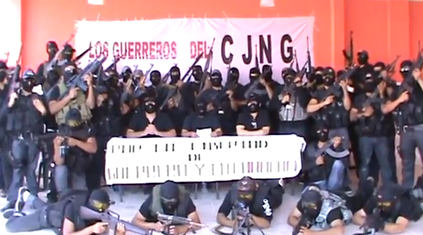
Nemesio “Mencho” Oseguera spent decades building his Jalisco New Generation Cartel into a transnational criminal organization fierce enough to forge a new underworld order in Mexico, displacing the Sinaloa cartel, torn by warring factions, as the world’s biggest drug pusher. The Sinaloans, Mexico’s top fentanyl traffickers, got caught in the crosshairs of the Trump administration, which promised to eradicate the synthetic opioid. The crackdown has left an open field for Jalisco and its lucrative cocaine trade, elevating Oseguera to No. 1.

The Jalisco cartel transports the cocaine by the ton from Colombia to Ecuador and then north to Mexico’s Pacific coast via speedboats and so-called narco subs…The U.S. has a $15 million bounty on Oseguera, but he rarely leaves his mountain compound, according to authorities. Few photos of him circulate. The cadre of men protecting Oseguera, known as the Special Force of the High Command, carry RPG 7 heat-seeking, shoulder-fired rocket launchers capable of piercing a tank, people familiar with cartel operations said. Visitors to the drug lord’s stronghold are hooded before they embark on the six-hour car trip through terrain sown with land mines, those people said. Locations of the pressure-activated explosives are known only by members of Oseguera’s inner circle.

The Jalisco cartel, which controls ports on Mexico’s Pacific coast, now uses routes and tunnels into the U.S. that are controlled by the sons of imprisoned drug kingpin Joaquín “El Chapo” Guzmán….
 
The cartel acts as a parallel government in the southwestern state of Jalisco and other parts of Mexico, taxing such goods as tortillas, chicken, cigarettes and beer, security experts said. It controls construction companies that build roads, schools and sewers for the municipal governments under cartel control.  A booming black market for fuel is another cash cow. Gasoline and diesel stolen from Mexican refineries and pipelines—or smuggled into Mexico from the U.S. without paying taxes—is sold at below market prices to small and large businesses.. The head of the Jalisco cartel’s fuel division is nicknamed “Tank” for his prowess at stealing and storing millions of gallons of fuel. 

Excerpst from Steve Fisher et al., America Loves Cocaine Again—Mexico’s New Drug King Cashes In, WSJ, Sept. 16, 2025
Who Terrifies an American President?

Though tensions between Iran and the U.S. have ratcheted up since the Oct. 7, 2024 attacks on Israel by Tehran-backed Hamas, exports from Iran surpassed 1.5 million barrels a day in 2024 starting in February, substantially more than at the start of the Biden presidency. Most of that oil is bought by small Chinese refineries at discounted prices. The U.S. and its allies have been “very, very careful not to go too far and damage the ability of Western economies to function,” when it comes to sanctions, said John Smith, partner at Morrison Foerster and former head of the U.S. Treasury Department’s Office of Foreign Assets Control.

U.S. diplomats and energy officials have for decades worked around the globe to keep oil flowing, often involving uncomfortable alliances and accommodations. When the Treasury department hit Moscow with a wave of sanctions on June 12, 2024 over the Ukraine war, it targeted banks but left the country’s oil industry largely untouched. There is frustration among some staffers in the U.S. Treasury Department over the lack of action against oil-trading networks that ferry Russian and Iranian oil, including one that officials are currently investigating, according to U.S. diplomats and some of the energy-industry players briefed by current officials. The network is operated by a little-known trader from Azerbaijan who emerged as the premier middleman for Russia’s Rosneft Oil, The Wall Street Journal reported.

When the Treasury imposed sanctions on Russia’s state tanker owner, Sovcomflot, it also issued licenses exempting all but 14 of the company’s fleet, which data provider Kpler estimates totals 91 ships. Industry players said the exemption licenses were a green light to oil traders to do business with those ships, minimizing the risk that they would be targeted by future sanctions. The National Economic Council, led by Lael Brainard, and others within the administration worried that broader measures would lead to logistical problems in the oil market and boost inflation, said people familiar with the matter. Rising oil output from sanctioned countries is one reason crude prices have fallen from their highs earlier this year, analysts said…

In another example of the collision of foreign and energy policies, earlier this year, Washington asked Ukraine to stop attacking some Russian refineries with drones after the damage rattled global diesel and gasoline markets….

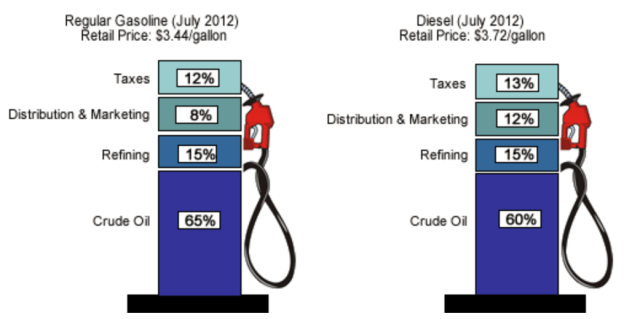
“Nothing terrifies an American president more than a gasoline-pump price spike,” said Bob McNally, president of consulting firm Rapidan Energy Group and former White House policy official under George W. Bush. “They will go to great lengths to prevent this, especially in an election year.”

Excerpts from Anna Hirtenstein et al., Biden Wants to Be Tough With Russia and Iran—but Wants Low Gas Prices Too, WSJ, June 26, 2024


When Others Do our Dirty Work: the Costs of Overdependence

China is tightening its grip on the global supply of processed manganese, rattling a range of companies world-wide that depend on the versatile metal—including the planet’s biggest electric-vehicle makers.

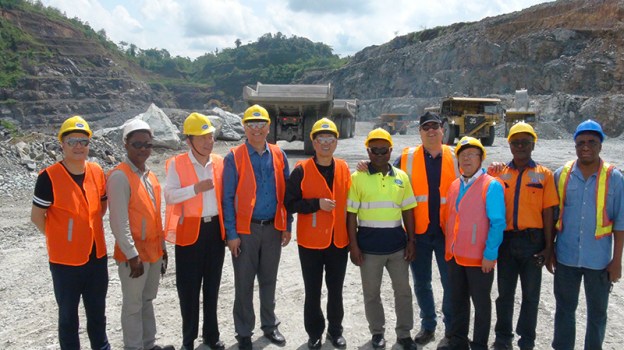
China produces more than 90% of the world’s manganese products, ranging from steel-strengthening additives to battery-grade compounds. Since October 2020, dozens of Chinese manganese processors accounting for most of global capacity have joined a state-backed campaign to establish a “manganese innovation alliance,” led by Ningxia Tianyuan Manganese Industry Group, setting out in planning documents goals and moves that others in the industry say are akin to a production cartel. They include centralizing control over supply of key products, coordinating prices, stockpiling and networks for mutual financial assistance.

The squeeze sent prices soaring in metal markets world-wide, snagging steelmakers and sharpening concern among car makers. China’s metal industries already dominate the global processing of most raw materials for rechargeable batteries, including cobalt and nickel. Three-quarters of the world’s lithium-ion batteries and half of its electric vehicles are made in China.  High-purity forms of manganese have increasingly become crucial for battery-powered automobiles, touted by Volkswagen AG and Tesla Inc. in recent months as a viable replacement for other, more-expensive battery ingredients….

While manganese ore is relatively abundant around the world, it is almost solely refined in China. Battery-grade manganese is traded mostly privately, and pricing can be opaque. Miners say a metric ton of the purified metal could cost up to $4,000—barely a 10th of the cost of cobalt, a widely used battery metal. By replacing cobalt, manganese could help auto makers produce 30% more cars with the same amount of nickel, analysts say.

Rival manganese projects outside China view the cartel-like activities as an opportunity to gain momentum for their own battery-grade developments…Still, analysts say such projects outside China might take years to start and heavy cost investments to develop. Viable bases of manganese ore are often located in remote regions, which require expensive infrastructure to ferry and process extracted ores.

Excerpt from Chuin-Wei Yap, China Hones Control Over Manganese, a Rising Star in Battery Metals, WSH, May 21, 2021

Tracking the Oil

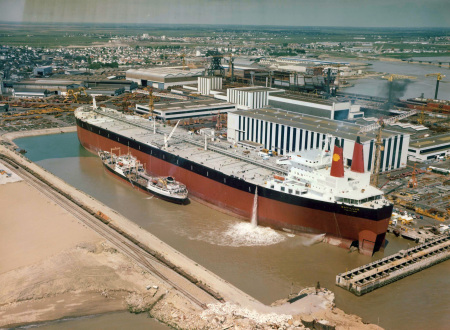
The oil he industry counts on a small group of little-known companies whose main job is to count the number of tankers leaving ports, at best using data gathered from satellites, at worst using simple binoculars. They then guess how much crude is being carried by measuring the depth of the vessels in the water.

Swiss-based Petro-Logistics S.A., one of those companies, calls its work “the art and science of tanker tracking,” with the aim being to discover what oil producers “are really doing as distinct to what they say they are doing,” according to a statement on its website. While the information produced by companies such as Petro-Logistics and U.K.-based Oil Movements serves as a main input for estimates by consultants, traders and official bodies, it’s not the only measurement stick in use.

The matter becomes even more complex for oil moved within pipelines. Russia, for instance, exports roughly 30 percent of its crude via pipeline, according to official data. That flow is most often measured by independent groups using infra-red photography, which provides only a rough approximation of output.

The Organization of Petroleum Exporting Countries traditionally has published a measure of production based on what the group calls “secondary sources,” in effect consultants who calculate flows from a variety of sources, including tanker tracking data. The cartel also publishes production figures based on what OPEC countries release publicly.

The IEA and the U.S. government also publish estimates, as do many news organizations, including Bloomberg. The most recent addition to this flood of information is the Joint Organisations Data Initiative (JODI), a project begun in 2002 that’s backed by some of the world’s richest countries.Although all of these sources rely on tanker-tracking data as a base of their data, each group also incorporates its own market intelligence and different methodologies to come up with their data

Excerpt from the Art and Science of Tanker Tracking, Bloomberg, Mar. 14, 2016