Tag Archives: Peruvian Amazon

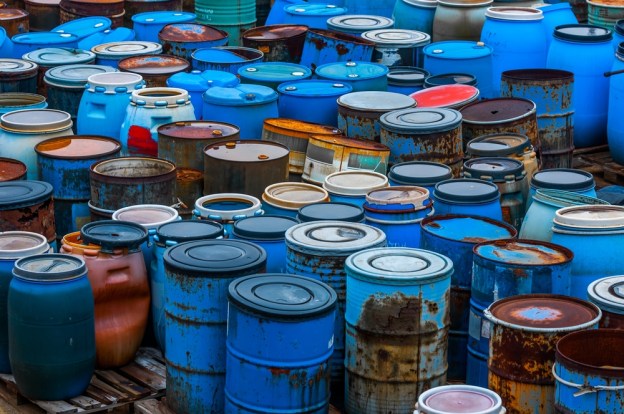
Oil Barrels Spilled in Amazon: Peru

It’s been a bad year for Peru’s Amazon – 2016 has seen seven oil spills there so far. And it’s only September. Most of these occurred across the Northern Peruvian Pipeline, in operation since 1977, which transports crude from the Peruvian Amazon to the Pacific Coast along 854 kilometers (530 miles) and is under the control of state-owned Petroperu. After the first two spills leaked around 3,000 barrels, in January and February 2016, the pipeline was shuttered for repairs. However, five additional oil spills have happened since then.According to Peru’s environment regulator OEFA, at least five oil spills were due to poor pipeline conditions, and illegal use of it after the closure. However, the oil company is blaming the latest two spills on vandalism by locals.,,

[M]ore than 190 oil spills have been recorded in Peru since 1997, according to Peru’s energy and mining agency. But the situation appears to have worsened since the beginning of 2016. After the two oil spills leaked 3,000 barrels – polluting nearby rivers and destroying the livelihood of locals – protests against pipeline’s poor conditions in February 2016 forced its shutdown.

When a third oil spill occurred in June 2016 – of 600 barrels – then-Minister of Environment, Manuel Pulgar Vidal, accused Petroperu of pumping crude illegally through the pipeline. The president of Petroperu was ousted, and a $3.5-million (around 3-million-euro) fine was levied.

But the disaster continued: During August and September 2016, four additional oil spills were recorded in the area. The last two occurred while thousands of indigenous people were demonstrating for withdrawal of the oil companies. According to the Peruvian government, Petroperu is responsible for at least five of the seven oil spills – the company has already been penalized more than $7 million. Petroperu continues to insist, however, that the oil spills were a result of extreme weather or vandalism by the locals.

The amount of oil spilled 2016 in the Peruvian Amazon – less than 10,000 barrels in seven spills – is a relatively small amount, compared for instance to the 650,000 barrels of oil that have fouls parts of the Amazon of Ecuador since the 1960s.

Repeated oil spills threaten Peru’s Amazon, DW.com, Oct. 2, 2016
Making Money in the Peruvian Amazon

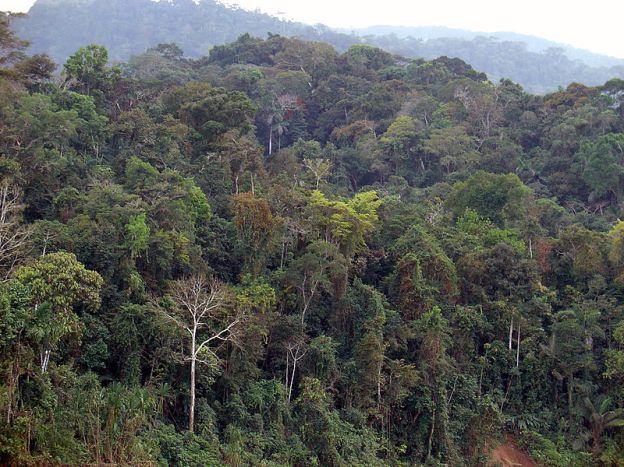
The Sierra del Divisor region in the Peruvian Amazon was identified as a biodiversity conservation priority back in the early 1990s. More than 20 years later and Peruvians are still waiting – some more desperately than others given all the narco-traffickers, illegal loggers and gold-miners in or near the region.

What’s so special about the Sierra del Divisor? It’s the “only mountainous region” anywhere in the lowland rainforest, according to Peruvian NGO Instituto del Bien Comun (IBC), while The Field Museum, in the US, describes it as “a mountain range” rising up “dramatically from the lowlands of central Amazonian Peru” and boasting “rare and diverse geological formations that occur nowhere else in Amazonia.” Its most iconic topographical feature is “El Cono”, an extraordinary peak visible from the Andes on a clear day.

Sierra del Divisor is home to numerous river headwaters feeding into key Amazon tributaries, eco-systems, and a tremendous range of flora and fauna, some of which are endemic, some endangered or threatened – and some with the most wonderful names. Giant armadillos, jaguars, cougars, Acre antshrikes, curl-crested aracaris, blue-throated piping guans and various kinds of monkeys, including the bald – but very red-faced – uakari, all populate the region. Effectively, it forms part of a vast “ecological corridor” running all the way from the Madidi National Park in Bolivia in a north-westerly direction along much of the Peru-Brazil border.

21 indigenous communities and 42 other settlements would benefit from the Sierra del Divisor being properly protected, states the Environment Ministry, while ultimately over 230,000 people in Peru depend on the region for food and water, according to the IBC. In addition, in the absolute remotest parts, it is home to various groups of indigenous peoples living in what Peruvian law calls “isolation.”

In 2006 Peru’s government established a 1.4 million hectare temporary “protected natural area” in this region called the Sierra del Divisor Reserved Zone. Six years later a government commission agreed it would be converted into a national park, and, all that remains now, after a painful administrative process, several key advances made this year and indigenous leaders lobbying various ministries, is for Peru’s Cabinet to approve it and the president, Ollanta Humala, to sign off on it. That is how it has stood since early May 2015 – and still nothing….

Why such a delay indeed, this year or in the past? Might it have something to do with the infrastructure integration plans for the region, such as the proposed – and effectively already underway – road between Pucallpa, the Peruvian Amazon’s current boom city, and Cruzeiro do Sul across the border in Brazil? Or the proposed railway between the same two cities ultimately connecting to Peru’s northern Pacific coast, declared in the “national interest” some years ago? Or the proposed railway running all the way across South America from Peru’s Pacific coast to Brazil’s Atlantic coast, a long-mooted project which has received so much media coverage recently because of Chinese interest in financing it and the visit by China’s premier, Li Keqiang, to Brazil and Peru in May?

Or might the delay be explained by oil and gas industry interests? Perupetro, the state company promoting oil and gas operations, tried to open up what would be the entire southern part of the park for exploration before backtracking in 2008, while the London Stock Exchange-Alternative Investment Market-listed company Maple Energy has been pumping oil for years in a concession just overlapping the west of the proposed park. More significantly, Canadian-headquartered company Pacific Rubiales Energy runs a one million hectare oil concession that would overlap the entire northern part of the park if it was established, and conducted its first phase of exploratory drilling and seismic tests in late 2012 and 2013 in what would be the park’s far north. Clearly, it wouldn’t be good PR for either Pacific or Peru to explore for oil in, or exploit oil from, a national park, although it wouldn’t be the first time a concession and park have overlapped. Indeed, according to the IBC, it has been agreed that Pacific’s “rights” to operate will be respected if the park is created.

Excerpts from David Hill Peru stalling new national park for unique Amazon mountain range, Guardian, July 29, 2015