Tag Archives: radioactive waste Russia

Making Friends with Radioactive Waste: the Nuclear Dump of Moscow

Russian environmental activists and residents are sounding the alarm (in December 2019) over government plans to build a motorway near a Soviet-era radioactive waste site in southeast Moscow that they fear could spew dangerous particles into the air.  The 34-km (21-mile) road, which city authorities say is safe and will help ease traffic, is set to pass the Moscow Polymetal Plant and a fenced-off site where it disposed of radioactive substances decades ago.  Vasily Desyatkov, a senior city construction official, said surface and underground tests carried out where the foundations of the road were due to be laid had turned back normal readings that show there is no risk.

But that has not placated activists who have led a series of protests in recent months.  “It could lead to the release of radionuclides contained in the soil which will be dispersed with the dust. They will be spread everywhere – on people’s feet, car wheels, anything,” said Igor, a protester.

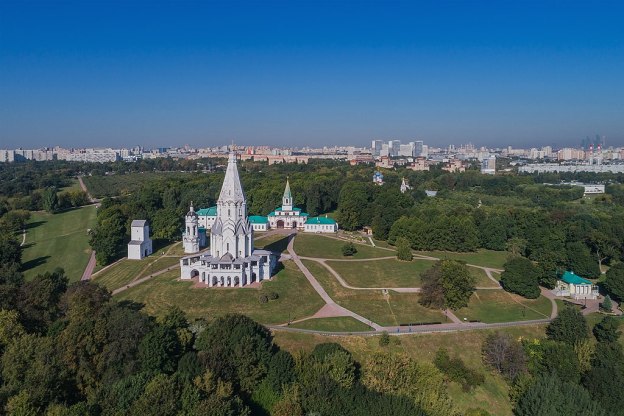
The site, the Moscow Polymetals Plant’s slag heap, is Just 13 kilometers from the Kremlin and steps from Kolomenskoye Park, a popular spot for Muscovites to ski in winter and picnic in summer, the Moskvorechye-Saburovo hill is the most contaminated of the bunch, according to Radon, a government agency tasked with locating and clearing radioactive waste. A legacy of a rushed Soviet effort to begin nuclear research as the race to build an atomic bomb gained steam in the 1930s, the hill is one of many contaminated sites across Russia …
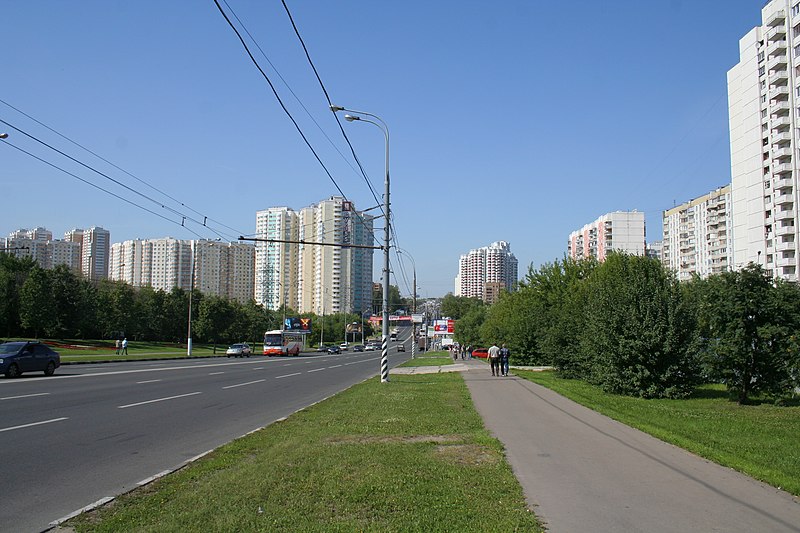
Moskvorechye-Saburovo District Moscow

It contains tens of thousands of tons of radioactive waste left over after the extraction of thorium and uranium from ore. The factory ceased production of metals in 1996 for “environmental reasons,” according to its website — it now produces weapons and military equipment — and the dump is now a hill half a kilometer wide sloping down to the banks of the Moscow River.  City officials had been considering a full-scale clean-up for years, but never rubber-stamped a plan due to the risky location of the site near a source of water for Moscow’s southern suburbs. 

“Operations in such an environment are a serious engineering challenge — one incautious step, and radioactive soil gets into the river,” said Alexander Barinov, Radon’s chief engineer for Moscow…. “Full decontamination by removing all of the radioactive waste is simply impossible,” he added, noting that Radon every year conducts “a kind of therapy” to ensure the site’s safety — in short, dumping dirt on top of the waste to keep it buried after topsoil runoff each spring. 

Excerpts from Russians protest over plans to build road near Soviet-era radioactive waste site, Reuters, Dec. 10, 2019; Will a Road Through a Nuclear Dumping Ground Result in ‘Moscow’s Chernobyl’?, Moscow Times, July 16, 2019
Nuclear Waste Management in Russia

Russia opened it first ever repository for low and medium level nuclear waste last week in a major benchmark for the country’s radioactive waste …Alexander Nikitin, chairman of the Environmental Rights Center Bellona… called the opening of the repository “the first important step” of Russia’s National Operator for Radioactive waste management.

The 48,000 cubic meter facility in the Sverdlovsk Region’s close nuclear city of Novouralsk lies at shallow depth and operates as a repository for what state nuclear corporation Rosatom classifies as type 3 and 4 wastes.The new facility will be able to store solid waste in isolation from the outside environment for 300 years, ten times longer than any other current storage schemes in Russia….

The Novouralsk site…. is the first of several that will open in Russia in the coming years….Rosatom plans to build a repository for type 3 and 4 waste at the closed nuclear city of Ozersk, where the notorious Mayak Chemical Combine is located. Another is planned for the closed city of Seversk in the Tomsk Region.

A site for Rosatom types 1 and 2 waste, representing high level nuclear waste, is currently being sited at the Nizhnekansky Rock Mass in the Krasnoyarsk Region.If the rock mass proves suitable for deep geological storage of intermediate and high level waste, construction of the repository could begin in 2024. How much waste the site would hold has yet to be determined.

Excerpts from Charles Digges, Russia’s first nuclear waste repository starts operation, Bellona, December 14, 2016

Russia Improves Nuclear Waste Management

Russia has introduced an automated system for the accounting and control of its radioactive substances and waste that encompasses more than 2000 organizations. The system follows an order by state nuclear corporation Rosatom, 113 subsidiaries of which account for 96% of the country’s radioactive substances and waste.  The system automates the collection and monitoring of the availability, production, transmission, receipt, processing, conditioning, siting and deregistration of radioactive substances and waste, as well as their changes in status, properties and location….Full implementation of the system is scheduled for late 2015…[T]he system is needed for the implementation of a Russian government decree on the procedure for state registration and control of radioactive waste.”The new solution enables a high level of quality control in the movement of radioactive substances and waste and provides complete data for assessment of the financial responsibility for handling them,.”

In June 2011, the Russian legislature passed the Radioactive Waste Management Law developing a unified state radioactive waste management system that brought Russia into compliance with the United Nations Joint Convention on the Safe Management of Spent Nuclear Fuel ( adopted in 1997 entered into force in 2001). In April 2012, the state-run national operator for radioactive waste, NO RAO, was created to manage this process.

Plans for disposal of low- and intermediate-level wastes are to be in place by 2018. It is expected to establish repositories for 300,000 cubic metres of low- and intermediate-level radioactive waste, and an underground research laboratory in Nizhnekansky granitoid massif at Zheleznogorsk near Krasnoyarsk for study into the feasibility of disposal of solid high-level radioactive waste and solid medium-level long-lived wastes by 2021. A decision on final high-level radioactive waste repository is expected by 2025.

Excerpts from Russia makes progress with radwaste data management, World Nuclear News, Feb. 23, 2015