Tag Archives: rape Congo

Why Arab Men Rape Black Women in Darfur

Sudan’s civil war is taking a jarring turn in Darfur, where an Arab-led militia is now using state-of-the-art drones and execution squads to dominate the region’s Black population. Rights researchers already are warning that the killings have the potential to surpass the genocide that played out in Rwanda just over 30 years ago. The group behind the violence, the Rapid Support Forces (RSF), led by Lt. Gen. Mohamed Hamdan Dagalo, has previously been accused by the U.S. of pursuing a genocide of Darfur’s Black population. Two decades ago, its predecessor was involved in the killing of more than 200,000 people in Darfur.

This time, the killings are the work of a closely-drilled and well-armed rebel force that already has established a parallel government to run Darfur, an expanse of western Sudan roughly the size of Spain. RSF fighters are armed with bomb-carrying Wing Loong II and FeiHong-95 drones, made in China, and supplied by the United Arab Emirates to help expand its own interests in the region.

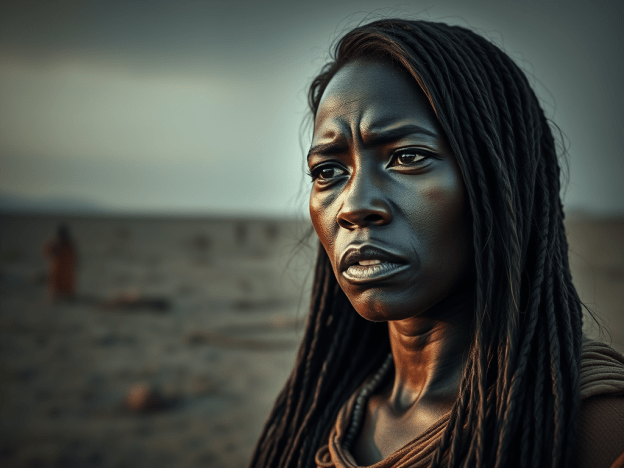
The RSF have been conducting door-to-door searches, picking out non-Arab men and boys before executing them… Witnesses and residents say militia members swept through the city, raping Black women, detaining aid workers and forcing the last remaining residents to leave… Black women with long hair are systematically separated and raped, according to interviews with multiple aid workers and victims.

According to Eric Reeves, a fellow with the Nairobi-based Rift Valley Institute: “The fierce ethnic animus of the RSF toward non-Arab civilians is equal to that of the Hutus toward the Tutsis in Rwanda. The obscene violence is clearly comparable.”

Excerpt from Nicholas Bariyo, Sudan Militia, Armed With Drones, Hunts Down Black Population of Darfur, WSJ, Oct. 31, 2025
Getting Raped as a Way of Life

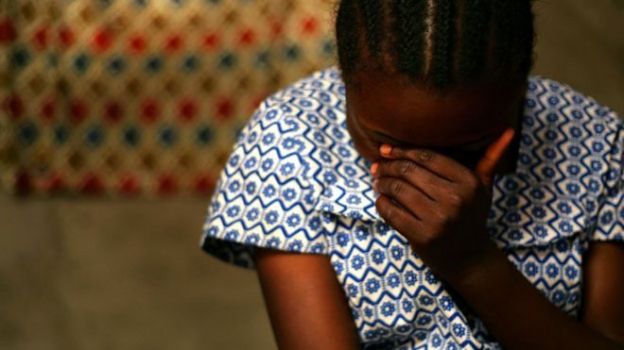
Kanzira Kihanga, a woman who lives in Congo, says she wasn’t surprised to learn in May 2025 that she was infected by the virus that causes AIDS. The 21-year-old believes she contracted the virus after back-to-back rapes by armed men. After the first attack, she went to a clinic but was only given half a dose of the PEP medication.* Two weeks later, she was raped again as she walked to the clinic to pick up the remainder of the dosage.

*Post-exposure prophylaxis (PEP) refers to HIV medicines that are taken after a possible exposure to prevent HIV infection.

Excerpt from Nicholas Bariyo, Congo Braces for HIV Surge After U.S. Funding Stops, WSJ, July 4, 2025

How Murder, Torture and Rape Fuel the Technological Revolution

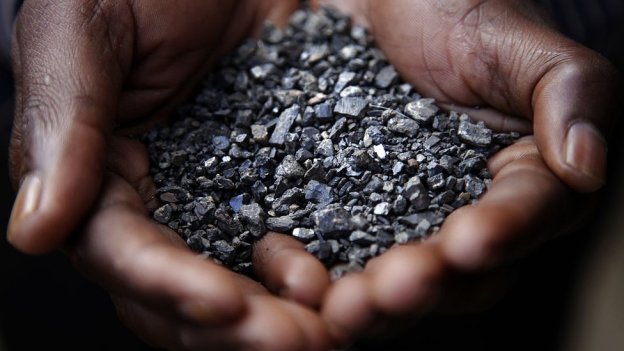
Congo is the world’s leading producer of coltan, from which tantalum is extracted. Tantalum is in hot demand because of its growing use in consumer products, from smartphones to laptops and it is critical for the defense industry (e.g., Apple iPhones, SpaceX rockets, IBM computers).

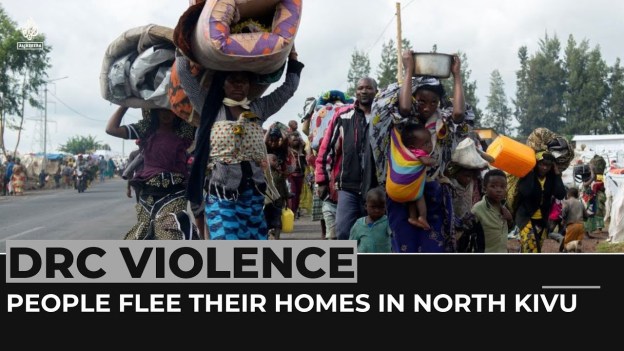
Coltan is mined in the country’s restive east, a region that has been engulfed in a decadeslong war between rebel groups and the Congolese army…A powerful militia backed by neighboring Rwanda has taken over swaths of eastern Congo, driving some two million people from their homes as fighters kill, torture and rape civilians. The militia, known as M23, has also seized control of Congo’s coltan production and transport, according to United Nations investigators, supply-chain experts, researchers and local traders. 

Now, a network of smuggling routes is increasingly being used to move ore illegally from militia-controlled mines in eastern Congo to neighboring Rwanda. From there, it is sold as Rwandan, and hence “conflict-free,” to smelters around the world, but primarily in China. 

M23 fighters levy taxes on informal coltan miners, who dig the ore from the ground, mostly by hand. The fighters also tax the movement of coltan, providing the militia with revenue to purchase weapons and other supplies. Overall, the trade generates around $300,000 a month for the fighters, according to Bintou Keita, the head of the U.N. mission in Congo….U.S. lawmakers have sought to prevent minerals commonly mined in eastern Congo—tin, tungsten, tantalum and gold—from financing conflict in the region. Legislation embedded in the 2010 Dodd-Frank Act requires U.S.-listed companies to disclose their use of the minerals, known as the 3TGs, as well as steps they are taking to prevent inadvertently financing armed groups. It doesn’t, however, oblige companies to remove potentially tainted materials from their supply chains…

Other armed groups are also profiting from the illegal coltan trade, including an alliance of militias that is helping the Congolese military fight M23, according to rights groups and U.N. researchers. The alliance, known as the Wazalendo, which U.N. investigators say is armed by Congo’s military, includes groups that are under international sanctions for war crimes. M23 and the Wazalendo are both recruiting child soldiers, raping women and girls, looting, murdering civilians and committing other atrocities, according to rights groups and U.N. investigators. Like M23, the Wazalendo are collecting illegal taxes on coltan at roadblocks along transportation routes, as well as from some mining sites. 

Excerpt from Alexandra Wexler, How This Conflict Mineral Gets Smuggled Into Everyday Tech,  WSJ, Oct. 6, 2024

What Happens When 48 Women are Raped Every Hour?

Congo is considered the rape capital of the world. On average, 48 women are raped every hour. Gang rapes, genital mutilation, and sexual violence are committed by armed groups, gangs, and government and police forces. Many of the victims are children and babies. Rape victims and children born of rape are often rejected by their families. HIV is rampant, and cases often go untested and untreated. Rapists almost always go unpunished.

Rapes and Razor Blades: Raping Children to Death in War Zones

Sexual abuse of young children happens all around the world. But children living in war-torn countries are at much higher risk. Those in countries recovering from conflict, such as Liberia, may also face greater dangers. The UN has recorded 15,000 cases of rape and sexual violence against children in conflict zones over the past 15 years. This, it warns, is probably a fraction of the true number. Around 72m children live in war zones in which fighters sexually attack children, according to research by Ragnhild Nordås of the University of Michigan and co-authors. That is almost ten times the number in 1990. In 2021, Liberia recorded 1,275 sexual assaults or rapes of people of all ages, according to official figures. Fully 10% of the victims were younger than six and 36% were younger than 13.

At a sexual-violence clinic in Monrovia, the capital, a nurse recounts how an eight-month-old baby was raped by her step father. A soft toy to comfort children perches on the examination table next to a large doll which young victims, often unable to speak, can point at to show what happened to them… In 2020,  another three-year-old was lured away from a water pump by a 15-year-old who used a razor blade to cut open her genital area to penetrate her. That attack caused large protests in Monrovia, which prompted President George Weah to declare rape a “national emergency”.

Why so many men rape young children in war and its aftermath is not well understood. Some experts think that war warps not just morality but also common sense. Between 2013 and 2016 in Kavumu, a village in eastern Congo, at least 11 men kidnapped and raped about 40 girls under the age of ten. Some were as young as 18 months. After each rape the men would take some blood from the victim’s hymen, believing this would protect them from bullets in battle. In 2017 a court convicted the 11 men of murder and rape.

Many of their victims were treated at Panzi Hospital, which was founded by Denis Mukwege, who was jointly awarded the Nobel peace prize in 2018 for his efforts to end sexual violence in war. The number of babies and infants treated for rape at the hospital dipped in the year after the trial, says Sylvain Mwambali, a doctor who works there. But it soon shot up again, to a higher level than in the three years before the convictions. In the past three years the hospital has treated 103 raped children aged five or younger, or about one every ten days. In 2020 Dr Mwambali treated a baby just a few months old whose vagina and intestines were mutilated by rape. “I could not sleep for weeks,” she says. “How can someone carry on, creating a wound like that? She would have been suffering, crying, they destroyed her vulva, up until the anus, yet they continued.”

Sometimes rebels may rape children to terrorise and control the population. Other men may copy them, perhaps because it makes them feel powerful. A breakdown in law and order may allow rapists to escape any punishment. “There is a social deterioration,” says Dr Mwambali. “People can rape your mother in front of you…there are rapes in churches.” In Liberia, warped beliefs of a different kind are a common explanation for why men rape young children. Some traditional healers tell people, “If you have intercourse with a young girl, you will become rich,” says Margaret Taylor of Women Empowerment Network, an NGO. “The younger the person is, the more riches they get.”

Excerpt from: The Sexual Abuse of Children: Child rape is far too common in some war-torn African countries, Economist, Feb. 5, 2022

The Thirst for Rape that Won’t Go Away

Ethiopia’s government says it is conducting a policing operation against the ousted rulers of Tigray, the Tigrayan People’s Liberation Front. Yet as phone connections to the region are restored, having been cut off since the fighting started on November 4th, 2020 credible reports of atrocities and war crimes are emerging. Many involve troops from neighbouring Eritrea, who are fighting alongside Ethiopian forces.

Perhaps the worst incident took place in Axum, one of Ethiopia’s holiest cities. According to Amnesty International, a rights group, Eritrean soldiers killed hundreds of civilians over two days in late November 2020 in retaliation for an attack on their camp. The soldiers picked out unarmed young men and killed them on the spot. They then plundered the city. “All we could see on the streets were bodies and people crying,” one survivor told Amnesty…

Months of restrictions on journalists and NGOs make it hard to know exactly what has been happening. The state-funded Ethiopian Human Rights Commission says it is investigating the Axum massacre and that its preliminary findings indicate that Eritrean soldiers killed a number of civilians in the city. It says it is also investigating reports of shelling in several parts of Tigray. Ethiopian officials including the president, Sahle-Work Zewde, have admitted that women in Tigray have been raped in large numbers. “We cannot pretend that we do not see or hear,” she said on February 19th, 2021. But she failed to identify the perpetrators, even though the victims said their rapists were soldiers in Eritrean and Ethiopian uniforms.

One survivor recounted a harrowing 10-day ordeal during which she said she and five other women were gang-raped by Eritrean soldiers. She said the troops joked and took photos as they injected her with a drug, tied her to a rock, stripped, stabbed and raped repeatedly her. Doctors who’ve treated Tigrayan women have said one woman’s vagina was stuffed with nails, stones and plastic.

Excepts from Murder in the mountains: Soldiers have killed hundreds of civilians in Tigray, Economist, Feb. 27, 2021

The De-humanization of a Nation

Rebels and government troops in Congo committed atrocities including mass rape, cannibalism and dismembering civilians, according to testimony published by a team of UN human rights experts who said the world must pay heed.

The team investigating conflict in the Kasai region of Democratic Republic of Congo told the UN Human Rights Council they suspected all sides were guilty of war crimes and crimes against humanity.   Their detailed 126-page report catalogued gruesome attacks committed in the conflict, which erupted in late 2016, involving Kamuina Nsapu and Bana Mura militias and Congo’s armed forces, the FARDC.

The testimony included boys forced to rape their mothers, little girls told witchcraft would allow them to catch bullets, and women forced to choose gang-rape or death.  “One victim told us in May 2017 she saw a group of Kamuina Nsapu militia, some sporting female genitals (clitorises and vaginas) as medals,” the report said.   “Some witnesses recalled seeing people cutting up, cooking and eating human flesh, including penises cut from men who were still alive and from corpses, especially FARDC and drinking human blood.”

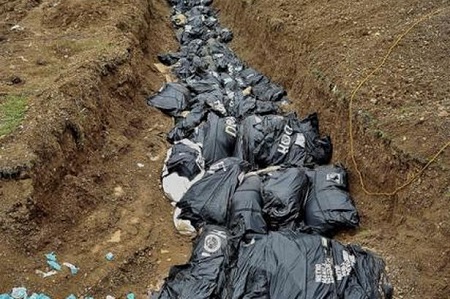
Lead investigator Bacre Waly Ndiaye told the Council in one incident, at least 186 men and boys from a single village were beheaded by Kamuina Nsapu, many of whose members were children forced to fight, unarmed or wielding sticks and were convinced magic made them invulnerable.   Many child soldiers were killed when FARDC soldiers machine-gunned them indiscriminately, he said. “The bodies were often buried in mass graves or were sometimes piled in trucks by soldiers to be buried elsewhere.”   There were initially thought to be about 86 mass graves, but after investigating the team suspects there may be hundreds, he said.

Excerpts from DR Congo war atrocities, Reuters, July 4, 2018

Rape in Congo