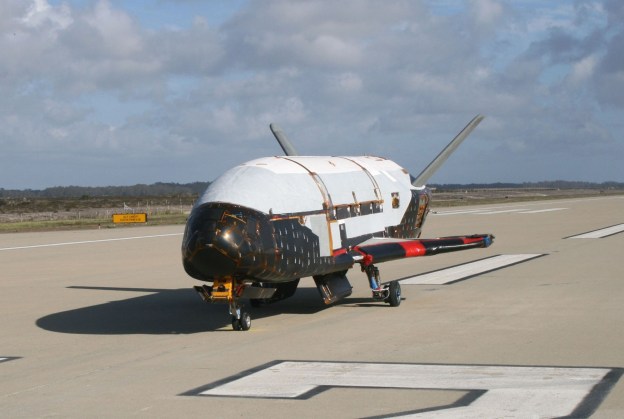
A Pentagon spaceplane called X-37B zoomed into orbit this week for its eighth mission. When it will come back is a secret. The uncrewed vehicle can spend months or years in space before it re-enters the atmosphere.. That combination of flexibility and endurance has made it a favorite tool for military officials looking to quickly deploy new technologies on the final frontier. A SpaceX rocket launched X-37B on August 21, 2025 from Florida’s Kennedy Space Center. Government and commercial engineers have spent years experimenting with lasers that allow satellites to share large amounts of data in space. The Pentagon is also testing tools like the inertial sensor, which could help improve navigation in situations where Global Positioning System signals aren’t available.
The spacecraft has spent the last five months on Earth after a 434-day mission that included tests of orbital maneuvers known as “aerobraking.” The move helps the vehicle use the drag from the planet’s atmosphere to change its orbit without using much fuel. Military officials haven’t disclosed many details about the payloads that X-37B carries, but past missions included testing different materials in orbit and an experiment that transmitted solar energy to the ground. Its fifth flight released three small satellites that government officials didn’t acknowledge until they had fallen back to Earth. There’s a global strategic interest in saying what you’re putting in space,” said Jonathan McDowell, a researcher at the Harvard-Smithsonian Center for Astrophysics. If the U.S. hides its satellites, “then the Chinese are going to start doing it too, and that’s not in our interest.”
China now fields more than 1,000 satellites and has developed a range of radio jammers, antisatellite missiles and other weapons capable of targeting Pentagon assets, according to a U.S. Air Force document released in May 2025. It also operates a competing spaceplane, called Shenlong, that has flown several missions.]
Excerpt from Drew FitzGerald, The Pentagon’s Mysterious X-37B Space Plane Embarks on New Mission, WSJ, Aug. 22, 205

 Law-In-Action