Tag Archives: UAE and Somalia

What is the Price of a Prince?

One of the U.S.’s closest allies in the Middle East, the United Arab Emirates, paid more than $20 million to secure the freedom of an Emirati prince kidnapped by al Qaeda’s West African affiliate… The ransom package also included the release of dozens of Islamist extremists imprisoned in Mali, where the prince was abducted in September 2025 and where al Qaeda-backed militants are threatening to seize control of the entire nation. The infusion of money and muscle into al Qaeda’s powerful West African branch, Jama’at Nusrat al-Islam wal-Muslimin, or JNIM, comes as the militants are besieging Mali’s capital, Bamako. Should they succeed in ousting the government, Mali—home to 25 million people in an area almost twice the size of Texas—would become the first country in the world governed by adherents of the terror group…

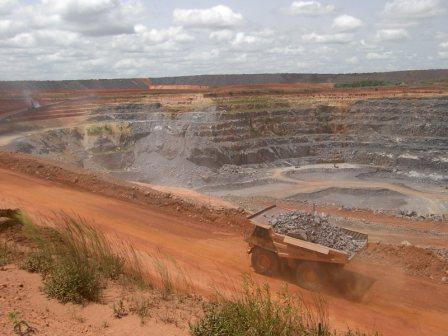
Sheikh Ahmed bin Maktoum bin Juma al-Maktoum, a 78-year-old member of Dubai’s ruling family, was seized during an al Qaeda raid on his farm south of Bamako…Emirati businesses have a strong presence in Mali, the world’s fourth-largest gold producer, which exports most of its output to Dubai. Al-Maktoum himself is involved in the precious-metals trade out of Mali…

Excerpts from Benoit Faucon, U.A.E.’s Ransom Payment for Kidnapped Prince Bolsters al Qaeda in Mali, WSJ, Dec. 5, 2025
Under the Radar: How the U.A.E. is Colonizing Africa

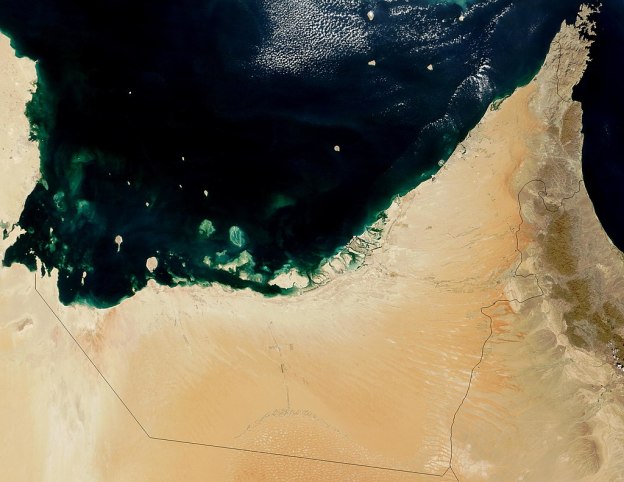
The petrostate, United Arab Emirates, has invested billions of dollars on the other side of the Arabian peninsula, in Africa, where it is now emerging as a significant player, at times muscling out China and annoying the U.S. and others. It has taken sides in local wars and spent heavily on buying farmland, ports and other projects that could help reduce its own dependence on oil in the decades to come.

The U.A.E. government says investments in Africa amounted to about $110 billion over the past decade….Its portfolio includes renewable-energy projects in Egypt, leased rice and wheat farmlands in the muddy plains of northern Angola and a majority stake in one of Zambia’s largest copper mines. U.A.E.-backed port projects are dotted around the coasts of the Atlantic, the Red Sea and the Indian Ocean. The Gulf state is also trying to become a key supplier of the minerals used in a new generation of batteries.  

The Wall Street Journal has reported that the U.A.E. shipped weapons including antiaircraft missiles and drones, to Sudan’s Rapid Support Forces, which is waging a civil war against the Iran-backed Sudanese military and has perpetrated a series of well-documented atrocities against civilian populations, especially in Darfur. It also sold armed drones to Ethiopia’s government, while the U.S. was pushing for a peace deal with Ethiopian rebel groups. Before that, U.N. investigators say it transferred arms to Libyan militia leader Khalifa Haftar in violation of a United Nations Security Council arms embargo…

There are signs of pushback in parts of Africa, too. In Chad, local Zaghawa communities have repeatedly staged protests against the U.A.E.’s use of Amdjarass airport in the east of the country to ship supplies to the RSF, according to activists and videos shared online. .

Excerpts from Nicholas Bariyo, The New Investment Superpower Outflanking China and the U.S. in Africa, WSJ, Nov. 6, 2024

Somalia as Security Flank for the Gulf

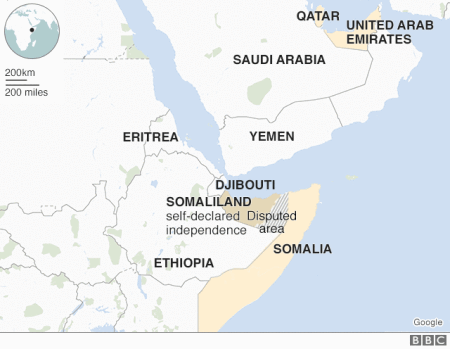
A battle for access to seaports is underway in one of the world’s unlikeliest places: Somalia, now caught in a regional struggle between Saudi Arabia and the United Arab Emirates on one side with Qatar backed by Turkey on the other.  At stake: not just the busy waters off the Somali coast but the future stability of the country itself.

In 2017, a company owned by the United Arab Emirates government signed a $336 million contract to expand the port of Bosaso, north of Mogadishu in the semi-autonomous Somali region of Puntland.   In 2016, another UAE-owned firm took control of Berbera port in the breakaway northern region of Somaliland and pledged up to $440 million to develop it. In March 2017, Ethiopia took a stake in the port for an undisclosed sum.  The federal government in Mogadishu has long been at odds with the semi-autonomous regions of Puntland and Somaliland. The money could destabilise the country further by deepening tensions between central government, aligned with Turkey and Qatar, and Puntland and Somaliland, which both receive money from the UAE.

At the same time, Turkey, an ally of Qatar, is ramping up a multi-billion dollar investment push in Somalia. A Turkish company has run the Mogadishu port since 2014, while other Turkish firms built roads, schools and hospitals.   The rivalries have intensified since June 2017, when the most powerful Arab states, led by Saudi Arabia and including the UAE, cut diplomatic ties with Qatar, accusing it of supporting Iran and Islamist militants…

Saudi Arabia and the UAE increasingly view the Somali coastline – and Djibouti and Eritrea to the north – as their “western security flank”, according to a senior western diplomat in the Horn of Africa region…

Excerpts from  Gulf States Scramble for Somalia, Reuters, May 2, 2018