Tag Archives: UAE and China

If This Is Not Sleazy: What Is?

The Abu Dhabi royal sometimes referred to as the “spy sheikh” is a major shareholder backing a new U.S. bank the Trump family’s cryptocurrency venture is preparing to launch…Seikh Tahnoon bin Zayed al Nahyan and co-investors are behind an entity that owns the largest stake—49%—in the holding company that World Liberty Financial created to house its banking venture.

The sheikh in 2025 backed a $500 million investment into World Liberty Financial in exchange for a 49% stake in the company. The Office of the Comptroller of the Currency in August 2026 granted preliminary conditional approval for World Liberty Financial to launch a federally chartered national trust bank to issue, redeem and safeguard USD1, the dollar-backed stablecoin World Liberty launched in 2025. The new venture marks an expansion of the business relationship between the Trump-backed crypto company and a foreign government official. Tahnoon serves as the United Arab Emirates’ national security adviser and is brother to the country’s president. He oversees a more than $1.3 trillion empire funded by his personal fortune and state money.

Stablecoins are pegged to the value of real assets held in a reserve. USD1 now has a market value of $4 billion. World Liberty says the dollars backing USD1 are invested in U.S. Treasurys and other cash equivalents, generating an estimated $150 million a year in interest. Previously, World Liberty issued USD1 through BitGo, a separate trust bank that held the stablecoin’s reserves and kept a portion of the interest. The more USD1 in circulation, the more revenue World Liberty can generate from its reserves. World Liberty says it plans for the trust bank to drive “mainstream adoption” of USD1 and to offer new services to clients, such as holding their cryptocurrency for a fee.

World Liberty moved to establish a bank in partnership with its shareholders after the president in July 2025 signed the Genius Act, which allows approved stablecoin companies to directly hold the reserve assets that their coins are fixed against. The shareholder structure of the bank’s holding company, called WLTC Holdings, is the same as World Liberty’s, though Tahnoon and his co-investors used a different entity—called StringZ Holding RSC—for the stake in WLTC. An entity affiliated with the Trump family holds a 38% stake, according to a person familiar with the matter.

The company’s pursuit of a banking license came under scrutiny from Democratic lawmakers after the Journal reported in January that Tahnoon and co-investors had made an undisclosed $500 million investment in the company in January 2025, through an entity called Aryam Investment 1. The deal, signed four days before President Trump’s inauguration, steered $263 million to Trump family entities, according to the president’s most recent financial disclosure. The investment drew sharp criticism from Democrats and legal experts, who said it was unprecedented for a foreign government official to take a major ownership stake in an incoming U.S. president’s company. Ethics experts said the timing of the new banking venture is significant because the expansion of Trump’s business relationship with a foreign government official is taking place while he is a sitting president—and at a time when his administration was actively negotiating with the U.A.E. over its access to U.S. artificial-intelligence chips.

Excerpt from Rebecca Ballhaus, Trump Family’s New Crypto Bank Is Backed by Abu Dhabi Sheikh, WSJ, Aug. 27, 2026
How AI Capital Flows to U.A.E.: the Tahnoon Coup

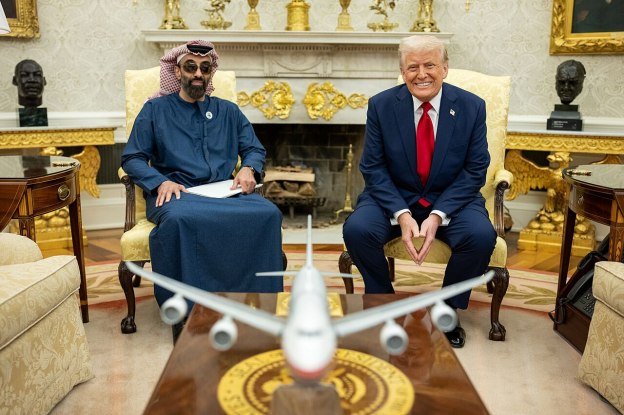
Four days before Donald Trump’s inauguration in 2025, lieutenants to an Abu Dhabi royal secretly signed a deal with the Trump family to purchase a 49% stake in their fledgling cryptocurrency venture World Liberty Financial for half a billion dollars… The buyers would pay half up front, steering $187 million to Trump family entities.. 

The investment was backed by Sheikh Tahnoon bin Zayed Al Nahyan, an Abu Dhabi royal who has been pushing the U.S. for access to tightly guarded artificial intelligence chips… Tahnoon—sometimes referred to as the “spy sheikh”—is brother to the United Arab Emirates’ president, the government’s national security adviser, as well as the leader of the oil-rich country’s largest wealth fund. He oversees a more than $1.3 trillion empire funded by his personal fortune and state money that spans from fish farms to AI to surveillance, making him one of the most powerful single investors in the world. The deal marked something unprecedented in American politics: a foreign government official taking a major ownership stake in an incoming U.S. president’s company.

Under the Biden administration, Tahnoon’s efforts to get AI hardware had been largely stymied over fears that the sensitive technology could be diverted to China. Of particular concern was one of Tahnoon’s own companies, the AI firm G42, which had stoked alarm among intelligence officials and lawmakers over its close ties to the sanctioned tech giant Huawei and other Chinese firms…

In 2025, the Trump administration decided to supply UAE with access to around 500,000 of the most advanced AI chips a year—enough to build one of the world’s biggest AI data center clusters. The framework agreement called for roughly one-fifth of the chips to go to G42…

The agreement was widely viewed as a coup for the emirate’s ruling family, overcoming longstanding U.S. national security concerns …Proponents hailed the deal for unlocking a flood of investment into the U.S. and for helping entrench American technology as the global standard….What wasn’t publicly known: Tahnoon’s emissaries had signed the deal to purchase 49% of World Liberty Financial cryptocurrency firm controlled by the Trump family.

Excerpt from Sam Kessler et al., Spy Sheikh’ Bought Secret Stake in Trump Company, WSJ, Jan. 31, 2026

What is the Price of a Prince?

One of the U.S.’s closest allies in the Middle East, the United Arab Emirates, paid more than $20 million to secure the freedom of an Emirati prince kidnapped by al Qaeda’s West African affiliate… The ransom package also included the release of dozens of Islamist extremists imprisoned in Mali, where the prince was abducted in September 2025 and where al Qaeda-backed militants are threatening to seize control of the entire nation. The infusion of money and muscle into al Qaeda’s powerful West African branch, Jama’at Nusrat al-Islam wal-Muslimin, or JNIM, comes as the militants are besieging Mali’s capital, Bamako. Should they succeed in ousting the government, Mali—home to 25 million people in an area almost twice the size of Texas—would become the first country in the world governed by adherents of the terror group…

Sheikh Ahmed bin Maktoum bin Juma al-Maktoum, a 78-year-old member of Dubai’s ruling family, was seized during an al Qaeda raid on his farm south of Bamako…Emirati businesses have a strong presence in Mali, the world’s fourth-largest gold producer, which exports most of its output to Dubai. Al-Maktoum himself is involved in the precious-metals trade out of Mali…

Excerpts from Benoit Faucon, U.A.E.’s Ransom Payment for Kidnapped Prince Bolsters al Qaeda in Mali, WSJ, Dec. 5, 2025

Under the Radar: How the U.A.E. is Colonizing Africa

The petrostate, United Arab Emirates, has invested billions of dollars on the other side of the Arabian peninsula, in Africa, where it is now emerging as a significant player, at times muscling out China and annoying the U.S. and others. It has taken sides in local wars and spent heavily on buying farmland, ports and other projects that could help reduce its own dependence on oil in the decades to come.

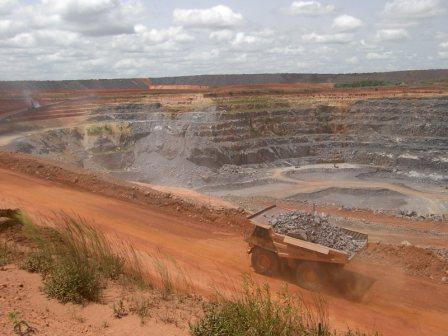
The U.A.E. government says investments in Africa amounted to about $110 billion over the past decade….Its portfolio includes renewable-energy projects in Egypt, leased rice and wheat farmlands in the muddy plains of northern Angola and a majority stake in one of Zambia’s largest copper mines. U.A.E.-backed port projects are dotted around the coasts of the Atlantic, the Red Sea and the Indian Ocean. The Gulf state is also trying to become a key supplier of the minerals used in a new generation of batteries.  

The Wall Street Journal has reported that the U.A.E. shipped weapons including antiaircraft missiles and drones, to Sudan’s Rapid Support Forces, which is waging a civil war against the Iran-backed Sudanese military and has perpetrated a series of well-documented atrocities against civilian populations, especially in Darfur. It also sold armed drones to Ethiopia’s government, while the U.S. was pushing for a peace deal with Ethiopian rebel groups. Before that, U.N. investigators say it transferred arms to Libyan militia leader Khalifa Haftar in violation of a United Nations Security Council arms embargo…

There are signs of pushback in parts of Africa, too. In Chad, local Zaghawa communities have repeatedly staged protests against the U.A.E.’s use of Amdjarass airport in the east of the country to ship supplies to the RSF, according to activists and videos shared online. .

Excerpts from Nicholas Bariyo, The New Investment Superpower Outflanking China and the U.S. in Africa, WSJ, Nov. 6, 2024