Tag Archives: UN treaty To Ban Nuclear Weapons

Back to 2030: Nuclear Race is Hot Again

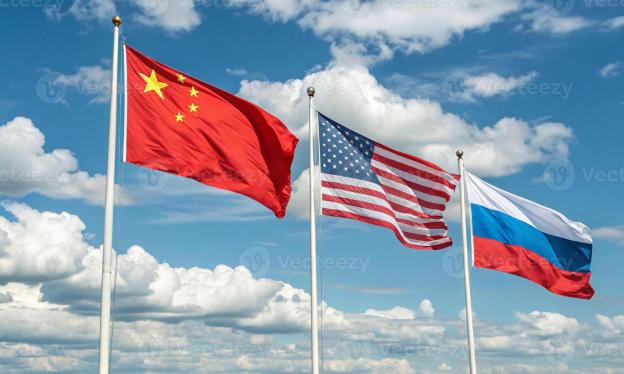
The new nuclear race has begun. But unlike during the Cold War, the U.S. must prepare for two peer rivals rather than one—at a time when it has lost its clear industrial and economic edge. China, which long possessed just a small nuclear force, is catching up fast, while Russia is developing a variety of new-generation systems aimed at American cities…Russian President Vladimir Putin has already used nuclear saber-rattling to throttle American support for Ukraine. He has deployed nuclear weapons to Belarus and, in 2025, tested a nuclear-powered missile and a nuclear-powered submarine drone that he claims are impervious to American defenses.

While Russia and the U.S. are still abiding by some arms-controls limit…China, unconstrained by any commitments, is quietly but rapidly leaping ahead. According to American estimates, Beijing will reach rough parity with the U.S. in deployed nuclear warheads by the mid-2030s.

Chinese leader Xi Jinping for the first time showcased China’s nuclear triad—its land, sea and air-launched ballistic nuclear missiles—at a Beijing parade honoring the 80th anniversary of victory over Japan in September 2025. Putin, sitting to his right atop the Gate of Heavenly Peace, took note. So did North Korea’s Kim Jong Un, sitting to his left.

Excerpt from Yaroslav Trofimov, The Nuclear-Arms Race Is Now a Three-Way Contest, WSJ, Nov. 16, 2025

If There is Hell, it Must Be Like This

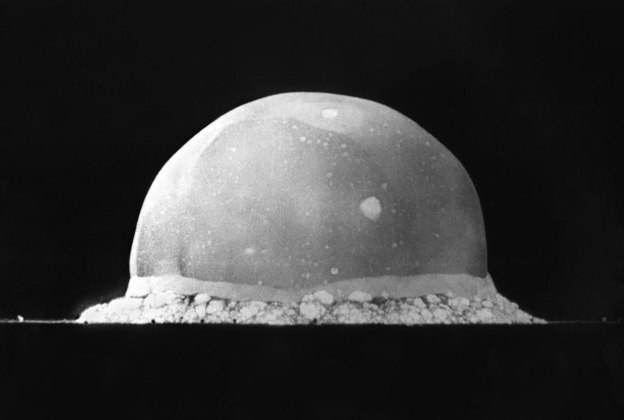
On 6 August 1945, the United States dropped an atomic bomb on the Japanese city of Hiroshima, killing 80,000 people in a single day, and tens of thousands more in the subsequent months. “If there is a hell,” survivor Ōiwa Kōhei recalled thinking of the aftermath, “it must be just like this.” Kōhei, 13-years-old at the time, was plagued for months by radiation poisoning, and forever by the psychological trauma. The hibakusha — the Japanese term for atomic-bomb survivors — “will not be with us for much longer, so it is essential that their irreplaceable living testimony should continue to be diligently and accurately recorded while it is still available”, writes historian Mordecai Sheftall. Their testimony must be preserved not for historical record, but so that current and future generations will take the lessons of their experiences to heart, says Sheftall.

Excerpt from Mordecai Sheftall, The Sun had fallen to Earth’ — a survivor’s recollection of the Hiroshima bombing, Nature, August 5, 2025

The Never-Ending Nuclear Arms Race

The United States Los Alamos National Laboratory (LANL) announced in October 2024 it had manufactured its first plutonium “pit”—used in the core of a thermonuclear warhead to initiate an nuclear explosion—since the United States largely halted such production in 1989. Under a nuclear arsenal modernization plan launched in 2008, the lab will scale up production to 30 pits per year, with an additional 50 to be produced annually starting in the mid-2030s at the Savannah River Site in South Carolina. But the work faces opposition from critics who say it could help fuel a new international nuclear arms race and also risks the health of workers and the environment. In September 30 2024, opponents won a ruling in federal district court in South Carolina when a judge ruled the U.S. Department of Energy failed to adequately consider other options for locating the production facilities. The judge is considering a request to pause production at LANL. The United States halted pit manufacturing in 1989 at the Rocky Flats Plant, near Denver, after an inspection revealed hazardous waste contamination.

Excerpt from U.S. resumes making nuke triggers, Science, Oct. 11, 2024

Who is Afraid of a Nuclear Weapons Ban?

The United States is urging countries that have ratified a U.N. treaty to ban nuclear weapons to withdraw their support as the pact has reached the 50 ratifications needed and will enter into force on January 22, 2021. The U.S. letter to signatories, obtained by The Associated Press, says the five original nuclear powers — the U.S., Russia, China, Britain and France — and America’s NATO allies “stand unified in our opposition to the potential repercussions” of the treaty.  It says the treaty “turns back the clock on verification and disarmament and is dangerous” to the half-century-old Nuclear Nonproliferation Treaty, considered the cornerstone of global nonproliferation efforts.

“Although we recognize your sovereign right to ratify or accede to the Treaty on the Prohibition of Nuclear Weapons (TPNW), we believe that you have made a strategic error and should withdraw your instrument of ratification or accession,” the letter says. The treaty requires that all ratifying countries “never under any circumstances … develop, test, produce, manufacture, otherwise acquire, possess or stockpile nuclear weapons or other nuclear explosive devices.” It also bans any transfer or use of nuclear weapons or nuclear explosive devices — and the threat to use such weapons — and requires parties to promote the treaty to other countries.

Beatrice Fihn, executive director of the International Campaign to Abolish Nuclear Weapons, the 2017 Nobel Peace Prize-winning coalition whose work helped spearhead the nuclear ban treaty, told The Associated Press Tuesday that several diplomatic sources confirmed that they and other states that ratified the TPNW had been sent letters by the U.S. requesting their withdrawal.  She said the “increasing nervousness, and maybe straightforward panic, with some of the nuclear-armed states and particularly the Trump administration” shows that they “really seem to understand that this is a reality: Nuclear weapons are going to be banned under international law soon.”…Fihn stressed that the entry into force of the treaty will be “a really big deal” because it will become part of international law and will be raised in discussions on disarmament, war crimes and weapons.”And I think that over time pressure will grow on the nuclear-armed states to join the treaty,” she said.

Excerpts from US Lobbies Against UN Nuke Treaty, Associated Press, Oct. 22, 2020