Tag Archives: voluntary carbon offsets

Another Laughingstock: Carbon Offsets

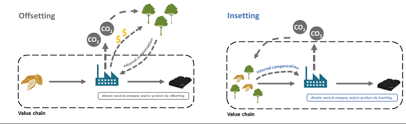
Carbon credits feature prominently in corporate climate strategies and have sparked public debate about their potential to delay companies’ internal decarbonisation. While industry reports claim that credit purchasers decarbonize faster, rigorous evidence is missing. This study (see below) provides an in-depth analysis of 89 multinational companies’ historical emission reductions and climate target ambitions. Based on self-reported environmental data and more than 400 sustainability reports, we find no significant difference between the climate strategies of companies that purchased credits and those that did not. Voluntary offsetting is not a central part of most companies’ climate strategies, and many pass credit costs directly onto their customers. While the companies within our sample retired one-fourth of all carbon credits in 2022, the top five offsetters’ expenditures on voluntary emission offsetting are, on average, only 1 percent relative to their capital expenditures.

Abstract from Niklas Stolz &  Benedict S. Probst, The negligible role of carbon offsetting in corporate climate strategies, Nature Communications,  Sept. 10, 2025

Indigenous Peoples against Netflix and Meta: Northern Kenya Rangelands Carbon Project

The Northern Kenya Rangelands Carbon Project managed by the Northern Rangelands Trust, a Kenyan nonprofit, is the world’s largest soil-carbon plan, its boosters say. Launched in 2012, it was designed to preserve some 4.7 million acres of grasslands to lock in carbon on land communally owned by the Maasai, Borana and other pastoralist groups, which is part of a network of protected areas hosting threatened species such as cheetahs, black rhinos and… giraffes.

On May 13, 2025, an international nonprofit , Verra, that certifies carbon credits suspended approval for the project, adding to the questions about the credibility of similar carbon-capture projects and whether they actually benefit the people who live off the land….A spokesperson for the group, Verra, said credits are now on hold as it reviews the program after a long-running dispute between the conservationists who created the rangelands project and local herders, who say the project disrupts grazing patterns built over the course of centuries…

The dispute reached a flashpoint in 2021, when 165 pastoralists from two conservation areas sued the Northern Rangelands Trust in Kenyan court for allegedly using their land without consent. The plaintiffs accused the trust of creating the conservancies—which acted as the herders’ representatives in the carbon deal—through pressure and intimidation rather than informed consent. The court ruled in their favor in January 2025.

Lawyers and rights groups representing pastoralists say the ruling, which applies to one of the biggest conservancies, invalidates around 20% of the entire project’s credits. They say credits in around half of the project’s 14 wildlife conservancies could be vulnerable to similar lawsuits. That could leave big corporations holding invalid offsets and open to charges from rights groups that they overstate their commitment to environmentally friendly practices.

The trust has sold over six million carbon credits, worth between $42 million and $90 million depending on market prices, to buyers including Netflix and Facebook parent Meta. Tech companies use credits to offset emissions from their energy-intensive operations, such as producing movies, running data centers to stream video, powering social media and training cutting-edge artificial-intelligence models, as well as from employee travel. Meta became carbon neutral—that is, it purchased enough credits to compensate for all of its emissions—in 2020, and Netflix followed suit two years later.

Excerpts from Caroline Kimeu, Netflix and Meta’s Carbon Credits Snared in Dispute With Maasai Herders, WSJ, May 13, 2025

See also Kenya: Landmark court ruling delivers devastating blow to flagship carbon offset project

Fraud and Manipulation in Voluntary Carbon Markets

The $2 billion voluntary carbon-offsets market has suffered allegations that many credits don’t deliver the emissions cuts they promise, but multiple efforts to rebuild credibility face an uphill battle. In 2023 the US Commodity Futures Trading Commission said it would make policing carbon offsets a priority. Nestlé decided to leave the market and standard setters published guidelines that few existing buyers would meet…“The offset industry’s inability to self-regulate has produced a slow-moving crisis,” said Danny Cullenward, research fellow at the Institute for Carbon Removal Law and Policy at American University. “Companies are asking whether the marketing benefits are worth the legal risks.”

Morgan Stanley estimated in February 2023 that that carbon offsets could be a $100 billion market by 2030. However, over the past year the market’s credibility has suffered after a series of allegations that credits aren’t delivering on their emissions-reduction promises. It has left many companies with cold feet.

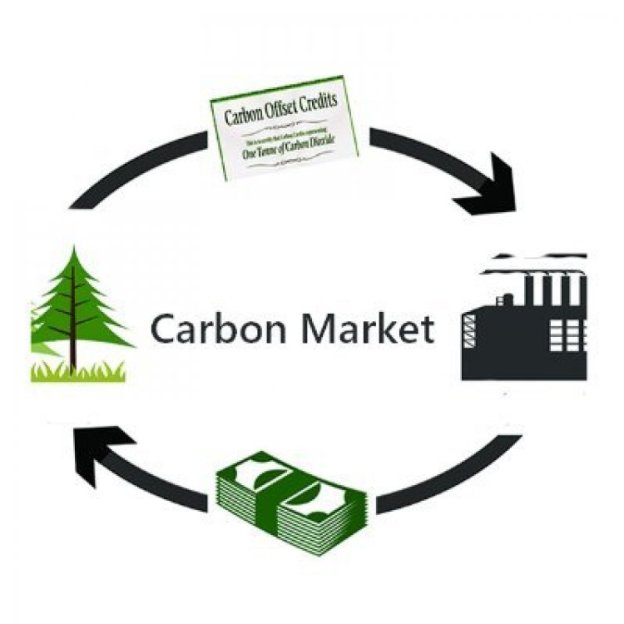
Each carbon credit is supposed to equal one metric ton of carbon dioxide avoided or removed from the atmosphere. Removal credits usually fund restoration projects such as tree planting, while the most common offset or avoidance credits fund energy-efficiency projects, renewable energy or protect forests. These so-called voluntary credits are separate and usually cheaper than government-regulated carbon trading that polluters pay for in the European Union and elsewhere. There are also some voluntary credits for mechanically removing CO2 directly from the air, which are currently much more expensive.

0In June 2023, the CFTC— the US federal regulator of derivatives—created an environmental task force focused on rooting out fraud in carbon markets. Earlier that month, the agency called for whistleblowers to expose misconduct. “As carbon credit markets continue to grow, we will act to foster the integrity of these markets by fighting fraud and manipulation,” CFTC Enforcement Director Ian McGinley said.

Excerpts from Dieter Holger, Rebuilding Trust in Carbon Offsets Faces Uphill Battle, WSJ, July 12, 2023

Buy Carbon Stored in Trees and Leave it There

For much of human history, the way to make money from a tree was to chop it down. Now, with companies rushing to offset their carbon emissions, there is value in leaving them standing. The good news for trees is that the going rate for intact forests has become competitive with what mills pay for logs in corners of Alaska and Appalachia, the Adirondacks and up toward Acadia. That is spurring landowners to make century-long conservation deals with fossil-fuel companies, which help the latter comply with regulatory demands to reduce their carbon emissions.

For now, California is the only U.S. state with a so-called cap-and-trade system that aims to reduce greenhouse gasses by making it more expensive over time for firms operating in the state to pollute. Preserving trees is rewarded with carbon-offset credits, a climate-change currency that companies can purchase and apply toward a tiny portion of their tab. But lately, big energy companies, betting that the idea will spread, are looking to preserve vast tracts of forest beyond what they need for California, as part of a burgeoning, speculative market in so-called voluntary offsets.

One of the most enthusiastic, BP PLC, has already bought more than 40 million California offset credits since 2016 at a cost of hundreds of millions of dollars. In 2019, the energy giant invested $5 million in Pennsylvania’s Finite Carbon, a pioneer in the business of helping landowners create and sell credits. The investment is aimed at helping Finite hire more foresters, begin using satellites to measure biomass and drum up more credits for use in the voluntary market.  BP has asked Finite to produce voluntary credits ASAP so they can be available for its own carbon ledger and to trade among other companies eager to improve their emissions math. As part of its shift into non-fossil-fuel markets, BP expects to trade offset credits the way it presently does oil and gas.“The investment is to grow a new market,” said Nacho Gimenez, a managing director at the oil company’s venture-capital arm. “BP wants to live in this space.”

Skeptics contend the practice does little to reduce greenhouse gases: that the trees are already sequestering carbon and shouldn’t be counted to let companies off the hook for emissions. They argue that a lot of forest protected by offsets wasn’t at high risk of being clear-cut, because doing so isn’t the usual business of its owners, like land trusts, or because the timber was remote or otherwise not particularly valuable.

If other governments join California and institute cap-and-trade markets, voluntary offsets could shoot up in value. It could be like holding hot tech shares ahead of an overbought IPO. Like unlisted stock, voluntary credits trade infrequently and in a wide price range, lately averaging about $6 a ton, Mr. Carney said. California credits changed hands at an average of $14.15 in 2019 and were up to $15 before the coronavirus lockdown drove them lower. They have lately traded for about $13.

These days, voluntary offsets are mostly good for meeting companies’ self-set carbon-reduction goals. BP is targeting carbon neutrality by 2050. Between operations and the burning of its oil-and-gas output by motorists and power plants, the British company says it is annually responsible for 415 million metric tons of carbon emissions.

Excerpts from Emissions Rules Turn Saving Trees into Big Business, WSJ, Aug. 24, 2020