Tag Archives: WWF coercive conservation

Ousting Indigenous Peoples is a Brutal Way to Protect the Environment

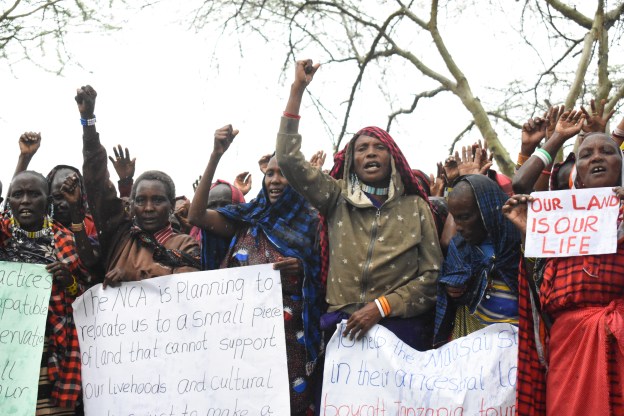
The government of Tanzania claims that the Maasai, the indigenous people of Tanzania,  present a threat to the ecosystem of the Serengeti National Park. The government says the seminomadic cattle farmers are a threat to the savannas and watering holes in an area that sustains the country’s money-spinning safari resorts and hunting reserves and, more recently, a swath of new carbon-credit projects.

To protect these areas, President Samia Suluhu Hassan’s government has outlawed human settlement there and begun evicting some of the more than 110,000 Maasai from the Ngorongoro Conservation Area—the vast zone of grass-, wood- and wetlands adjacent to the Serengeti that the Maasai have used for both herding and tourism for the past 65 years.

The area includes the famous Ngorongoro Crater, the world’s largest, fully-intact caldera and home of one of Africa’s densest populations of zebras, gazelles and other large mammals…The government argues that the number of Maasai living in Ngorongoro has expanded from just 8,000 in 1959, outpacing Tanzania’s overall population growth. The herders, along with their cattle, are overwhelming the area’s fragile ecosystem, it says. Similar warnings have been issued by the United Nations Educational, Scientific and Cultural Organization, or Unesco, which declared the Ngorongoro Conservation Area a World Heritage site in 1979.


But for the Maasai, the evictions are endangering a centuries-old way of life they say is much closer to nature than the rest of rapidly urbanizing Tanzania. They accuse the government of giving priority to revenue from foreign tourists, investors and conservation groups over the lives and livelihoods of some of its own citizens. ..Experts and activists focused on the rights of indigenous people say the Maasai are the latest group caught in the murky intersection of tourism, biodiversity protection and global climate goals. Similar conservation-related evictions have also targeted indigenous communities in the Brazilian Amazon and the Nouabalé-Ndoki rainforest in the Republic of Congo.

Revenue from tourism jumped 40% to $3.5 billion in 2023, about 17% of Tanzania’s gross domestic product, and according to government projections could reach $6 billion by 2025. The government has already set aside swaths of land around the Ngorongoro Crater previously reserved for the Maasai for the construction of a China-funded geological park, where tourists and researchers can explore fossils, rock paintings and other archaeological artifacts dating as far back as 4 million years ago. To the south of the Ngorongoro Conservation Area, a local company called Carbon Tanzania is selling carbon credits linked to about 273,000 acres of land that the Maasai have also used for grazing and limited cultivation. The project restricts the cutting down of trees but allows cultivation in some zones…

One of the most violent standoffs between the Maasai and Tanzanian authorities took place in mid-2022 in the grassy plains of Loliondo, about 100 miles west of Serengeti. Heavily armed police and rangers stormed Maasai villages, fired tear gas and live rounds, and bulldozed hundreds of houses as they sought to seize some 37,000 acres of land for a new game reserve. One police officer was killed by an arrow shot by the Maasai, authorities said. Many Maasai were wounded in the clashes, and thousands fled into neighboring Kenya to seek medical treatment. Dozens of others were arrested. After the mayhem in Loliondo, authorities appeared to have opted for a more tactical approach in neighboring Ngorongoro, closing down schools, water sources and hospitals to force residents out of homes, Maasai activists say.

Excerpts from Nicholas Bariyo, The Safaris and Carbon-Credit Projects Threatening the Serengeti’s Maasai, WSJ, Dec. 22, 2024

Surveillance for Conservation: the Smart Wildlife Parks in Africa

In 2010, Rwanda’s government partnered with international conservation group African Parks to manage the Akagera Park…African Parks, based in South Africa, is known for reviving troubled national parks. The nonprofit worked to strengthen Akagera’s security, brought in anti-poaching dogs, purchased better field equipment, and hired and trained more rangers. The number of patrols increased from about 1,500 in 2011 to more than 5,400 last year.

Since 2013, poaching has dropped dramatically, which led to a wildlife revival that once seemed inconceivable. In 2017 Akagera reintroduced 18 black rhinos from South Africa. In a conservation milestone, the first rhino calves were born in the park a year later. As for lions, seven were reintroduced to the park in 2015. Today there are at least 35 of them prowling Akagera’s highlands, grassy plains, and forests…The Howard Buffett Foundation even donated a helicopter to the Rwandan government for rhino patrols.

Fences, more patrols, and reintroductions are all part of the park-rehabilitation playbook, but Akagera is also using a distinctive new technology to help even the odds against poachers. In 2017, Akagera became the world’s first “Smart Park” when it tested and installed a telecommunications network called LoRaWAN, or Long Range Wide-Area Network for securely tracking and monitoring just about anything in the park. Poachers can potentially intercept the conventional radio signals parks use to track animals but the low-bandwidth LoRa signals are relayed on a private, closed network on various frequencies, making them harder to crack. The network also runs on solar energy and is cheaper than satellite tracking technology.

Akagera partnered with Dutch conservation technology group Smart Parks to install LoRa receivers on towers throughout the park. (Smart Parks is the result of a merger between the Shadow View Foundation and the Internet of Life.) LoRa sensors, which vary in size and can be small enough to fit in one’s hand, can then communicate with towers to track the location of rangers, vehicles, equipment, and more. In 2017 they collected more than 140,000 location updates per day. Next year the park plans to install 100 sensors to monitor tourist vehicles as well, says Hall.

Excerpt from AMY YEE , In Rwanda, Learning Whether a ‘Smart Park’ Can Help Both Wildlife and Tourism, Atlas Obscura, Nov. 24, 2020

Paper Parks, their Elephants and Marginal People

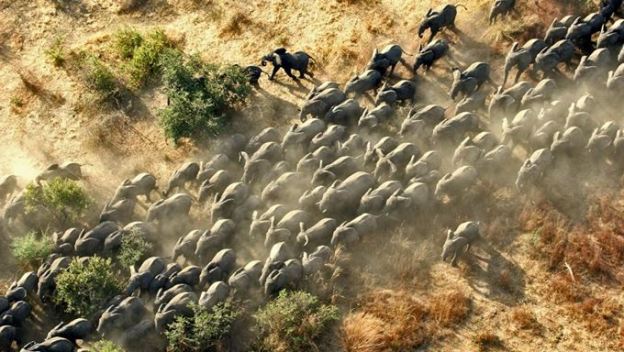
Since 2010 Chad has taken a step that other African countries are increasingly following. It handed management of its national park to an NGO. Since African Parks took over, the elephant population has begun to rise. In 2011 just one calf was born; in 2018, 127 were. The revival is emblematic of broader success that public-private partnerships (PPPs) are having in conserving some of the most precious parts of the planet.  Sixty years ago, when decolonization was sweeping the continent, the UN counted 3,773 “protected areas” in Africa and its surrounding waters. By 1990 the figure was 6,075; today it is 8,468. Some 14% of the continent’s land has been categorized as protected, according to the World Database on Protected Areas…

Most “protected areas” are “paper parks”, argues Peter Fearnhead, the chief executive of African Parks. In theory their demarcation denotes stewardship; in practice there is often very little care. Since its founding in 2000 the NGO has grown to manage 19 parks in 11 countries. It is the largest of an expanding number of ppp operators across the continent. The African Parks model relies on “three ms”, explains Mr Fearnhead: a clear mandate from a government (which keeps ownership of the area but hands over the running to the NGO); sound management; and money from donors such as the EU.

Zakouma is African Parks’ flagship operation. When it took over its management the priority was security. The national park was caught up in Chad’s civil conflicts in the 2000s, when rebel groups, some backed by Sudan, took on government forces. Janjaweed militias, notorious for mass murder and rape in Darfur, took advantage of the vacuum to slaughter Zakouma’s elephants and launch attacks on nearby villages.
The approach to security is a blend of low and high tech. It relies on residents of surrounding areas to alert it to poachers. Local intelligence is then combined with satellite tracking of the elephants. This helps anti-poaching rangers to know where to go.

Winning the support of people on the edge of the park has been crucial. Locals are happy to help report sightings of the Janjaweed, since they fear being robbed or murdered by them. African Parks also negotiates with nomads to ensure their caravans of camels do not go through the park.

Excerpts from Elephants’ graveyard no more: African governments are outsourcing their natural areas, Economist, Oct. 22, 2020