Monthly Archives: July 2024

How Europe Gave In to Musk Space X

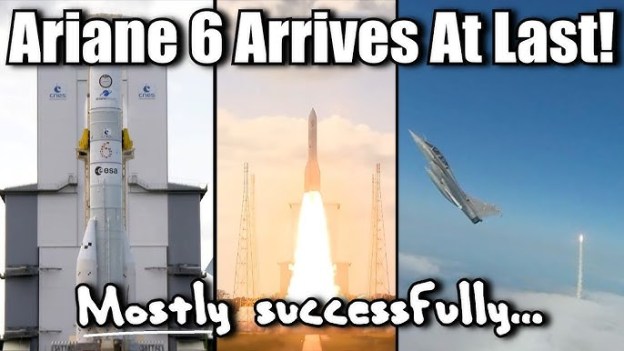
A new European rocket is poised to blast into space with a mission that officials here say is vitally important: reducing the region’s reliance on Elon Musk and SpaceX. Europe’s satellites and military intelligence have come to depend on the U.S. company after delays and malfunctions left the continent unable to get to orbit with its own rockets. Officials fear that dependence could extend to the battlefield: SpaceX’s Starlink internet service has been crucial for Ukraine to fight off Russia, fanning worries in Europe that its armies might also need Musk for satellite communications in a war.  Governments say the Ariane 6 rocket, operated by the European consortium Arianespace, will begin to change that equation. It is set to lift off from French Guiana on in July 2024, Europe’s first rocket to launch in a year.

“Clearly, we must deliver. We must restore autonomous access to space” for Europe, Stéphane Israël, chief executive of Arianespace, said in an interview.  With European rockets stuck on the ground, SpaceX stepped in to fill the void. Its Falcon 9 rocket has launched all of Europe’s most important satellites over the past year, including two that were supposed to be handled by Arianespace. The most recent blow came last month when Europe’s weather-satellite agency canceled a contract to launch in 2025 with Ariane 6 and hired SpaceX instead. The decision left European space officials crestfallen, with the head of the French space agency saying: “How far will we, Europeans, go in our naivety?”…

The rise of SpaceX has upended Europe’s rocket industry and its champion, Arianespace, which used to lead the world in commercial launch services. SpaceX’s mastery of reusable rocket technology has left Arianespace struggling to compete on price and more than a decade behind with its own reusable rocket.  The French government is the biggest backer of Arianespace and is aiming to keep the consortium in business amid doubts in Germany that it is still worth subsidizing. French officials say they fear the continent would be happy to let SpaceX keep launching for Europe. ArianeGroup, Arianespace’s parent company, is vital to what France calls its strategic autonomy because it has a military arm that provides the rocket technology for France’s nuclear arsenal.

Excerpts from Matthew Dalton, The Mission for Europe’s New Rocket: Challenge SpaceX, WSJ, July 8, 2024

Dior Handbags Made in Chinese Sweatshops of Italy

A series of raids in Italy in 2024 has exposed the contrast between the glamorous world of Milan’s catwalks and some of the realities of luxury-goods production. An investigation by Milan prosecutors into working conditions at local factories found workshops making handbags and other leather goods for Dior and Armani used exploited foreign labor to produce the high-end products at a fraction of their retail price.

Dior paid a supplier €53 apiece, roughly $57, to assemble a handbag that it sells in stores for €2,600, or about $2,780, according to documents examined as part of the probe….Some of the raided workshops, all of which were in Italy, were also making products for other fashion brands, prosecutors said. The Italian investigation highlights a distinctly modern issue in the luxury industry. While other sectors have moved manufacturing to China and other low-wage countries, many luxury brands kept production closer to home, believing it was crucial to their appeal.

But despite being stamped with the “Made in Italy” label, prosecutors allege that some luxury goods are made by foreign workers, many of whom are Chinese, under conditions that fall far short of legal standards. As a result of the Italian investigation, judges in June 2024 placed Manufactures Dior SRL—a unit of Dior—under so-called court administration after ruling that its supply chain included Chinese-owned firms in Italy that mistreated migrant workers.

Excerpts from Nick Kostov, Raids Find Luxury Handbags Being Made by Exploited Workers in Italy, WSJ, July 2, 2024

How Boeing Maimed Itself and Killed 346 People

Spirit AeroSystems is going full circle, from part of Boeing till 2005 to independent supplier in 2005 (when Boeing sold to a private equity firm) and back to part of Boeing in 2024. It is the perfect example of a realization dawning on corporate America: Outsourcing isn’t all it was once cracked up to be. The deal’s logic of vertical reintegration makes sense in light of recent history, with air-travel safety likely benefiting from centralized supervision and a simpler workflow between plants. Yet it is also an indictment of what executives in most industries have been doing for almost three decades….’

At the core of the outsourcing trend that lasted 30 years was the idea that an “asset-light” firm focused on intellectual property and its “core” expertise would be better run. With this mindset, jettisoning aerostructures operations seemed like a no-brainer….
It wasn’t just aerostructures: In the 2000s, Boeing outsourced more than 70% of the 787 Dreamliner program. But the problems with becoming an assembler of planes, as opposed to a true manufacturer, gradually became apparent. The company lost control of supply, resulting in years of delays and cost overruns…

Aerospace isn’t the only industry to revive vertical integration. Intel is beefing up chip manufacturing in the U.S., General Motors is building battery plants and Sweden’s IKEA is acquiring containerships. One general flaw of the asset-light model is that, over time, firms can lose their innovative edge because a lot of “learning by doing” happens when production processes interact. Another is that low-margin bits of the supply chain get worn down to just a few sources. These may not have the financial muscle to make big investments in times of turmoil, or they may be geopolitically sensitive. Such risks were underscored by post-Covid shortages, particularly in the largely “fabless” U.S. microchip industry, which has outsourced chip making to foundries in East Asia in a way that echoes what happened to aerostructures.

Excerpts from Jon Sindreu, Boeing Calls Time on the Great American Outsourcing, July 2, 2024

The Race for Fusion: US v. China

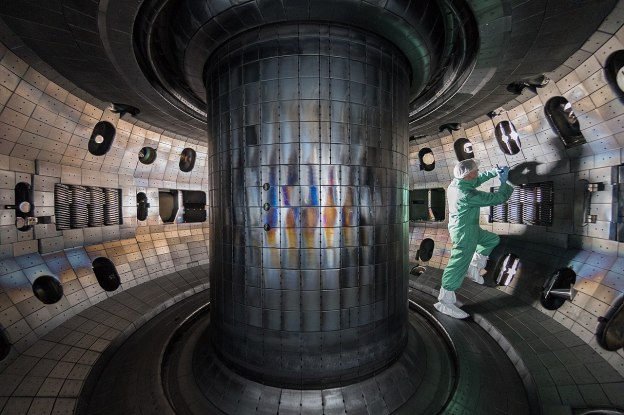
A high-tech race is under way between the U.S. and China as both countries chase an elusive energy source: nuclear fusion.  China is outspending the U.S., completing a massive fusion technology campus and launching a national fusion consortium that includes some of its largest industrial companies. Crews in China work in three shifts, essentially around the clock, to complete fusion projects.

The result is an increasing worry among American officials and scientists that an early U.S. lead is slipping away. JP Allain, who heads the Energy Department’s Office of Fusion Energy Sciences, said China is spending around $1.5 billion a year on fusion, nearly twice the U.S. government’s fusion budget. What’s more, China appears to be following a program similar to the road map that hundreds of U.S. fusion scientists and engineers first published in 2020 in hopes of making commercial fusion energy. “They’re building our long-range plan,” Allain said. “That’s very frustrating, as you can imagine.”

China already has a fast-growing nuclear-technology industry and is building more conventional nuclear power plants than any other country. The country’s nuclear-plant development will give it an advantage when commercial fusion is reached, according to a report released last month by the Information Technology and Innovation Foundation, a Washington, D.C.-based think tank with backers that include big tech companies…

The Chinese Academy of Sciences’ Institute of Plasma Physics in the eastern Chinese city of Hefei in 2018 broke ground on a nearly 100-acre magnetic fusion research and technology campus. The facility is expected to be completed in 2025 but is already largely operational and focused on industrializing the technology. In 2023 China said it would form a new national fusion company, and said the state-owned Chinese National Nuclear Corp. would lead a consortium of state-owned industrial firms and universities pursuing fusion energy. Among the largest efforts by a private Chinese company are those of ENN, an energy conglomerate, which created a fusion division from scratch in 2018. Since then, ENN has built two tokamaks, the machines where fusion can happen, using powerful magnets to hold plasma. ENN’s fusion work isn’t well-understood outside of China and its pace of development would be difficult to replicate in the U.S. or Europe.

Excerpts from Jennifer Hiller, China Outspends the U.S. on Fusion in the Race for Energy’s Holy Grail, WSJ, July 9 2024

Elites and Those Who Work for Them: The Discrimination Scandal at Davos Economic Forum

The Davos World Economic Forum’s board is working with a global law firm to investigate its workplace culture, weeks after The Wall Street Journal revealed allegations of harassment and discrimination at the organization behind the elite Davos gatherings. Based on interviews with more than 80 current and former employees, the Journal reported on June 29, 2024 that the Forum has allowed to fester an atmosphere hostile to women and Black people, with some alleging sexual harassment, pregnancy-related discrimination and racial discrimination. 

Excerpt from Shalini Ramachandran, World Economic Forum Opens Board Probe of Workplace Culture, WSJ, July 19, 2024

Who Will be the First to Colonize the Solar System?

A Chinese spacecraft touched down on grasslands in China’s Inner Mongolia region in June 2024, carrying the first-ever rock samples from the far side of the moon. A scientific breakthrough in itself, the success also advanced China’s plan to put astronauts on the moon by 2030 and build a lunar base by 2035. Such momentum is worrying American space officials and lawmakers, who have their own ambitions to build moon bases.

Unlike the original space race between the Americans and the Soviets, the goal of the U.S. and China isn’t just to make a short trip to the moon. It is to build permanent human outposts on its most strategic location, the lunar south pole. And as both nations gear up to build stations there one day, it is looking likely that tensions in orbit will mirror those on Earth.

Some U.S. officials fear China is planning a land grab. Chinese officials suspect the same of the Americans and are teaming up with Russia and other friendly nations for its south-pole outpost. The successful completion of the Chang’e 6 mission shows that, by one measure, China is ahead for now. Its lunar program has now soft-landed on the moon four times since 2013, the latest mission scooping up rocks near the south pole with robotic arms…

Meanwhile, after a decades-long moon-landing hiatus, two U.S. companies this year launched lunar-surface missions under NASA contracts. One lander tipped on its side after touching down. The other didn’t try to land because of technical problems. At least two more private missions, with funding from NASA, are slated to try to get to the moon later this year….All this is piling pressure upon the world’s most storied space agency. Through its Artemis exploration program, the National Aeronautics and Space Administration plans to conduct multiple landings in the coming years, develop a logistics station in lunar orbit and eventually build permanent camps on the moon’s surface. But Artemis has faced repeated delays and cost overruns while relying on a complex mix of government workers and private contractors…

“Unlike the U.S.-Soviet space race of the 20th century, this new round of competition centers on the water ice at the lunar south pole, with its extraction and use as a common goal,” wrote four scientists affiliated with China’s Academy of Sciences in a paper published in May. “The ability to collect and utilize lunar resources is a mark of national prestige and geopolitical influence. “We’re talking about colonizing the solar system,” said Greg Autry, a NASA official during the Trump administration.

Excerpts from Stu Woo, Historic Moon Mission Moves China Ahead in Space Race With U.S., WSJ, June 25, 2024

Who Terrifies an American President?

Though tensions between Iran and the U.S. have ratcheted up since the Oct. 7, 2024 attacks on Israel by Tehran-backed Hamas, exports from Iran surpassed 1.5 million barrels a day in 2024 starting in February, substantially more than at the start of the Biden presidency. Most of that oil is bought by small Chinese refineries at discounted prices. The U.S. and its allies have been “very, very careful not to go too far and damage the ability of Western economies to function,” when it comes to sanctions, said John Smith, partner at Morrison Foerster and former head of the U.S. Treasury Department’s Office of Foreign Assets Control.

U.S. diplomats and energy officials have for decades worked around the globe to keep oil flowing, often involving uncomfortable alliances and accommodations. When the Treasury department hit Moscow with a wave of sanctions on June 12, 2024 over the Ukraine war, it targeted banks but left the country’s oil industry largely untouched. There is frustration among some staffers in the U.S. Treasury Department over the lack of action against oil-trading networks that ferry Russian and Iranian oil, including one that officials are currently investigating, according to U.S. diplomats and some of the energy-industry players briefed by current officials. The network is operated by a little-known trader from Azerbaijan who emerged as the premier middleman for Russia’s Rosneft Oil, The Wall Street Journal reported.

When the Treasury imposed sanctions on Russia’s state tanker owner, Sovcomflot, it also issued licenses exempting all but 14 of the company’s fleet, which data provider Kpler estimates totals 91 ships. Industry players said the exemption licenses were a green light to oil traders to do business with those ships, minimizing the risk that they would be targeted by future sanctions. The National Economic Council, led by Lael Brainard, and others within the administration worried that broader measures would lead to logistical problems in the oil market and boost inflation, said people familiar with the matter. Rising oil output from sanctioned countries is one reason crude prices have fallen from their highs earlier this year, analysts said…

In another example of the collision of foreign and energy policies, earlier this year, Washington asked Ukraine to stop attacking some Russian refineries with drones after the damage rattled global diesel and gasoline markets….

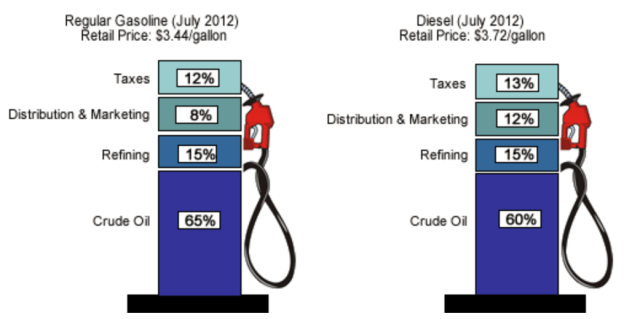
“Nothing terrifies an American president more than a gasoline-pump price spike,” said Bob McNally, president of consulting firm Rapidan Energy Group and former White House policy official under George W. Bush. “They will go to great lengths to prevent this, especially in an election year.”

Excerpts from Anna Hirtenstein et al., Biden Wants to Be Tough With Russia and Iran—but Wants Low Gas Prices Too, WSJ, June 26, 2024