Monthly Archives: February 2025

The Real Green Energy Transition: Mining Minerals from Plants

Worries about China’s domination of critical minerals are driving Western scientists and companies to embark on increasingly novel ways to develop alternative sources. One such effort seeks to exploit a quirk of nature: Certain plants, called hyperaccumulators, absorb large quantities of minerals, like nickel and zinc, from the soil. Cultivating these plants, and then incinerating them for their metal, could provide U.S. companies with a small stream of domestically sourced minerals—without the expense and environmental destructiveness of conventional mining….At a greenhouse in Amherst, MA, scientists undertake gene editing to build a new fast-growing, nickel-absorbing oilseed plant. If successful, the plant could be used to harvest the metal from mineral-rich soils in states such as Maryland and Oregon…

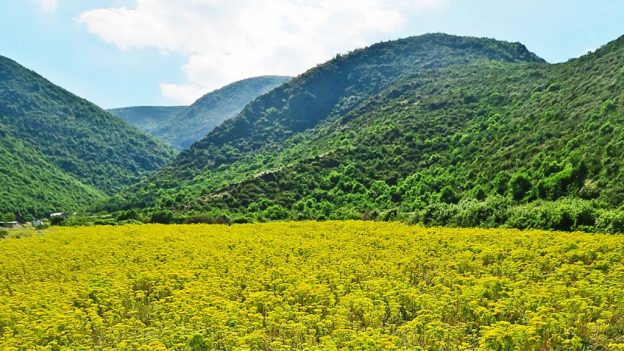
Some 10 million acres of barren, nickel-rich soil are scattered around the U.S. In such areas, concentrations of minerals are generally too low to justify large-scale mining, but could offer opportunity for inexpensive nickel farming. In the case of nickel phyto-mining, as such efforts are known, the plants are dried and incinerated, leaving an ashy nickel concentrate. This concentrate can then be further purified and turned into battery-grade material.

To be sure, phytomining is small in scale. Companies in the field are targeting harvests of around 300 pounds of nickel per acre per year, roughly enough for six EV batteries. But the funding for nickel-farming plants is one small piece of a broad effort by the U.S. government to develop secure supplies of the minerals that are needed for defense and cutting-edge industry, and are an area where China is dominant.

Excerpt from Jon Emont, The New Weapon Against China’s Mineral Dominance: Plants, WSJ,  Jan. 25, 2025
The Shadow War: Cutting Underwater Data Cables

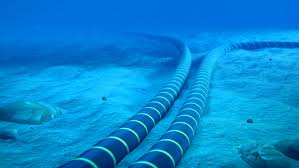
The North Atlantic Treaty Organization (NATO) mounted its first coordinated response to the suspected sabotage campaign against critical infrastructure, after another underwater data cable was severed in the Baltic Sea in 2025. NATO vessels raced to the site of a damaged fiber-optic cable in Swedish waters on January 26, 2025 where a trio of ships carrying Russian cargo, including one recently sanctioned by the U.S., were nearby. All three vessels are now being investigated as part of a probe into suspected sabotage of the fiber optic cable.

The incident is the latest in a string of alleged underwater attacks in the region that prompted NATO to announce earlier this month the formation of a surveillance mission called Baltic Sentry. It includes regular naval patrols, as well as enhanced drone, satellite and electronic surveillance of Baltic areas that are crisscrossed by critical infrastructure such as data and power cables, along with gas pipelines and offshore wind farms…Under international maritime law, a ship in international waters is under the jurisdiction of the country of its registration and can be boarded by foreign enforcement officials only with explicit permission of its owner or flag country. The captain of the Pskov, one of the ships suspected to have cut the undersea cables, cited the international law of the sea when he argued against an official request to steer his ship into a port in Finland…

In December 2024, Finland detained a vessel called Eagle S, an oil tanker belonging to Russia’s shadow fleet that is registered in the Cook Islands, on suspicion that it had deliberately used its anchor to cut a power cable connecting Finland and Estonia. In a midnight raid, Finnish special forces dropped from a helicopter onto the deck of Eagle S and captured the ship and its crew, which have since been detained in a Finnish port. 

In November 2024, an investigation was launched against a Chinese bulk carrier called Yi Peng 3, which cut two data cables in the Baltic after dragging its anchor for several hours, according to investigators. The vessel was loaded with Russian fertilizer. The probe continues. 

Excerpt from Bojan Pancevski, Suspected Sabotage of Deep-Sea Cable Triggers First NATO-Led Response, WSJ, Jan. 27, 2025

Bureaucracy Against Biodiversity

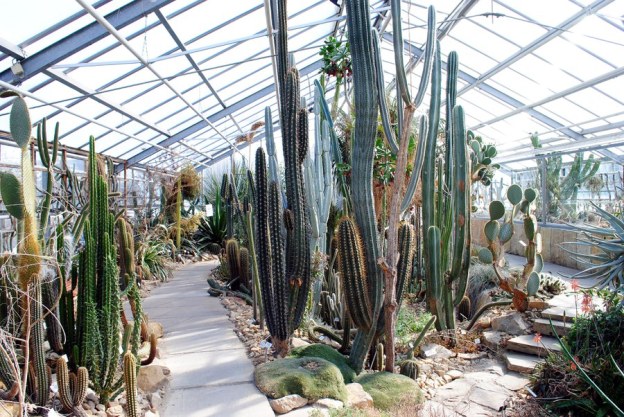
Botanic gardens around the world are struggling to find the space to conserve rare plants and save endangered species. “They can’t all fit,” said Brockington. Cambridge University Botanic Garden, for example, is home to more than 8,000 species. “That’s more than a tropical country like Vietnam, growing in a tiny little acreage of Cambridge.”…Threatened plants must compete for space in botanic gardens with beautiful, famous – but less endangered – flowers, trees and landscapes that will attract visitors and inspire people to learn about gardening and the natural world….The first botanic gardens were founded during the colonial era, and almost all are located in the west. In the past, botanists from these gardens would engage in “extractive, colonial-type practices”, visiting poorer nations to “pull out whatever plants they or their rich patrons were interested in, bring them back and cultivate them,” Brockington said.

In 1993, a United Nations Convention on Biological Diversity attempted to stop this by assigning sovereignty over biodiversity to national governments, enabling states to “own” the genetic material within their geopolitical boundaries…But this is hampering efforts of gardens to collect endangered plants in the wild, and exchange seeds and plant material to protect threatened species from extinction. To maintain diversity and preserve the world’s living collections, plants must be regularly replaced or propagated. But since the convention was introduced in 1993, the number of plants in botanic gardens collected from the wild has halved.

“Political boundaries do not help us share material and collectively steward the world’s most threatened biodiversity,” Brockington said. Brexit, for example, has been “catastrophic” for exchanges of plant material between European botanic gardens, he said. “The bureaucracy of seed exchange can be so costly now, it would be cheaper for our staff to personally fly to somewhere like Sweden, with a legal amount of seed, than send it by post.”…Brockington wants the world’s botanic gardens to collaborate to safeguard plant populations by creating one big “meta collection”, where individual specimens of an endangered wild species are extensively cultivated in multiple institutions.

Excepts from  Donna Ferguson, The risk of extinction is accelerating’: world’s botanic gardens raise alarm with space to protect endangered plants running out, Guardian, Jan. 25, 2025

Like a Lamb to the Slaughter: DeepSeek Collects Personal Data–Nobody Cares

Amid ongoing fears over TikTok, Chinese generative AI platform DeepSeek says it’s sending heaps of US user data straight to its home country, potentially setting the stage for greater scrutiny. The United States’ recent regulatory action against the Chinese-owned social video platform TikTok prompted mass migration to another Chinese app, the social platform “Rednote.” Now, a generative artificial intelligence platform from the Chinese developer DeepSeek is exploding in popularity, posing a potential threat to US AI dominance and offering the latest evidence that moratoriums like the TikTok ban will not stop Americans from using Chinese-owned digital services…In many ways, DeepSeek is likely sending more data back to China than TikTok has in recent years, since the social media company moved to US cloud hosting to try to deflect US security concerns “It shouldn’t take a panic over Chinese AI to remind people that most companies set the terms for how they use your private data” says John Scott-Railton, a senior researcher at the University of Toronto’s Citizen Lab. “And that when you use their services, you’re doing work for them, not the other way around.”To be clear, DeepSeek is sending your data to China. The English-language DeepSeek privacy policy, which lays out how the company handles user data, is unequivocal: “We store the information we collect in secure servers located in the People’s Republic of China.”

In other words, all the conversations and questions you send to DeepSeek, along with the answers that it generates, are being sent to China or can be. DeepSeek’s privacy policies also outline the information it collects about you, which falls into three sweeping categories: information that you share with DeepSeek, information that it automatically collects, and information that it can get from other source…DeepSeek is largely free… “So what do we pay with? What… do we usually pay with: data, knowledge, content, information.” …

As with all digital platforms—from websites to apps—there can also be a large amount of data that is collected automatically and silently when you use the services. DeepSeek says it will collect information about what device you are using, your operating system, IP address, and information such as crash reports. It can also record your “keystroke patterns or rhythm.”…

Excerpts from John Scott-Railton, DeepSeek’s Popular AI App Is Explicitly Sending US Data to China, Wired, Jan. 27, 2025