Since the 1960s, Canada’s nuclear power plants have generated more than two million bundles of highly radioactive used fuel. And they’re all still stored on the sites of the plants that produced them.But the pace of finding a site to store Canada’s most potent radioactive waste permanently is about to pick up. Twenty Canadian communities have said they’ll consider volunteering to host the storage site. That list is about to close. The Nuclear Waste Management Organization, whose job it is to find and build the site, will stop taking new names on Sept. 30, 2012. The impending cut-off is ratcheting up the pressure on the technocrats charged with selecting a site; on the boosters who want to snare the multi-billion-dollar repository for their community; on the activists who harbour deep suspicions about safety; and on the aboriginal leaders who say they’ve been cut out of the process….
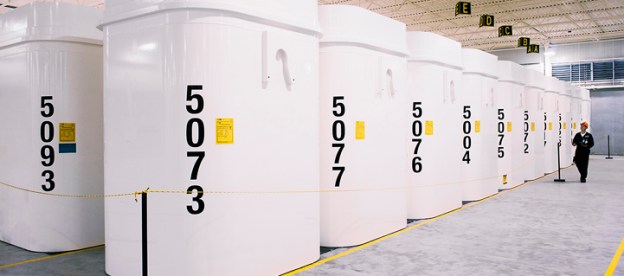
A fuel bundle for a Candu nuclear power reactor is about the size of a fireplace log. As of June 30, 2011, Canada had 2,273,873 used fuel bundles stored at its nuclear plants in Ontario, Quebec and New Brunswick. Another 85,000 or so have been added since then. In total, they’d fill about six NHL hockey rinks, stacked up as high as the boards.
The Nuclear Waste Management Organization, formed by the three electric utilities that run nuclear reactors, wants to bury the waste deep underground in caverns excavated from stable rock, where it can lie undisturbed forever. The depth will probably depend on the site’s geology. A facility proposed to hold less-potent radioactive waste at the Bruce nuclear site near Kincardine will be 680 metres deep. By comparison, the CN Tower is 553 metres tall. The NWMO is looking for a “willing” community to agree to take the $16-to-$24-billion project. The host community itself will decide how to define “willing.” Candidate communities will have multiple opportunities to withdraw if they get cold feet, the NWMO says. As it moves through a nine-stage selection process, the NWMO hopes to have narrowed the field to one or two communities by 2015, then spend until about 2020 deciding on a specific site within the chosen community. After that, it will take three to five years to do an extensive environmental assessment of the site. The proponents will also have to satisfy the Canadian Nuclear Safety Commission that their plan makes sense, and obtain a license to construct and operate the facility. Then, it will take six to 10 years to build. The NWMO doesn’t expect the first bundles to be stored until 2035. The plan is to seal the waste in sturdy, radiation-proof containers and store it deep in a stable rock formation where — even if the containers were to crack and leak — there’s be no danger of contaminating groundwater used by humans. (Although that’s the current strategy, the NWMO says it would consider a different plan if compelling evidence emerged that another technique is superior.)
Current designs call for surface buildings and facilities to cover about 100 hectares (250 acres), says the NWMO’s Michael Krizanc. “As well, there may be a need to limit activities in the immediate area surrounding the surface facilities in order to meet regulatory or other requirements.” Underground, the excavated caverns will cover an area of about 2.5 kilometres by 1.5 kilometres. That’s 375 hectares, or 930 acres. “The NWMO would need to have rights to the land above the repository,” says Krizanc, but “alternative uses could be considered, with the community, for portions of the land.”….
Meanwhile in Saugeen Shores, a lively battle is under way as members of a citizens group dubbed save Save Our Saugeen Shores, or SOS, fights what they see as an attempt to impose the waste site on their community on the shore of the Great Lakes….SOS also worries that U.S. power plants might be able to force Canada to take U.S. nuclear waste in a Canadian waste site, through terms of the free trade agreement between the countries…..Up in Elliot Lake, contractors Stephen Martin and Marc Brunet can’t wait for the project to start….Elliot Lake has been identified with uranium since its founding, he shrugs: “We’re the uranium capital of the world…. This thing will be a tourist attraction. I think it’s the best thing that could happen.”
John Spears, Nuclear waste seeks a home, Toronto Star, Sept. 1, 2012
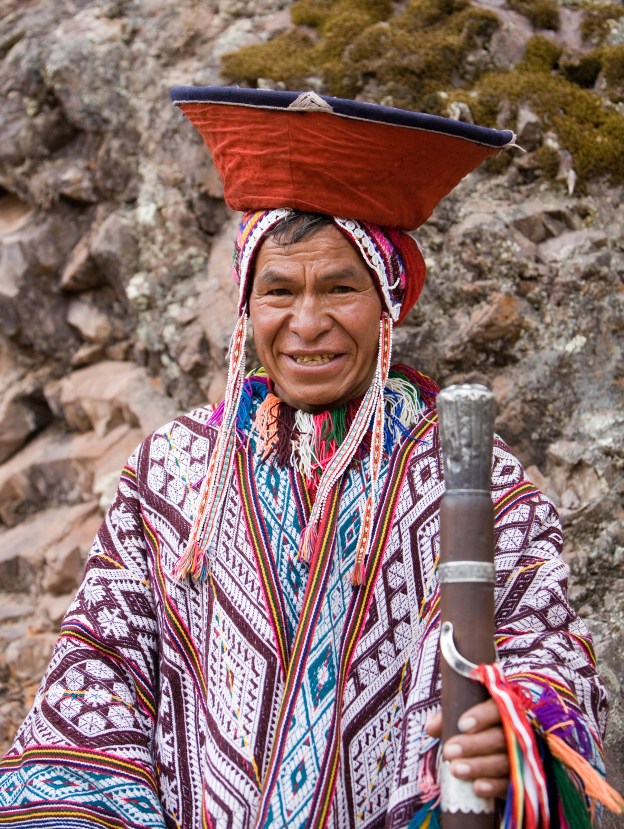
 Peru’s official human rights ombudsman, Defender of the People Eduardo Vega, is set to convene the first the first “prior consultation” with Amazonian indigenous peoples on oil development in their territory, under terms of a new law passed earlier this year setting terms for the process. The consultation concerns a planned new round of oil contracts planned for Bloc 1AB, currently held by Argentine firm Pluspetrol, in the watersheds of the Pastaza, Corrientes and Tigre rivers in the northeast of Loreto region. The Regional Organisation of Indigenous Peoples of the East (ORPIO), with an office in the city of Iquitos, it to represent the impacted indigenous peoples. Vega pledged the process would be carried out “with the utmost clarity so that rights of the indigenous peoples will be respected and the same process can serve for other consultations that will subsequently be carried out.” But after years of conflict over resource extraction in the region and accusations of broken promises by the government, many indigenous residents remain skeptical about the process.