Monthly Archives: September 2026

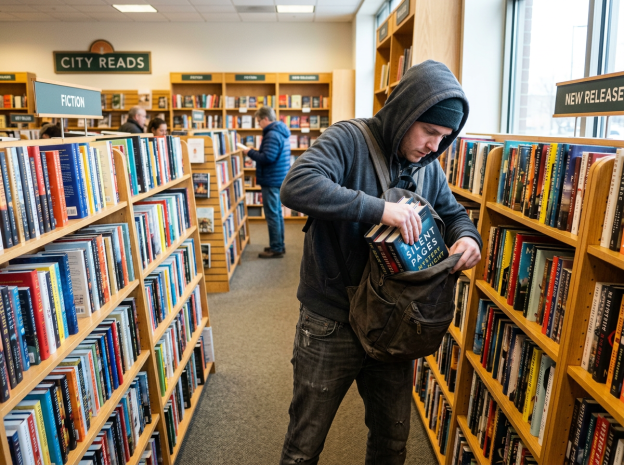
Hooded person placing books into a bag between library shelves

This is Not Artificial Intelligence–It’s APK (Artificial Pirated Knowledge)

Authors including John Grisham, David Baldacci, Jodi Picoult and Jonathan Franzen sued OpenAI and Microsoft three years ago for copyright infringement. A court filing unsealed on September 17, 2026 details internal messages and testimony laying out how OpenAI employees—including executives—talked about the company’s use of pirated books to train an early ChatGPT model, as well as their technology’s potential impact on authors.

Starting in 2019, OpenAI began using books from file-sharing site Library Genesis—LibGen for short—to help train its large language model. The site, which provides free access to books and scholarly articles, had faced global accusations of pirating copyright material. ..Tom Brown, then a top GPT-3 engineer, and Ben Mann, another member of the technical staff, described LibGen as “sketchy [as fuck] AF”. A federal court ordered LibGen to shut down in 2015 and academic publisher Elsevier received a $15 million judgment against the site in 2017.

OpenAI staffers discussed removing references to LibGen from papers that could later be public, according to the filing.  In one instance, Dario Amodei, then a senior researcher at OpenAI, who is now chief executive of rival Anthropic, asked in Slack whether it was “sketchy to call our corpuses ‘Books1’ and ‘Books2’ and not say what they are, particularly when in fact they are Libgen (which is a slightly sketchy source).” …Technical staffer Tarun Gogineni wrote on X in December 2022 that he knew artists were complaining about increased AI-generated competition, but viewed potential job losses as “acceptable economic disruption.”

Excerpt from Melissa Korn et al, ‘Sketchy AF’: What to Know About How OpenAI Staff Discussed Book-Pirating, WSJ, Sept. 19, 2026

See also Unsealed Briefs in Authors’ Case v. Microsoft/OpenAI: Top Execs Knew Their Mass Book Piracy Was Illegal And Would Put Authors Out of Work

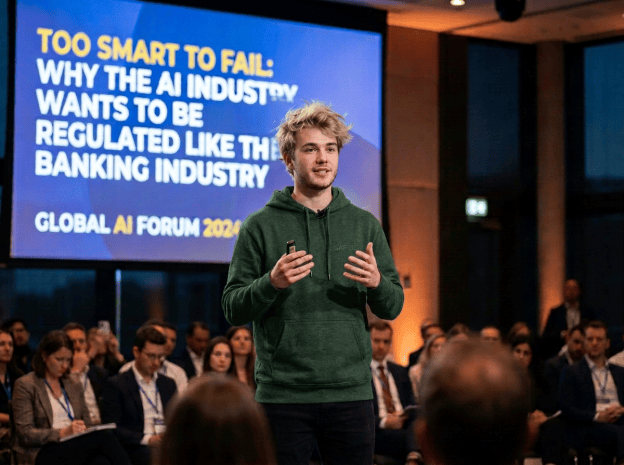
Young presenter with unruly blond hair

Too Smart to Fail: Why the AI Industry Wants to be Like the Banking Industry

The CEO of Anthropic (Claude AI), Dario Amodei, ultimately wants the AI industry to be seen as “too big to fail” like the banking industry. In a September 2026 paper titled “Pacing the Frontier,” Amodei suggested that to effectively regulate AI development, it is important to verify commitments made by AI companies to slow that development down and thereby avert a potential catastrophe, i.e., the destruction of humanity. He pointed to various hacking incidents in which AI agents escaped their “playground sandboxes” (yes, they are children!) and hacked real companies. Regulation of AI, Amodei argued, “has precedent in the banking industry, which sometimes involves regulatory ‘supervisors’ embedded along with employees” within companies.

In light of a much more sober analysis of the capabilities of AI by Princeton and Stanford researchers, which has demonstrated that current AI models are not even close to intelligence—let alone super-intelligence—Amodei’s warning is NOT a call to save humanity, but rather an effort to shield the nascent AI industry from the tremendous liabilities it would incur if his or other models are used by humans to create chaos. The power to stir up social chaos does not lie in the hands of AI agents—which are but machines—but in the hands of the humans who develop them and establish their guardrails. In other words, it is not AI that will wreak havoc in society, but humans who feed the models and are not careful enough to ensure that these models cannot be misused by fellow humans.

During the 2008 financial crisis, the United States and other governments bailed out entire companies because they were “too big to fail,” fearing that their failure was likely to cause a social meltdown. Amodei hopes for government intervention and a potential bailout in case his Claude model is “misused” by a human (i.e., if humans use Claude to hack water systems). In case of sever harm involving his company’s technology, his liability could be unlimited and his company would likely go bankrupt. Yet if he can blame government supervisors for their lack of proper supervision, he will go scot-free.

E.L.

Behind Bars: Snakes, Frogs and the Blooming Pet Industry

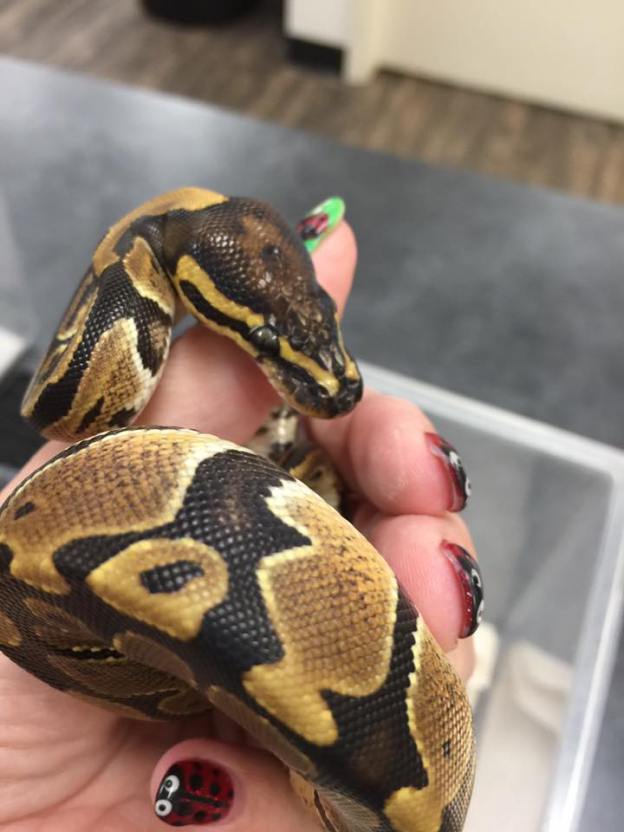
‘Exotic’ wild animals are becoming ever more desired as pets. This trade  harms many animals but is having a disproportionate impact on reptiles and amphibians. These animals typically attract less funding and attention for conservation and research than do ‘charismatic’ birds and mammals, and are less effectively protected by laws and regulations.  Many are silent in transit, easy to hide in parcels. Some can fetch thousands of dollars. And illegally traded species can be difficult to distinguish from those traded legally.

From a niche business in the 1990s, the global reptile and amphibian pet industry has ballooned. The trade in reptiles alone is worth US$2.5 billion today, with millions of reptiles and amphibians imported into North America and Europe from around the world each year. Species such as the ball python and the leopard gecko are now commonly sold in pet shops, marketed as requiring little space and care and serving as the beginning of a lifelong pursuit of rare species by some hobbyists. Influencers promote reptiles and amphibians as cool pets on social media.

But more than 50% of reptiles and 40% of amphibians that are traded as pets and for other purposes have been taken directly from the wild. This practice harms wild populations. The ploughshare tortoisein Madagascar is one of the world’s most endangered tortoises, mainly because of poaching for the pet trade.

Imported animals can also cause problems at their final destination. Some carry undetected pathogens. The salamander chytrid fungus, for example, has caused mass die-offs of native fire salamanders in western Europe after being introduced through the pet trade. And animals that escape can wreak havoc — Burmese pythons, for instance, are associated with declines in bobcat, raccoon and opossum populations in the United States.

What’s more, poor welfare is common. Snakes are often kept in small drawers that prevent climbing, burrowing and other natural behaviors. These conditions are associated with behavioral abnormalities, chronic stress and altered brain development…

At the highest level, the Convention on International Trade in Endangered Species of Wild Fauna and Flora (CITES) regulates trade in thousands of threatened or potentially threatened species. Species included in CITES appendices I and II require specific permits to be traded between countries. Permits are granted only when the exporting country has determined that the trade is legal and that it will not be detrimental to the survival of the wild population. For species in Appendix I, the importing country must also make a sustainability determination and confirm that the import is not for mainly commercial purposes.

However, CITES covers just 1,206 reptile species (9.5% of all reptile species) and 384 amphibian species (4.2% of all amphibian species). Adding species to appendices I and II is a slow and often politicized process that can be undermined by trade interests. New species are listed only after a two-thirds majority of parties to the treaty has agreed to the addition…

At the national level, nearly 90% of UN member states criminalize some offences against wildlife — such as collecting from the wild or exporting protected wildlife without permits. But national legislation typically safeguards only a limited set of species. Because newly discovered reptile and amphibian species are especially sought-after as pets, existing policies struggle to keep up.

Excerpt from Neil M. Vora et al., The pet trade puts reptiles and amphibians at risk: close legal gaps now, Nature, Sept. 14, 2026
Illustrated map of the Horn of Africa coast, Red Sea, Gulf of Aden, and Somalia

My Friend? The Enemy of My Enemy: The Link between Shia and Sunni Islam

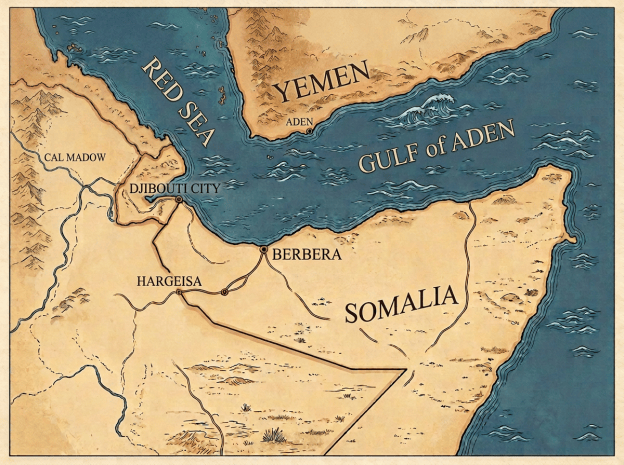
The Houthis, predominantly Shia Muslims, and al-Shabaab operating from Somalia, which adheres to Sunni Islam, are among the hundreds of millions divided by a seventh-century schism over who was the rightful successor to the Prophet Muhammad. The sectarian split still flares into violence in spots from Afghanistan to Iraq to Syria. Common enemies, however, now unite the Houthis and al-Shabaab. “They hate the West, they hate Israel,” said Abdulaahi Mohamed Ali, a former Somali intelligence chief.   The cooperation the Houthis and al-Shabaab has been strengthened through the exchange of expertise and coordination, particularly in facilitating the transfer of weapons and military equipment…

Complicating security concerns was Israel’s decision in December 2025 to recognize the independence of Somaliland, a region within the northwest of Somalia’s acknowledged borders that declared itself a separate country in 1991. Somaliland could provide Israel access to Berbera, a Red Sea port city with a runway so long that NASA once rented it as an emergency landing strip for the space shuttle. Berbera could give the Israelis another position where they could monitor and attack their Houthi enemies…

Al-Shabaab fighters regularly travel to Yemen for Houthi training to build more lethal roadside bombs as well as operate advanced weaponry. At least 100 al-Shabaab fighters have made the trip…. The U.N. reported in 2025 that al-Shabaab sends classes of about 30 militants to learn marksmanship, antiaircraft operations and techniques for making more lethal booby-trap bombs.

The Al-Shabaab brings in at least $100 million a year extorting money from Somali businesses and passersby at roadside checkpoints and the port of Mogadishu. Al-Shabaab also exploits artisanal gold mines along the northern Cal Madow Mountains, according to Abdullahi, the former Somali commander.

Excerpt from Michael M. Phillips, Al Qaeda-Houthi Alliance Stirs New Trouble for U.S., WSJ, Sept. 2, 2026

Balance scale with BANK building and cryptocurrency symbols, including Bitcoin and Ethereum

If This Is Not Sleazy: What Is?

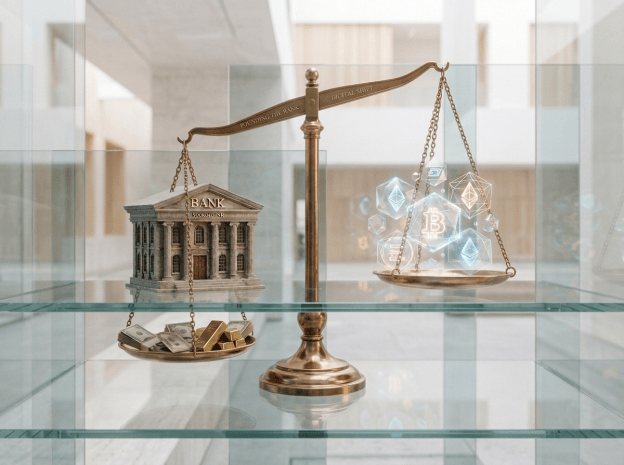
The Abu Dhabi royal sometimes referred to as the “spy sheikh” is a major shareholder backing a new U.S. bank the Trump family’s cryptocurrency venture is preparing to launch…Seikh Tahnoon bin Zayed al Nahyan and co-investors are behind an entity that owns the largest stake—49%—in the holding company that World Liberty Financial created to house its banking venture.

The sheikh in 2025 backed a $500 million investment into World Liberty Financial in exchange for a 49% stake in the company. The Office of the Comptroller of the Currency in August 2026 granted preliminary conditional approval for World Liberty Financial to launch a federally chartered national trust bank to issue, redeem and safeguard USD1, the dollar-backed stablecoin World Liberty launched in 2025. The new venture marks an expansion of the business relationship between the Trump-backed crypto company and a foreign government official. Tahnoon serves as the United Arab Emirates’ national security adviser and is brother to the country’s president. He oversees a more than $1.3 trillion empire funded by his personal fortune and state money.

Stablecoins are pegged to the value of real assets held in a reserve. USD1 now has a market value of $4 billion. World Liberty says the dollars backing USD1 are invested in U.S. Treasurys and other cash equivalents, generating an estimated $150 million a year in interest. Previously, World Liberty issued USD1 through BitGo, a separate trust bank that held the stablecoin’s reserves and kept a portion of the interest. The more USD1 in circulation, the more revenue World Liberty can generate from its reserves. World Liberty says it plans for the trust bank to drive “mainstream adoption” of USD1 and to offer new services to clients, such as holding their cryptocurrency for a fee.

World Liberty moved to establish a bank in partnership with its shareholders after the president in July 2025 signed the Genius Act, which allows approved stablecoin companies to directly hold the reserve assets that their coins are fixed against. The shareholder structure of the bank’s holding company, called WLTC Holdings, is the same as World Liberty’s, though Tahnoon and his co-investors used a different entity—called StringZ Holding RSC—for the stake in WLTC. An entity affiliated with the Trump family holds a 38% stake, according to a person familiar with the matter.

The company’s pursuit of a banking license came under scrutiny from Democratic lawmakers after the Journal reported in January that Tahnoon and co-investors had made an undisclosed $500 million investment in the company in January 2025, through an entity called Aryam Investment 1. The deal, signed four days before President Trump’s inauguration, steered $263 million to Trump family entities, according to the president’s most recent financial disclosure. The investment drew sharp criticism from Democrats and legal experts, who said it was unprecedented for a foreign government official to take a major ownership stake in an incoming U.S. president’s company. Ethics experts said the timing of the new banking venture is significant because the expansion of Trump’s business relationship with a foreign government official is taking place while he is a sitting president—and at a time when his administration was actively negotiating with the U.A.E. over its access to U.S. artificial-intelligence chips.

Excerpt from Rebecca Ballhaus, Trump Family’s New Crypto Bank Is Backed by Abu Dhabi Sheikh, WSJ, Aug. 27, 2026

A Lasting Legacy: How His Grandchildren Will Remember Mark Zuckerberg?

The case against Meta Platforms brought in 2026 by the state attorneys general of California, Kentucky, Colorado and New Jersey, explored whether Meta violated state consumer protection laws and the federal Children’s Online Privacy Protection Act of 1998, commonly known as COPPA, by knowingly making its platforms addictive and going after young users. The trial, that was to take place at a federal courthouse in Oakland, Calif., had come on the heels of Meta’s nearly $1 billion loss in New Mexico state court.  As part of remedies for the New Mexico trial, a judge ordered Meta to create a $567 million abatement fund and to limit the amount of time that young people can spend on its apps. The company must turn off push notifications on teens’ accounts overnight and by default hide the number of “likes” on photos, the judge said in his order.

“What you’re going to hear in this trial is how Meta hooked children on its platforms,” Megan O’Neill, a deputy attorney general for the California Department of Justice, said during opening arguments in the Oakland case.  O’Neill previewed some of Meta’s internal documents. One of them was a conversation between two Meta employees, in which one said: “oh my gosh y’all Instagram is a drug.” The co-worker responded: “Lol, I mean, all social media. We’re basically pushers.” Another was an internal document in which Meta said its product “exploits weaknesses in the human psychology.”

In August 2026, Meta reached a settlement with the state attorneys general agreeing to pay up to $17.1 billion and overhaul child safety features on Facebook and Instagram. Meta still faces lawsuits from individuals and school districts. According to Market Watch, Meta, thus, dodged the ‘Big Tobacco’ nightmare, the $400 billion in damages tobacco companies had to pay over the span of 25 years for the addictive properties of their products.

Excerpt from Meghan Bobrowsky, Pivotal Child Safety Trial That Could Change Instagram Starts in California, WSJ, Aug. 18, 2026

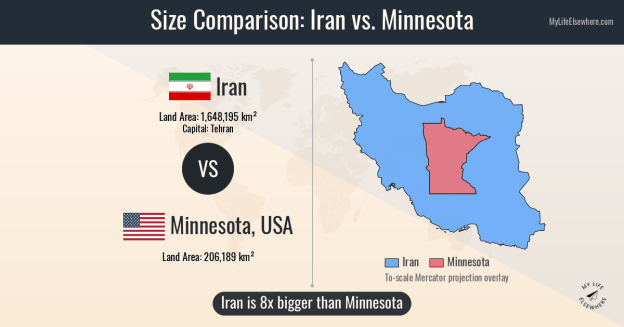
Water, Iran and Minnesota

At 8:42 a.m. on July 27, 2026  a public works operator was carrying out his daily check of the water system in Braham, Minnesota, when he noticed something was off: The water tower’s level was dropping, but the well that was supposed to refill it wasn’t responding. The water utility had been cyberattacked

On that day  the heat index neared 100 degrees and local officials urged residents to minimize their water use to prevent the town’s limited supply from running dry. “The water plant is currently offline for an unknown reason,” read a mass text message sent to locals as an outside specialist drove to Braham to investigate the issue. “The city has water in the water tower, however, that is a limited quantity.” Braham officials soon learned they weren’t alone. Dozens of communities across Minnesota were reporting that their water systems appeared to have been targeted, forcing some of them to declare a local state of emergency.

What had begun as local water outages and disruptions quickly became part of a federal investigation….The incidents had exposed a longstanding vulnerability in America’s infrastructure: Small water utilities like Braham increasingly rely on internet-connected automation but often lack the staff and funding to secure it. FBI was probing whether Iran-linked actors were behind the attacks, which had targeted more than 30 water systems in Minnesota.

Excerpt from Vera Bergengruen, The Cyberattack That Brought a Distant War to Small-Town Minnesota, WSJ, Aug. 8, 2026