Tag Archives: Amazon Peru

Peruvian Amazon: Oil Pollution & Human Rights

On September 15, 2018 indigenous federations from the Amazonian Loreto region of northern Peru scored a small victory in the fight for community rights. Representatives from four federations signed an agreement with the Peruvian government and the state-owned enterprise PetroPerú that acknowledges prior consultation as part of the new contracting process for petroleum Block 192. Under the new agreement, Block 192 will undergo a community consultation process before PetroPerú awards a new contract for operating the oil field…

Under the formal resolution with Prime Minister César Villanueva, the Ministry of Energy and Mining, and PetroPerú, the government will complete the community consultation for Block 192 between December 2018 and March 2019.

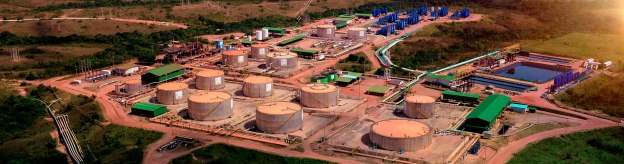
Extending across the Tigre, Corrientes, Pastaza and Marañón river basins in Peru’s remote Loreto province, Block 192 is the largest-yielding oil field in Peru, accounting for 17 percent of the country’s production. The government plans to continue production of oil at the block for another 30 years, adding to the almost 50 years of oil activity in the region. The oil field is currently operated by Canadian-based Frontera Energy, whose contract with PetroPerú is set to expire in September 2019.

American-based Occidental Petroleum discovered oil in the region in 1972 and a succession of companies, including the Dutch-Argentinian conglomerate Pluspetrol, left Block 192 (previously Block 1-AB) heavily polluted. While Peru’s Agency for Environmental Assessment and Enforcement fined Pluspetrol for violations, the Peruvian government remains in a protracted legal fight with the oil giant. A majority of the fines are outstanding and Pluspetrol denies any wrongdoing, despite settling with a local community in 2015.

For over 40 years, the indigenous Kichwa, Quechua, Achuar, and Urarina peoples who live near the oil field have been exposed to salts, heavy metals and hydrocarbons. According to a 2018 toxicology study by Peru’s National Center for Occupational Health and Environmental Protection for Health, over half of the indigenous residents in the region’s four basins have blood lead levels that surpass international recommended limits. A third have levels of arsenic and mercury above the levels recommended by Peru’s Ministry of Health…

The actual cost of cleaning up Block 192, along with neighboring Block 8, would approach $1 billion. To make matters more challenging, the $15 million fund of Peruvian government is almost exhausted..”

Excepts from Andrew Bogrand, Righting the many wrongs at Peru’s polluted oil Block 192, Nov. 2, 2018
Making Money in the Peruvian Amazon

The Sierra del Divisor region in the Peruvian Amazon was identified as a biodiversity conservation priority back in the early 1990s. More than 20 years later and Peruvians are still waiting – some more desperately than others given all the narco-traffickers, illegal loggers and gold-miners in or near the region.

What’s so special about the Sierra del Divisor? It’s the “only mountainous region” anywhere in the lowland rainforest, according to Peruvian NGO Instituto del Bien Comun (IBC), while The Field Museum, in the US, describes it as “a mountain range” rising up “dramatically from the lowlands of central Amazonian Peru” and boasting “rare and diverse geological formations that occur nowhere else in Amazonia.” Its most iconic topographical feature is “El Cono”, an extraordinary peak visible from the Andes on a clear day.

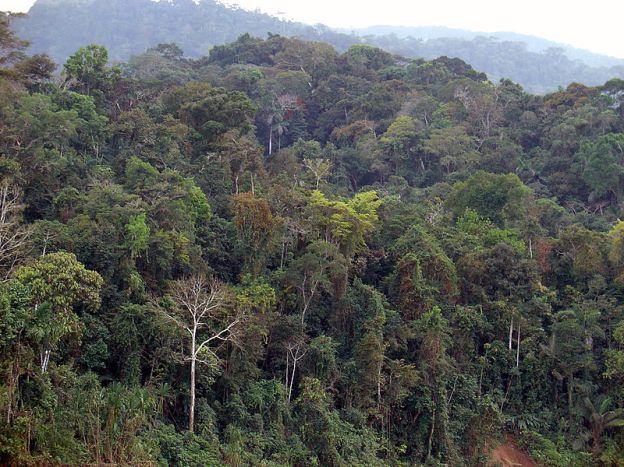
Sierra del Divisor is home to numerous river headwaters feeding into key Amazon tributaries, eco-systems, and a tremendous range of flora and fauna, some of which are endemic, some endangered or threatened – and some with the most wonderful names. Giant armadillos, jaguars, cougars, Acre antshrikes, curl-crested aracaris, blue-throated piping guans and various kinds of monkeys, including the bald – but very red-faced – uakari, all populate the region. Effectively, it forms part of a vast “ecological corridor” running all the way from the Madidi National Park in Bolivia in a north-westerly direction along much of the Peru-Brazil border.

21 indigenous communities and 42 other settlements would benefit from the Sierra del Divisor being properly protected, states the Environment Ministry, while ultimately over 230,000 people in Peru depend on the region for food and water, according to the IBC. In addition, in the absolute remotest parts, it is home to various groups of indigenous peoples living in what Peruvian law calls “isolation.”

In 2006 Peru’s government established a 1.4 million hectare temporary “protected natural area” in this region called the Sierra del Divisor Reserved Zone. Six years later a government commission agreed it would be converted into a national park, and, all that remains now, after a painful administrative process, several key advances made this year and indigenous leaders lobbying various ministries, is for Peru’s Cabinet to approve it and the president, Ollanta Humala, to sign off on it. That is how it has stood since early May 2015 – and still nothing….

Why such a delay indeed, this year or in the past? Might it have something to do with the infrastructure integration plans for the region, such as the proposed – and effectively already underway – road between Pucallpa, the Peruvian Amazon’s current boom city, and Cruzeiro do Sul across the border in Brazil? Or the proposed railway between the same two cities ultimately connecting to Peru’s northern Pacific coast, declared in the “national interest” some years ago? Or the proposed railway running all the way across South America from Peru’s Pacific coast to Brazil’s Atlantic coast, a long-mooted project which has received so much media coverage recently because of Chinese interest in financing it and the visit by China’s premier, Li Keqiang, to Brazil and Peru in May?

Or might the delay be explained by oil and gas industry interests? Perupetro, the state company promoting oil and gas operations, tried to open up what would be the entire southern part of the park for exploration before backtracking in 2008, while the London Stock Exchange-Alternative Investment Market-listed company Maple Energy has been pumping oil for years in a concession just overlapping the west of the proposed park. More significantly, Canadian-headquartered company Pacific Rubiales Energy runs a one million hectare oil concession that would overlap the entire northern part of the park if it was established, and conducted its first phase of exploratory drilling and seismic tests in late 2012 and 2013 in what would be the park’s far north. Clearly, it wouldn’t be good PR for either Pacific or Peru to explore for oil in, or exploit oil from, a national park, although it wouldn’t be the first time a concession and park have overlapped. Indeed, according to the IBC, it has been agreed that Pacific’s “rights” to operate will be respected if the park is created.

Excerpts from David Hill Peru stalling new national park for unique Amazon mountain range, Guardian, July 29, 2015


Oil Pollution in Amazon Peru

Hundreds of indigenous people deep in the Peruvian Amazon are blocking a major Amazon tributary following what they say is the government’s failure to address a social and environmental crisis stemming from oil operations.   Kichwa men, women and children from numerous communities have been protesting along the River Tigre for almost a month, barring the river with cables and stopping oil company boats from passing.  Oil companies have operated in the region for over 40 years, and have been linked by local people to pollution that has led the government to declare “environmental emergencies” in the Tigre and other river basins….

The oil concession where the protest is taking place, Lot 1-AB, is Peru’s most productive, but the contract, held by Pluspetrol, expires in August 2015. The government has committed to relicensing it and consulting the indigenous communities involved, but leaders say the contamination and other issues must be addressed first.   “What we want is remediation, compensation, and to be consulted, according to international norms, about the relicensing,” says Fachin. “We won’t permit another 30 years of work otherwise.”…The Kichwas are now they are demanding 100 million Peruvian nuevo soles, from Pluspetrol, for “compensation after almost 45 years of contamination.”

“The state declared an environmental emergency, but hasn’t done anything,” says Guillermo Sandi Tuituy, from indigenous federation Feconat. “It must find a solution to this problem if it wants to relicense the concession.”...Pluspetrol took over Lot 1-AB from Occidental in 2000. It did not respond to requests for comment.

Peru’s indigenous people protest against relicensing of oil concession, Guardian,  Feb, 2, 2012

Peru Pipelines and Indigenous Peoples

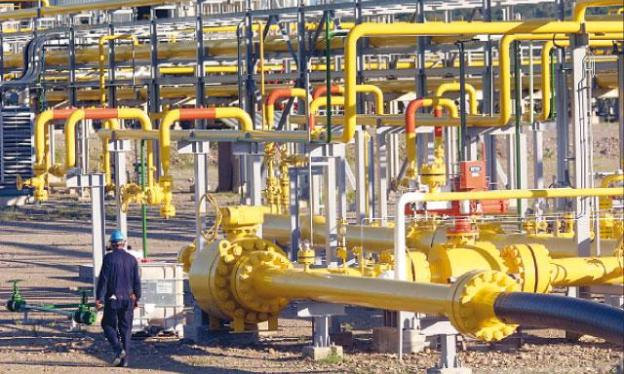
Peru’s government said in June 2014 that three companies have qualified to submit bids for a contract to build and operate a multi-billion dollar gas pipeline project in the country’s southern region, the state news agency Andina reported.  State investment promotion agency ProInversion said that two of the contenders for the Southern Peru Gas Pipeline concession are consortia.

The consortium Gasoducto Sur Peruano is made up of Brazilian construction giant Odebrecht and the firm Enegas. The consortium Gasoducto Peruano del Sur is made up of France’s GDF Suez, as well as the firms Sempra, Techint and TGI. The third contender is Energy Transfer.  The technical proposals are expected to be submitted on June 26, 2014 and the concession is scheduled to be awarded on June 30, 2014. The bid consists in the design, financing, construction and maintenance of a 32″ pipeline, in three sections.

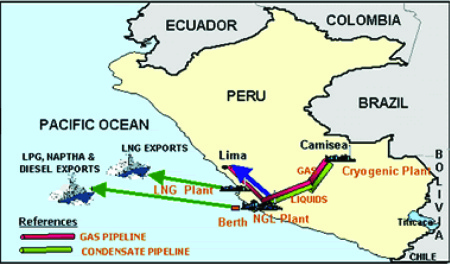
The Southern Peru Gas Pipeline will extend some 1,000 kilometers, transporting natural gas from the Camisea fields in Peru’s south-eastern Amazon region to the Peruvian coast. The project is expected to require an investment of some $4 billion.  The government says the pipeline is to provide inexpensive gas to southern Peru, helping to spur development in one of the country’s poorer regions.  [However NGOS have argued that the project will harm indigenous peoples living in the region].

According to the UN Special Rapporteur on the rights of indigenous peoples,, James Anaya (see Remarks on the extension of exploration and extraction of natural gas  in Block 88 of the Camisea project, March 24, 2014)

“[S]everal national and international NGOs have claimed a number of environmental and health problems in relation to the expansion plan of the project, in some cases stating that any activity of extractive industry within the reserve is simply incompatible with its protection goals. The Special Rapporteur has found that in many cases these claims are speculative and vague, and without relation to the information contained in the EIA of the company or the findings of government.”

But the rapporteur stated also that:

“Assessing the impacts that mining activity could have on indigenous peoples within the reserve and to establish effective safeguards, it is necessary to have adequate knowledge beforehand, to the extent possible, these peoples and their dynamics, in observance the principle of non-contact remote villages. However, while there is relatively extensive information on indigenous reserves within the sustained or sporadic contact with settlements, the available information on indigenous peoples in isolation is outdated and incompleteThis information gap has generated divergent opinions and a lack of trust in relation to the protective measures that the Government has demanded that Pluspetrol is committed to implement in the context of extractive activities in the reserve.

Excerpts, Three Contenders for Peru’s Southern Gas Pipeline,  Peruvian Times, June 6, 2014 and the Remarks on the extension of exploration and extraction of natural gas in Block 88 of the Camisea project, March 24, 2014