Tag Archives: anti-ballistic missile defense

Back from the Dead but Wobbling: Nuclear Deterrence

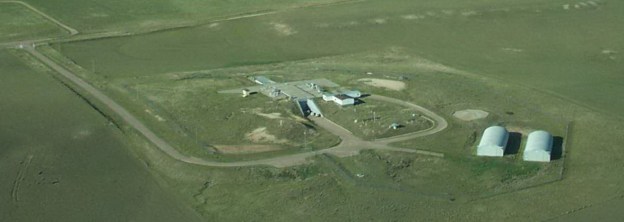
The Pentagon has revised the projected cost of refurbishing hundreds of nuclear missile silos to $141 billion, a $30 billion increase from an estimate provided in January. The U.S. Air Force project, known as Sentinel, includes replacing the Cold War-era intercontinental ballistic missiles inside the silos with newer models…Sentinel is part of a long-delayed nuclear-arms refresh that the Congressional Budget Office estimates will cost at least $1.5 trillion over the next 30 years…The missiles sitting inside some 450 silos are decades past their projected lifespan of 10 years. The underground silos require thousands of miles of new fiber-optic cabling. Underground command centers that control the missiles need to be rebuilt. Maintenance jobs that used to take two or three hours now take twice as long, and parts are more difficult to obtain, Air Force officials said.

“Its scale, scope and complexity are something we haven’t attempted as a nation for over 60 years,” Bill LaPlante, the Pentagon’s chief weapons buyer, told reporters in July 2024 as he cleared Sentinel to continue as a must-do program despite the surging costs. The Pentagon hired Northrop Grumman in 2020 to oversee the Sentinel program and do the initial engineering and design work. Northrop, aided by construction giant Bechtel, was the only bidder for the initial $13.3 billion contract after Boeing dropped out

Most of the people who did it the last time aren’t even around anymore. So re-creating all of this has turned out to be a huge problem,” said Madelyn Creedon, a former senior Energy Department and Pentagon official who chaired a congressionally mandated panel on future U.S. nuclear and conventional forces…

Excerpt from Doug Cameron U.S. Nuclear Missile Silos Need Modernizing, but Fixes Aren’t Coming Soon, WSJ, Aug. 26, 2024

War and the Innocent Bystanders

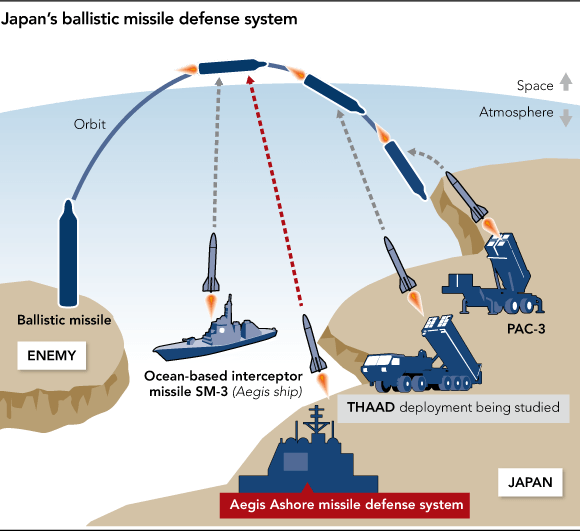
During a visit to Tokyo in 2017, Donald Trump called on Japan to buy “massive” amounts of American weaponry. At the time, North Korea was testing new rockets regularly. For the Japanese government, buying Aegis Ashore, a pricey American missile shield, allayed both concerns. Not all Japanese, however, were happy with the purchase, especially in Araya, a quiet residential neighbourhood of low-slung homes next to the sea in Akita city—and the site of a proposed Aegis base.

Akita City, Japan

Jittery locals fretted about electromagnetic waves from the system’s radar and debris from its rockets. They worried about becoming a target in a conflict, as the city’s oil refineries were during the second world war. “Why, why here?” asks Sasaki Masashi, a retired railway worker and head of a neighbourhood council. “It says: ‘Please attack us’,” complains Sakurada Yuko, another anti-Aegis campaigner. They have collected signatures, harangued officials and voted against the ruling Liberal Democratic Party  which unexpectedly lost a seat in Akita in elections to the upper house of parliament last year.

In June 2020  Akita received unexpected but welcome news: the government declared it was scrapping the $4.2bn purchase of Aegis Ashore. Kono Taro, the defence minister, cited the ballooning cost of ensuring that boosters did not fall on civilian property….

Excerpts from Anti-anti-missile systems, Economist, Aug. 15, 2020

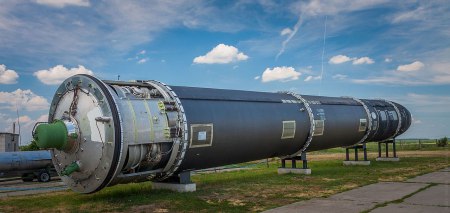
The fate of SS-18 Satan

While Ukraine renounced its own possession of nuclear weapons in 1994, many scientists and design bureaus in the country still have the know-how required to manufacture important components of strategic weapons.

China has often been particularly keen of this knowledge, acquiring Ukrainian help in designing their first phased-array radar system.  Ukrainian aerospace, tank and naval engineers is also a common phenomenon in China, most notably Valerii Babich, designer of the Varyag aircraft carrier. There are even rumors of “Ukrainetowns” in some Chinese cities founded by the large number of expats hired by Chinese firms. Ukrainian and Russian businessmen even sold Kh-55 nuclear cruise missiles (without the warheads) from Ukrainian stockpiles to China in the 2000s. As China continues to modernize their ICBM fleet, it begs the question: how much help is Ukraine providing, willingly and unwillingly?

This wouldn’t be the first time Ukraine’s ICBM knowhow was possibly exported. In the fall of 2017, Ukraine’s Yuzhnoye Design Bureau, based in Dnipro, was accused of providing rocket engines to North Korea. While Ukrainian media has denied this allegation, there was a definite case of Yushnoye employees who were caught selling the plans on the RS-20 (SS-18 “Satan”) to Chinese missile engineers. Although the Chinese engineers were caught by Ukrainian police, Chinese diplomatic influence resulted in the charges being cleared. This trend has continued, as recently as 2016 when a scientist at Dnipropetrovsk National University left for China with many materials regarding the use of composites and heat-shielding coatings on rocket launchers—which were considered Ukrainian state secrets…

Given all the different vectors through which rocket and missile technology are flowing from Ukraine to China, it’s reasonable to say that Ukraine has provided considerable aid to the Chinese ballistic missile program.

Excerpts, Charlie Gao, Do China’s Nuclear Missiles Have Ukrainian DNA?, The National Interest, June 23