Tag Archives: Arak nuclear plant Iran

How to Kill Scientists and Get Away with It

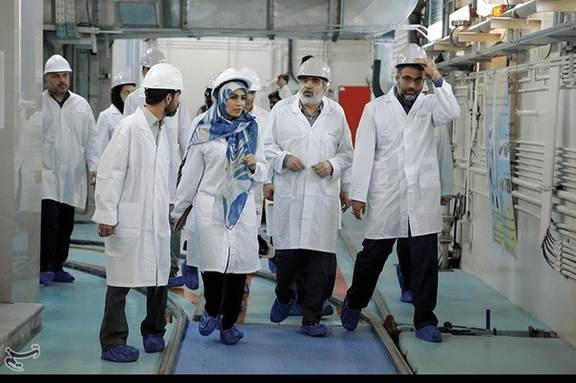
When Israel’s attacks on Iran began before dawn on June 13, 2025 explosions shattered the homes of some of Iran’s top scientists… All nine were killed in near-simultaneous attacks to prevent them from going into hiding…The attack on the scientists was considered so fantastical by even its planners that it was called “Operation Narnia,” after the fictional C.S. Lewis series…A week after the June 13 attacks, Israel used a drone to kill another scientist who was being kept in what was supposed to be a safe house in Tehran. The person hasn’t been named…The deadly airstrikes were the first to target Iran’s nuclear scientists since 2020, when Mohsen Fakhrizadeh was gunned down with a remote-controlled weapon. Israel has never denied or confirmed its role in the deaths of five Iranian scientists between 2010 and 2020.

Among the most important targets was Fereydoon Abbasi-Devani, the former head of the Atomic Agency of Iran and one of the founders of Iran’s nuclear weapons-related work…Another killed scientist was Mohammad Mehdi Teranchi, who led a unit under Fakhrizadeh focusing on high explosives, which are needed to detonate a nuclear weapon…

Iran has used universities like Shahid Beheshti, the Sharif University of Technology and Malek Ashtar University to keep alive its nuclear-weapons expertise over the past two decades….At these universities, Iran often matches up its nuclear scientists on experiments and other studies with younger students. Two of the scientists killed on June 13, Ahmadreza Zolfaghari and Abdulhamid Minouchehr, published an article in the Annals of Nuclear Energy in June 2024 that used advanced computer modeling to show how neutron sources behave in a chain reaction. That information can be used for civilian purposes, like building a nuclear reactor, or to help trigger a chain reaction in a nuclear weapon. 

Excerpt from Laurence Norman, How Israel Killed Iran’s Top Nuclear Scientists, WSJ, June 29, 2025
The Unintentional Making of a Global Power: Iran

In 2024, Iran, under Supreme Leader Ali Khamenei’s leadership, thwarted decades of U.S. pressure and emerged from years of isolation largely by aligning itself with Russia and China…Iran’s economy remains battered by U.S. sanctions, but oil sales to China and weapons deals with Russia have offered financial and diplomatic lifelines…Today, Tehran poses a greater threat to American allies and interests in the Middle East than at any point since the Islamic Republic was founded in 1979. 

Iran’s military footprint reaches wider and deeper than ever. Iranian-backed armed groups have hit Saudi oil facilities with missiles and paralyzed global shipping in the Red Sea. They have dominated politics in Iraq, Lebanon, Yemen and Syria, and launched the most devastating strike on Israel in decades, when Hamas attacked in October. Iran launched its first direct military attack from its soil on Israel in April 2024. It has also orchestrated attacks on opponents in Europe and beyond, Western officials say. 

“In many respects, Iran is stronger, more influential, more dangerous, more threatening than it was 45 years ago,” said Suzanne Maloney, director of the foreign-policy program at the Brookings Institution, who advised Democratic and Republican administrations on Iran policy. 

U.S. policy has at times unintentionally contributed to Iran’s strength. The 2003 toppling of Saddam Hussein removed a sworn enemy from Iran’s borders. Washington’s failure to stabilize postwar Iraq bolstered Tehran’s influence…

Excerpts from Sune Engel Rasmussen and Laurence Norman, How Iran Defied the U.S. to Become an International Power, WSJ, July 2, 2024

Unleashing Nuclear Power – Iran

China was expected to build two nuclear power plants for Iran as part of the country’s new nuclear direction under the controversial nuclear deal that was signed July 15, 2015. The plants were set to be located on the Makran coast, near the neighboring Gulf of Oman, Iran’s Atomic Energy Organization head Ali Akbar Salehi announced on July 22, 2015.

Uninhibited by sanctions, Iran announced plans for four new nuclear power plants. Chinese contractors will be building two of the four planned. “We will simultaneously launch construction of four new nuclear power plants in the country in the next two to three years,” Salehi said, according to Indo-Asian News Service. “We plan to engage more than 20,000 workers and engineers in this large-scale construction.”

When it comes to United Nations sanctions, China had always been an advocate for Iran, along with Russia, generally opposing Washington’s proposed restrictions. On July 20, 2015, the United Nations adopted the nuclear deal between Tehran and Washington, after the “P5+1” countries — the U.S., Britain, France, Russia, China and Germany — unanimously approved it, also voting to lift a series of economic sanctions that were previously imposed on Iran.

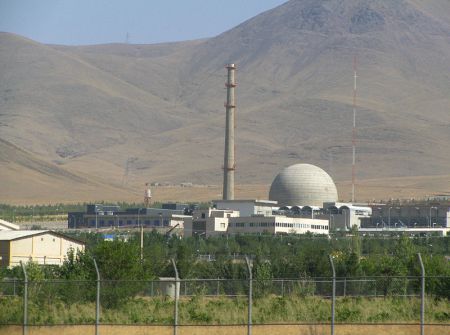
China has played a unique, hands-on role in the nuclear deal involving Iran’s Arak reactor, which has been described previously as a “pathway” to nuclear weapons for Iran.

“China has put forward the idea of the modification of the Arak heavy water reactor. … This is the unique role China has played in resolving the Iranian nuclear issue,” Chinese Foreign Minister Wang Yisaid in a statement…..  [The nuclear deal]  has also opened up a door to increased business opportunity in Iran, particularly for China.  Following the announcement of the landmark deal, Wang said that China played a pivotal role in negotiations, and he expressed hope that Iran would take part in China’s “one belt, one road” ambition to revive the Silk Road route.

Excerpts from Michelle FlorCruz, Iran Nuclear Deal: China To Build 2 Nuclear Power Plants For Islamic Republic Following Landmark Agreement, International Business Times, July 22, 2015

Full text of Iran Nuclear Deal Signed July 15, 2015
Joint Comprehensive Plan of Action
Annex I: Nuclear-related commitments
Annex II: Sanctions-related commitments
Attachments to Annex II
Annex III: Civil nuclear cooperation
Annex IV: Joint Commission
Annex V: Implementation Plan