
Tag Archives: B61 nuclear bomb

Back to 2030: Nuclear Race is Hot Again

The new nuclear race has begun. But unlike during the Cold War, the U.S. must prepare for two peer rivals rather than one—at a time when it has lost its clear industrial and economic edge. China, which long possessed just a small nuclear force, is catching up fast, while Russia is developing a variety of new-generation systems aimed at American cities…Russian President Vladimir Putin has already used nuclear saber-rattling to throttle American support for Ukraine. He has deployed nuclear weapons to Belarus and, in 2025, tested a nuclear-powered missile and a nuclear-powered submarine drone that he claims are impervious to American defenses.

While Russia and the U.S. are still abiding by some arms-controls limit…China, unconstrained by any commitments, is quietly but rapidly leaping ahead. According to American estimates, Beijing will reach rough parity with the U.S. in deployed nuclear warheads by the mid-2030s.

Chinese leader Xi Jinping for the first time showcased China’s nuclear triad—its land, sea and air-launched ballistic nuclear missiles—at a Beijing parade honoring the 80th anniversary of victory over Japan in September 2025. Putin, sitting to his right atop the Gate of Heavenly Peace, took note. So did North Korea’s Kim Jong Un, sitting to his left.

Excerpt from Yaroslav Trofimov, The Nuclear-Arms Race Is Now a Three-Way Contest, WSJ, Nov. 16, 2025
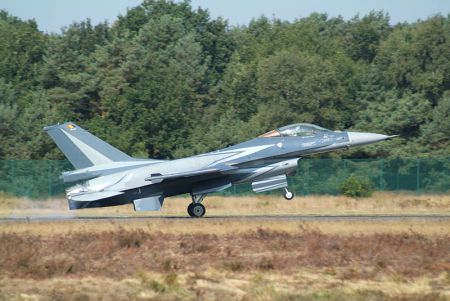
Nuclear Weapons: Belgium

The US has approximately 180 B61 bombs – more than 10 times as powerful as those dropped on Hiroshima – at six locations in five countries across Europe.  An unknown number of these weapons are stored at the Kleine Brogel airbase in Belgium.  And Belgium has been the focus of European security services due to its reputation as a hotbed of radicalisation. During the first breach in 2010, anti-nuclear campaigners spent up to an hour wandering around the air base before security personnel moved in.A few months later activists again managed to sneak onto the site, this time reportedly gaining access to one of the hardened shelters used to house F-16 fighter jets as well as atomic weapons….

The US has stored non-strategic or tactical forward-deployed weapons at European facilities since the Cold War.The US Defence Department maintains about 4,760 nuclear warheads; an estimated 2,080 warheads are deployed while 2,680 warheads are held in storage….US bases have also been hit by worrying security breaches, including the break-in at the Y-12 site in Tennessee in 2012, one of the United States’ most sensitive sites. …….

Belgian authorities evacuated nuclear power plants at Doel, which houses four reactors, and Tihange, which houses three, in the immediate aftermath of terrorist attacks of March 2016…

Excerpts from TOM BATCHELOR, Security breaches uncovered at EUROPEAN bases storing US nuclear warheads, Express UK, Apr. 4, 2016

US Nuclear Revitalization

As North Korea dug tunnels at its nuclear test site last fall, watched by American spy satellites, the Obama administration was preparing a test of its own in the Nevada desert.

A fighter jet took off with a mock version of the nation’s first precision-guided atom bomb. Adapted from an older weapon, it was designed with problems like North Korea in mind: Its computer brain and four maneuverable fins let it zero in on deeply buried targets like testing tunnels and weapon sites. And its yield, the bomb’s explosive force, can be dialed up or down depending on the target, to minimize collateral damage.

Mr. Obama has long advocated a “nuclear-free world.” His lieutenants argue that modernizing existing weapons can produce a smaller and more reliable arsenal while making their use less likely because of the threat they can pose. The changes, they say, are improvements rather than wholesale redesigns, fulfilling the president’s pledge to make no new nuclear arms.

But critics, including a number of former Obama administration officials, look at the same set of facts and see a very different future. The explosive innards of the revitalized weapons may not be entirely new, they argue, but the smaller yields and better targeting can make the arms more tempting to use — even to use first, rather than in retaliation.

The United States military is replacing the fixed tail section of the B61 bomb with steerable fins and adding other advanced technology. The result is a bomb that can make more accurate nuclear strikes and a warhead whose destructive power can be adjusted to minimize collateral damage and radioactive fallout…

The B61 Model 12, the bomb flight-tested last year in Nevada, is the first of five new warhead types planned as part of an atomic revitalization estimated to cost up to $1 trillion over three decades. As a family, the weapons and their delivery systems move toward the small, the stealthy and the precise.  Already there are hints of a new arms race. Russia called the B61 tests “irresponsible” and “openly provocative.” China is said to be especially worried about plans for a nuclear-tipped cruise missile….The advanced cruise missile are estimated to cost up to $30 billion for roughly 1,000 weapons….Because the missile comes in nuclear and non-nuclear varieties, a foe under attack might assume the worst and overreact, initiating nuclear war.

Excerpt from WILLIAM J. BROAD and DAVID E. SANGERJAN, As U.S. Modernizes Nuclear Weapons, ‘Smaller’ Leaves Some Uneasy, NY Times, Jan. 11, 2016

see also Nuclear Weapons, Justice and the Law