Tag Archives: Bab al-Mandab strait

Hook Them On. Then Cut Them Off

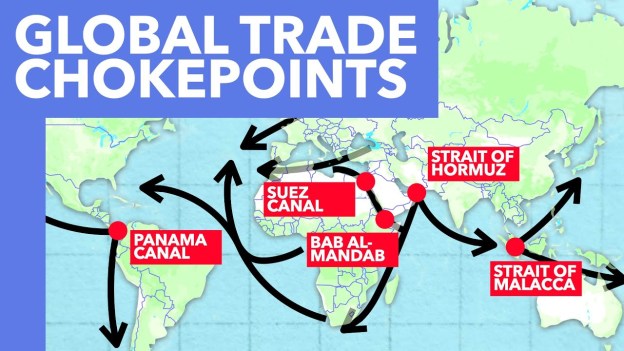
In exploiting the economic pinch-point off its coast, the strait of Hormuz, Iran is following a trail blazed by the U.S. and China, which for years have used their dominance in key areas of global commerce to pursue their foreign-policy goals…Officials and analysts say the goal is “strategic indispensability”—building deterrence by mutually assured economic destruction. “In order to have that deterrence, in order to say ‘don’t cut off what we need,’ you need to be able to say ‘I can cut off what you need,’ ” said Andrew Capistrano, a visiting research fellow at the Institute of Geoeconomics, a Tokyo-based think tank…

Larger economies can exploit pressure points that flow from their heft in the global economy. The U.S. has long used the dollar-based financial system to sanction individuals, businesses and governments. It has also used America’s grip on semiconductor technology to stymie China’s military and put the brake on Beijing’s ambitions to leapfrog the U.S. as the world’s biggest and most advanced economy.

China exercises its economic might through its near-total control of rare earths. Beijing used the supply chain of these minerals, which are critical in the manufacture of everything from jet fighters to smartphones, as leverage to pressure U.S. industries and win relief on trade and tariffs from Trump…To build deterrence, “you need to get other people hooked on your supply. You need to be part of this interconnected web of the global economy in order to have a seat at the table of power,” said Emily Benson, head of strategy at the advisory firm Minerva Technology Futures.

Excerpt from Jason Douglas, Iran Shows You Don’t Have to Be a Superpower to Wage Economic Warfare, WSJ, Apr. 9, 2026
Dirt Poor but Mighty: Somaliland

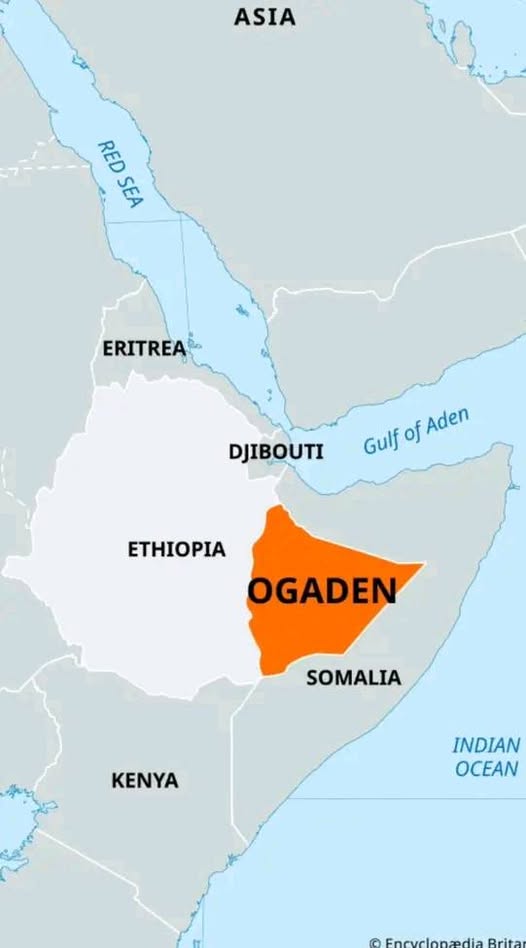
By extending diplomatic recognition to the breakaway statelet of Somaliland, on December 26, 2025, Israel has cut a deal aimed at sharing intelligence and securing the strategic waterways of the Red Sea—making the country a player in the Horn of Africa, where Arab countries are jostling for influence…Somaliland, a semidesert territory inside internationally recognized Somali borders, lies just south of the vital Bab al-Mandab Strait that connects the Red Sea to the Indian Ocean…Somaliland, which declared independence from Somalia during a civil war in 1991, is a self-declared nation of 6.2 million people—which, if it were a nation state, would be one of the poorest in the world. Its territory is smaller than Missouri.

Somaliland has an underused port and a long runway at Berbera… Houthi leader Abdul-Malik al-Houthi, operating in Yemen, called the recognition a “hostile and illegitimate act” targeting Somalia, Yemen and the Red Sea and warned that any Israeli presence in Somaliland would be considered a military target. Somaliland has in recent years been monitoring a Houthi buildup of arms trade and training to a Somali al Qaeda affiliate called al-Shabaab.

Excerpt from Benoit Faucon, Israel Flexes New Diplomatic Muscle in Recognition of Somaliland, WSJ, Jan. 4, 2025

Slyly Conquering East Africa

The rulers of United Arab Emirates (UAE), one of whose components, Dubai, own a majority stake in DP World, one of the world’s largest maritime firms with perations in 40 countries.It is one of several Gulf states trying to gain a strategic foothold in east Africa through ports. Controlling these offers commercial and military advantages but risks exacerbating tensions in the region…

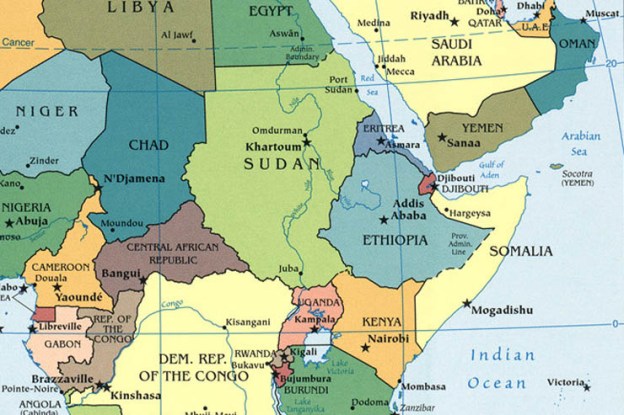
DP World thinks the region from Sudan to Somalia needs 10-12 ports. It has just half that. The firm’s first foray was on Djibouti’s coast. When DP World won its first concessions there in the 1990s, the Emiratis were among the few investors interested in the small and poor former French colony. DP World built and operated a new container terminal, Doraleh,and helped finance roads and other infrastructure. Doraleh is now the country’s largest employer and the government’s biggest source of revenue. It runs at nearly full capacity, handling 800,000 containers a year. Much of its cargo travels along a Chinese-built railway from Addis Ababa, Ethiopia’s capital.

Djibouti’s profile rose further after the terrorist attacks on America of September 11th, 2001, when America opened a military base there. France and China also have bases; other navies patrol off its coast to deter Somali pirates. But when the Emiratis wanted to open their own naval base they were rebuffed, partly because of their close ties to Djibouti’s rival, Eritrea (the two states had a bloody border dispute in 2008). In 2015 the UAE started building a naval base in Assab, in southern Eritrea. The base has been used in the Saudi-led war against Houthi rebels in Yemen….In 2016 DP World won a 30-year concession to operate the port of Berbera in Somaliland, which declared independence in 1991 (though no foreign government recognises it). Critics said the deal would hasten the break-up of Somalia.

The Horn ports all sit near the Bab al-Mandab strait, a vital choke-point at the mouth of the Red Sea: 4.8m barrels of oil passed through it every day in 2016. Competition is getting fierce, though. Qatar and its ally, Turkey, are building ports in Sudan. Saudi Arabia is in talks to set up a naval base in Djibouti. All three Gulf states are trying to snap up farmland in east Africa, part of a broader effort to secure food supplies for their arid countries. Emirati-built ports could one day export crops from Emirati-owned farms…

Gulf states could also find themselves in competition with China…In February 2018 Djibouti seized the Doraleh port, a concession to the UAE… Shippers believe it took Doraleh as a sop to China, to which it is heavily indebted. In July 2018, Djibouti opened the first phase of a new $3.5bn free-trade zone, set to be the largest in Africa when it is finished. Built mostly by state-owned Chinese firms, it sits next to Doraleh. DP World says the project violates the terms of its concession and is threatening to sue.

Excerpts from Red Sea Scamble: Ports on the Horn, Economist, July 21, 2018, at 33