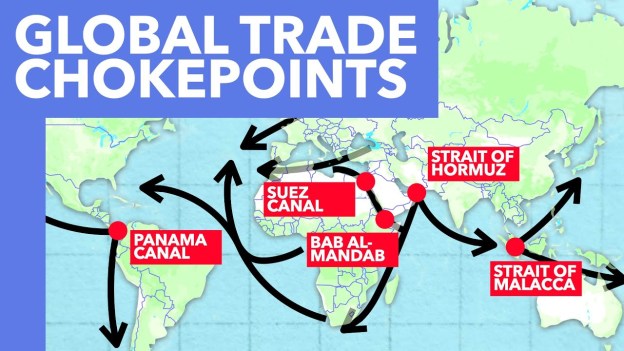
Tag Archives: Strait of Hormuz

Hook Them On. Then Cut Them Off

In exploiting the economic pinch-point off its coast, the strait of Hormuz, Iran is following a trail blazed by the U.S. and China, which for years have used their dominance in key areas of global commerce to pursue their foreign-policy goals…Officials and analysts say the goal is “strategic indispensability”—building deterrence by mutually assured economic destruction. “In order to have that deterrence, in order to say ‘don’t cut off what we need,’ you need to be able to say ‘I can cut off what you need,’ ” said Andrew Capistrano, a visiting research fellow at the Institute of Geoeconomics, a Tokyo-based think tank…

Larger economies can exploit pressure points that flow from their heft in the global economy. The U.S. has long used the dollar-based financial system to sanction individuals, businesses and governments. It has also used America’s grip on semiconductor technology to stymie China’s military and put the brake on Beijing’s ambitions to leapfrog the U.S. as the world’s biggest and most advanced economy.

China exercises its economic might through its near-total control of rare earths. Beijing used the supply chain of these minerals, which are critical in the manufacture of everything from jet fighters to smartphones, as leverage to pressure U.S. industries and win relief on trade and tariffs from Trump…To build deterrence, “you need to get other people hooked on your supply. You need to be part of this interconnected web of the global economy in order to have a seat at the table of power,” said Emily Benson, head of strategy at the advisory firm Minerva Technology Futures.

Excerpt from Jason Douglas, Iran Shows You Don’t Have to Be a Superpower to Wage Economic Warfare, WSJ, Apr. 9, 2026
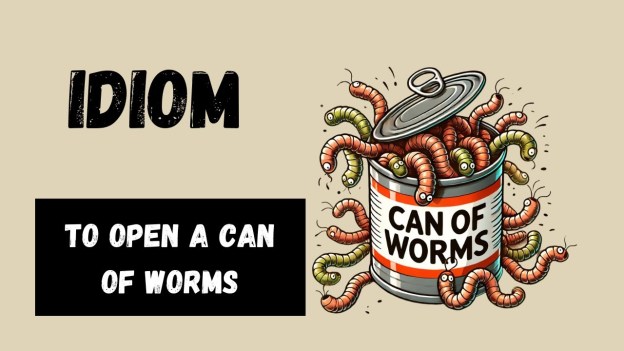
Why the Iran War Feels Like Opening a Can of Worms

Iran has attacked dozens of vessels in the strait, often with small, unmanned boats carrying explosive charges or airborne drones. Other ships have been hit by projectiles, in the strait and in the Gulf of Oman and the Persian Gulf. Iran has began laying plans to allow select ships through, with Tehran’s Parliament considering a law to charge tolls. It raised the prospect that Iran could leverage its position and make deals with nations that need oil, gas and other commodities produced in the Persian Gulf region. “In practice, this creates a form of coerced interdependence: states that seek access to gulf energy may find themselves needing to accommodate Iran, whether directly or indirectly,” said Danny Citrinowicz, a national-security fellow at the Atlantic Council…

The extent to which Iran has seeded naval mines in the strait couldn’t be determined. It has a large array of different mines, including versions that can be anchored to the sea floor and detonated by remote control when a ship passes… Only 24 miles wide at its narrowest point, the Strait of Hormuz is such a confined space that cruise missiles can be fired from hundreds of miles away and still hit ships moving through it…

Houthi militants in Yemen, who are aligned with Iran, waged a two-month campaign in 2025 with missiles, drones and unmanned boats against international shipping that parallels Iran’s closure of the strait. The U.S. struck more than 1,000 targets in Yemen, but never succeeded in halting Houthi attacks fully until the two sides declared a truce in May 2025.

Excerpt from  David S. Cloud et al.,, U.S. War Planes and Helicopters Kick Off Battle to Reopen Hormuz, WSJ, Mar. 19, 2026


,