Tag Archives: Belt and Road China

What Ails the West: the Forgotten Art of Industrialization

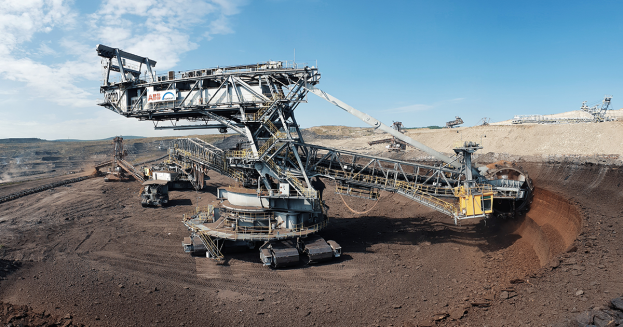
For the past few years, the West has been trying to break China’s grip on minerals that are critical for defense and green technologies. Despite their efforts, Chinese companies are becoming more dominant, not less. They are expanding operations, supercharging supply and causing prices to drop. Their challengers can’t compete. Take nickel, which is needed for electric-vehicle batteries. Chinese processing plants that dot the Indonesian archipelago are pumping out vast quantities of the mineral from new and expanding facilities, jolting the market. Meanwhile, Switzerland-based mining giant Glencore is suspending operations at its nickel plant in New Caledonia, a French territory, concluding it can’t survive despite offers of financial help from Paris. The U.K.’s Horizonte Minerals, whose new Brazilian mine was expected to become a major Western source, said last month that investors had bailed, citing oversupply in the market. Lithium projects in the U.S. and Australia have been postponed or suspended after a surge in Chinese production at home and in sub-Saharan Africa. 

The only dedicated cobalt mine in the U.S. also suspended operations last year, five months after local dignitaries attended its opening ceremony. Its owners say they are struggling against a flood of Chinese-produced cobalt from Indonesia and the Democratic Republic of Congo.

Last year, non-Chinese production of refined cobalt declined to its lowest level in 15 years… The share of lithium mining done within China or by Chinese companies abroad has grown from 14% in 2018 to 35% this year… Over the same time, lithium processing done within China has risen from 63% in 2018 to 70%…China has many advantages in the race to lock up minerals. Its miners are deep-pocketed and aggressive, making bets in resource-rich countries that Western companies have long viewed as corrupt or unstable, such as Indonesia, Mali, Bolivia and Zimbabwe. State banks provide financing for power plants and industrial parks abroad, paving the way for further private Chinese investment.

China’s rapid industrial development also means its companies have spent decades fine-tuning the art of turning raw ore into metals. They can set up new facilities quickly and cheaply. A paper published in February by the Oxford Institute for Energy Studies pegs the costs of building a lithium refinery outside China as three to four times higher than building one within the country. In eastern Indonesia, Chinese companies have built a fleet of highly efficient nickel and cobalt plants over the past few years after mastering a technology Western miners long considered glitchy and expensive. The plants run on coal power, some of it new, at a time when the world is looking to phase out dirty energy. “It’s just a simple, straightforward engineering capability that the Chinese have that has been lost in the rest of the world,” said Jim Lennon, managing director for commodities strategy at Macquarie, an Australian bank. “The Chinese have this overwhelming competitive advantage now that can’t really be addressed.”….

Excerpts from Jon Emont, China Is Winning the Minerals War, WSJ, June 19, 2024

What Eats Alive the Global Banks of China

Eight years after Chinese leader Xi Jinping and his counterparts from Brazil, Russia, India and South Africa established the New Development Bank, with headquarters in Shanghai, it has all but stopped making new loans and is having trouble raising dollar funds to repay its debts…The New Development Bank is the lesser-known of two China-based multilateral lenders. Its larger cousin, the Asian Infrastructure Investment Bank (AIIB), in June 2023 landed in the middle of a public-relations crisis after a disgruntled executive accused it of being controlled by members of China’s Communist Party

Trouble at both banks, as well as at China’s giant Belt and Road infrastructure push, which has seen China spend $1 trillion to expand its influence across Asia, Africa and Latin America, spotlights growing difficulties for Beijing’s strategy to rearrange an international order it considers biased in favor of the West.  Both the AIIB and the New Development Bank were set up in large part to reduce developing countries’ dependence on dollar-based funding—alternatives to the International Monetary Fund that would help finance development in some of the world’s fastest-growing economies. 

The AIIB operates on a much larger scale than the New Development Bank, counting many Western countries such as the U.K. and Canada among its more than 100 members. The bank found itself in a political firestorm this week after its Canadian communications chief resigned and accused the bank’s management of being “dominated by the Communist Party,” allegations that the AIIB called baseless. Nonetheless, Canada’s government said it would halt all activity with the bank while it reviews the allegations, and the bank said it would conduct an internal review.

Meanwhile, the New Development Bank is fighting for its very survival, threatened by its own reliance on the U.S. currency. Two-thirds of the bank’s borrowings are dollar-denominated—hardly in line with the bank’s stated aim to break its members’ reliance on the dollar. 

Soon after Russian troops marched into Ukraine in February 2022, the bank froze all new lending to Russia to assure investors that it was complying with Western sanctions. However, Wall Street quickly became wary of lending to a bank nearly 20% owned by Russia. Xi’s deepening alignment with Russian President Vladimir Putin was another deterrent. Since then, the bank has had to take on increasingly expensive debt to service old borrowings and stay current with its own liquidity requirements. To bolster its resources, the bank is in talks with Saudi Arabia, Argentina and Honduras about becoming members…

Excerpts from Alexander Saeedy and Lingling Wei, A Bank China Built to Challenge the Dollar Now Needs the Dollar,  WSJ, June 17, 2023
 

How to Buy the Global Yes-Men

China will finance the construction of an outpost for a special forces unit of Tajikistan’s police near the Tajik-Afghan border. The post will be located in Tajikistan’s eastern Gorno-Badakhshan Autonomous Province in the Pamir mountains, which border China’s Xinjiang province as well as the northeastern Afghan province of Badakhshan. No Chinese troops will be stationed at the facility.

The plan to build the post comes amid tension between the Dushanbe government and Afghanistan’s new Taliban rulers. Tajik President Emomali Rakhmon has refused to recognise the Taliban government, calling for a broader representation of Afghanistan’s ethnic groups – of which Tajiks are the second-biggest. Kabul, in turn, has warned Dushanbe against meddling in its domestic affairs. According to Russian media, the Taliban have struck an alliance with an ethnic Tajik militant group based in northern Afghanistan which seeks to overthrow Tajikistan’s current government.

China is a major investor in Tajikistan and Beijing has also acted as a donor on several occasions, handing over, for example, a new parliament building free of charge.

Excerpts from China to build outpost for Tajikistan special forces near Afghan border, Reuters, Oct. 28, 2021

The Techno-spheres: Westerners against the Chinese

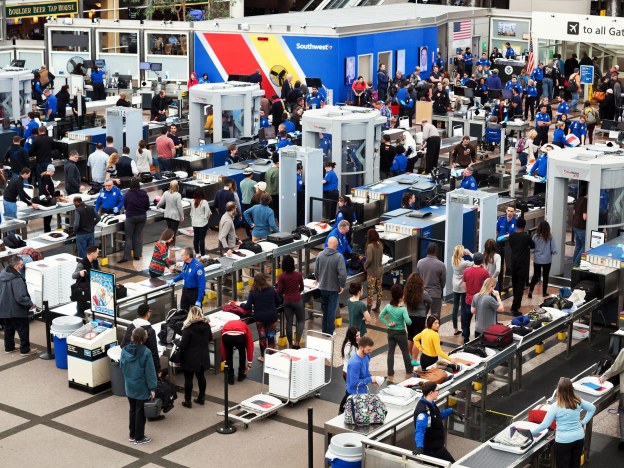
Lithuania’s government on Feb. 17 prohibited Chinese security-scanner maker Nuctech Co. from supplying equipment to the country’s two airports, saying a proposed deal was “not in line with national-security interests.” State-controlled Nuctech, which the U.S. government in December 2020 listed among Chinese entities banned from certain transactions with U.S. parties, had won a tender launched a year ago by state-owned Lithuanian Airports.

Canada last year also abandoned a plan to buy Nuctech scanners for its embassies following controversy around the announced deal. Norway, Croatia and an EU directorate in recent months have also stopped scanner tenders involving Nuctech, although none publicly linked the cancellations to security, as Lithuania did. Lithuania banned China’s Nuctech from supplying security-scanning equipment to its two airports.

“We are choosing the Western technosphere. We are not choosing the Chinese technosphere,” said Laurynas Kasciunas, chairman of the Lithuanian parliament’s national-security and defense committee, which oversees a national-security review board that had recommended banning Nuctech. Such policy reversals remain a minority amid extensive Chinese business activity across the EU. 

Excerpt from Daniel Michaels and Valentina Pop, China Faces European Obstacles as Some Countries Heed U.S. Pressure, WSJ, Feb. 23, 2021

How to Make Friends: Load Them Up with Debt

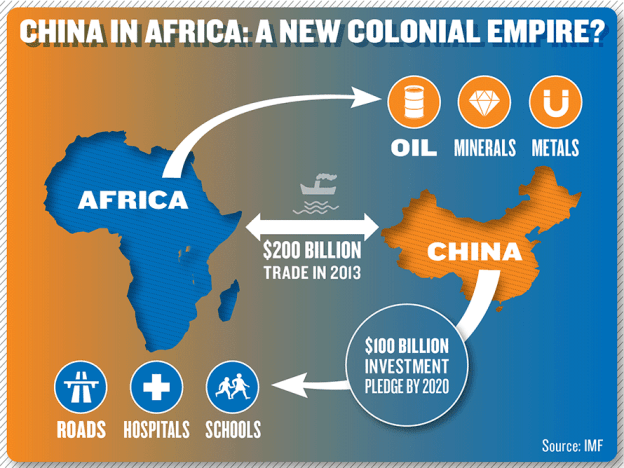
“It’s no secret…China is by far the largest bilateral creditor to African governments,” said Mike Pompeo, America’s secretary of state, in June 2020, blaming it for creating an unsustainable debt burden. The World Bank disclosed ib July 2020, how much governments owe to China (and other lenders). The World Bank report revealed that developing countries owed $104 billion to China at the end of 2018. The total includes soft loans from China’s government, semi-soft loans from “policy banks”, such as China Development Bank, and profit-seeking loans from state-owned commercial lenders. The same countries owed $106bn to the World Bank and $60bn to bondholders…

The new figures confirm Mr Pompeo’s observation that China is by far the biggest bilateral creditor to Africa, and in many poor countries elsewhere. It accounts for about 20% of the total foreign debt owed by the 73 governments eligible for the G-20 moratorium on debt payments due to the COVID-19 pandemic (the Debt Service Suspension Initiative (DSSI)). That is more than all of the Paris Club lenders, including America, Britain and Japan, combined.

Excerpts from Public Finance: The Debt Toll, Economist, July 4, 2020

Strangling China with Hong Kong: the Politics of Fear

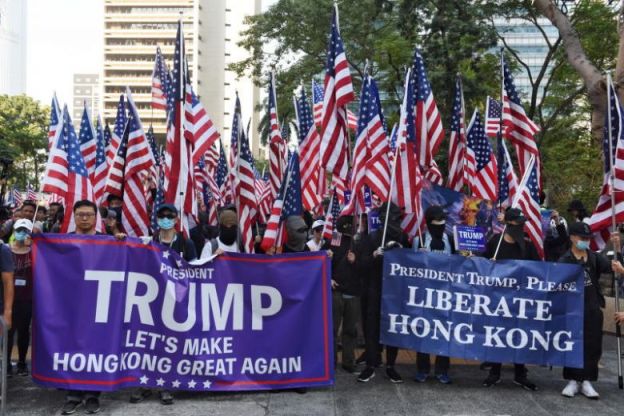
The U.S. determination  that Hong Kong is no longer autonomous from mainland China, under the Hong Kong Policy Act of 1992, will have significant implications for the city’s exporters and businesses.  Sensitive U.S. technologies could no longer be imported into Hong Kong, and the city’s exports might be hit with the same tariffs levied on Chinese trade.

But the act doesn’t cover the far more extensive role Hong Kong plays as China’s main point of access to global finance.  As of 2019, mainland Chinese banks held 8,816 trillion Hong Kong dollars ($1.137 trillion) in assets in the semiautonomous city, an amount that has risen 373% in the last decade…. China’s banks do much of their international business, mostly conducted in U.S. dollars, from Hong Kong. With Shanghai inside China’s walled garden of capital controls, there is no obvious replacement.

While the U.S. doesn’t directly control Hong Kong’s status as a financial center, Washington has demonstrated its extensive reach over the dollar system, with penalties against Korean, French and Lebanese financiers for dealing with sanctioned parties. The U.S. recently threatened Iraq’s access to the New York Federal Reserve, demonstrating a growing willingness to use financial infrastructure as a tool of foreign policy.  Even though the U.S. can’t legislate Hong Kong’s ability to support Chinese banks out of existence, the role of an international funding hub is greatly reduced if your counterparties are too fearful to do business with you.

Putting the ability of Chinese banks to conduct dollar-denominated activities at risk would be deleterious to China’s ability to operate financially overseas, posing a challenge for the largely dollar-denominated Belt and Road global infrastructure initiative. It would also put the more financially fragile parts of the country, like its debt-laden property developers, under strain.  China’s hope to develop yuan into an influential currency also centers on Hong Kong’s remaining a viable global financial center—more than 70% of international trade in the yuan is done in the city.

Excerpts from Mike Bird, How the US Could Really Hurt China, WSJ, May 290, 2020