Tag Archives: cyberwar United States

How to Create Panic? China’s Typhoons

Hackers linked to the Chinese government have broken into a handful of U.S. internet-service providers in 2024 in pursuit of sensitive information…The hacking campaign, called Salt Typhoon by investigators, hasn’t previously been publicly disclosed and is the latest in a series of incursions that U.S. investigators have linked to China in recent years. The intrusion is a sign of the stealthy success Beijing’s massive digital army of cyberspies has had breaking into valuable computer networks in the U.S. and around the globe.

In Salt Typhoon, the actors linked to China burrowed into America’s broadband networks. In this type of intrusion, bad actors aim to establish a foothold within the infrastructure of cable and broadband providers that would allow them to access data stored by telecommunications companies or launch a damaging cyberattack…Investigators are exploring whether the intruders gained access to Cisco Systems routers, core network components that route much of the traffic on the internet, according to people familiar with the matter. Microsoft is investigating the intrusion and what sensitive information may have been accessed, people familiar with the matter said.

China has made a practice of gaining access to internet-service providers around the world. But if hackers gained access to service providers’ core routers, it would leave them in a powerful position to steal information, redirect internet traffic, install malicious software or pivot to new attacks.

In September 2024, U.S. officials said they had disrupted a network of more than 200,000 routers, cameras and other internet-connected consumer devices that served as an entry point into U.S. networks for a China-based hacking group called Flax Typhoon. And in January 2024, federal officials disrupted Volt Typhoon, yet another China-linked campaign that has sought to quietly infiltrate a swath of U.S. critical infrastructure. “The cyber threat posed by the Chinese government is massive,” said Christopher Wray, the Federal Bureau of Investigation’s director, speaking earlier this year at a security conference in Germany. “China’s hacking program is larger than that of every other major nation, combined.”

U.S. security officials allege that Beijing has tried and at times succeeded in burrowing deep into U.S. critical infrastructure networks ranging from water-treatment systems to airports and oil and gas pipelines. Top Biden administration officials have issued public warnings over the past year that China’s actions could threaten American lives and are intended to cause societal panic. The hackers could also disrupt the U.S.’s ability to mobilize support for Taiwan in the event that Chinese leader Xi Jinping orders his military to invade the island….

Excerpts from Sarah Krouse et al., China-Linked Hackers Breach U.S. Internet Providers in New ‘Salt Typhoon’ Cyberattack, WSJ, Sept. 26, 2024
The Under-Our-Noses Nasty Wars

Christopher Wray warned in February 2023 that Beijing’s efforts to covertly plant offensive malware inside U.S. critical infrastructure networks is now at “a scale greater than we’d seen before,” an issue he has deemed a defining national security threat. Citing Volt Typhoon, the name given to the Chinese hacking network that was revealed in 2023 to be lying dormant inside U.S. critical infrastructure, Wray said Beijing-backed actors were pre-positioning malware that could be triggered at any moment to disrupt U.S. critical infrastructure. Officials have grown particularly alarmed at Beijing’s interest in infiltrating U.S. critical infrastructure networks, planting malware inside U.S. computer systems responsible for everything from safe drinking water to aviation traffic so it could detonate, at a moment’s notice, damaging cyberattacks during a conflict.

The Netherlands’ spy agencies said in February 2024 that Chinese hackers had used malware to gain access to a Dutch military network in 2023. The agency, considered to have one of Europe’s top cyber capabilities, said it made the rare disclosure to show the scale of the threat and reduce the stigma of being targeted so allied governments can better pool knowledge.

A report released in February 2024 by agencies including the FBI, the Cybersecurity and Infrastructure Agency and the National Security Agency said Volt Typhoon hackers had maintained access in some U.S. networks for five or more years, and while it targeted only U.S. infrastructure directly, the infiltration was likely to have affected “Five Eyes” allies…

Excerpts from  Joe Parkinson, BI Director Says China Cyberattacks on U.S. Infrastructure Now at Unprecedented Scale, WSJ, Feb. 19, 2024

Invisible CyberAttack: Volt Typhoon

Cybersecurity agencies in the U.S., the U.K., Canada, Australia and New Zealand—an intelligence-sharing group of countries known as the Five Eyes—said a Chinese state-sponsored actor is employing a tactic known as “living off the land,” which involves using built-in network administration tools to gain access to systems. The activity blends in with normal Windows system activities, allowing the actor to evade detection. The campaign is impacting communications, manufacturing, transportation, maritime and other sectors in parts of the U.S. and Guam, the American territory that hosts major military installations in the Pacific, according to a blog post from Microsoft, publisher of the Windows operating system. The tech giant said the Chinese actor, known as Volt Typhoon, is pursuing capabilities that could disrupt communication infrastructure between the U.S. and Asia in a future crisis.

China has consistently denied carrying out cyberattacks and has accused the U.S. of being the biggest culprit of such efforts…By gaining access to a system through the “living off the land” approach—and maintaining that access while remaining undetected—hackers can glean intelligence about how the system operates. It could also give them the ability to disrupt the system later with no warning—though the intent could just be information gathering…

Excerpts from Mike Cherney and Austin Ramzy, Hack Hurts Bid for Beijing Reset, WSJ, May 26, 2023

The Repressive Digital Technologies of the West

A growing, multi-billion-dollar industry exports “intrusion software” designed to snoop on smartphones, desktop computers and servers. There is compelling evidence that such software is being used by oppressive regimes to spy on and harass their critics. The same tools could also proliferate and be turned back against the West. Governments need to ensure that this new kind of arms export does not slip through the net.

A recent lawsuit brought by WhatsApp, for instance, alleges that more than 1,400 users of its messaging app were targeted using software made by NSO Group, an Israeli firm. Many of the alleged victims were lawyers, journalists and campaigners. (NSO denies the allegations and says its technology is not designed or licensed for use against human-rights activists and journalists.) Other firms’ hacking tools were used by the blood-soaked regime of Omar al-Bashir in Sudan. These technologies can be used across borders. Some victims of oppressive governments have been dissidents or lawyers living as exiles in rich countries.

Western governments should tighten the rules for moral, economic and strategic reasons. The moral case is obvious. It makes no sense for rich democracies to complain about China’s export of repressive digital technologies if Western tools can be used to the same ends. The economic case is clear, too: unlike conventional arms sales, a reduction in spyware exports would not lead to big manufacturing-job losses at home.

The strategic case revolves around the risk of proliferation. Software can be reverse-engineered, copied indefinitely and—potentially—used to attack anyone in the world…. There is a risk that oppressive regimes acquire capabilities that can then be used against not just their own citizens, but Western citizens, firms and allies, too. It would be in the West’s collective self-interest to limit the spread of such technology.

A starting-point would be to enforce existing export-licensing more tightly… Rich countries should make it harder for ex-spooks to pursue second careers as digital mercenaries in the service of autocrats. The arms trade used to be about rifles, explosives and jets. Now it is about software and information, too. Time for the regime governing the export of weapons to catch up

The spying business: Western firms should not sell spyware to tyrants, Economist, Dec. 14, 2019

Cyberwar: government hackers

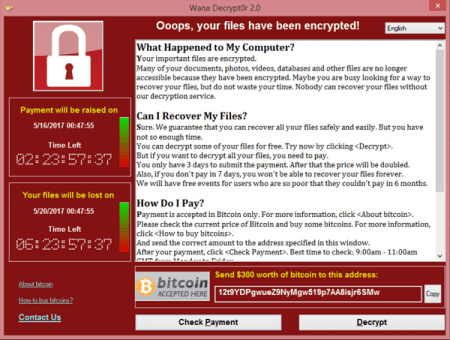
The mysterious hacking group that supplied a critical component of the WannaCry “ransomware” software attack that spread across the globe in mid-May 2017 has been releasing alleged National Security Agency secrets for the past eight months.  Former intelligence officials now fear that the hackers, who go by the name Shadow Brokers, are taking a new tack: exposing the identities of the NSA’s computer-hacking team. That potentially could subject these government experts to charges when traveling abroad.

The Shadow Brokers on April 14, 2017 posted on a Russian computer file-sharing site what they said were NSA files containing previously unknown attack tools and details of an alleged NSA hack affecting Middle Eastern and Panamanian financial institutions.

But something went largely unnoticed outside the intelligence community. Buried in the files’ “metadata”—a hidden area that typically lists a file’s creators and editors—were four names. It isn’t clear whether the names were published intentionally or whether the files were doctored. At least one person named in the metadata worked for the NSA, a person familiar with the matter said.  Additionally, the hacking group in April, 2017 sent several public tweets that seemingly threatened to expose the activities of a fifth person, former NSA employee Jake Williams, who had written a blog post speculating the group has ties to Russia… Security experts who have examined the documents believe they contain legitimate information, including code that can be used in hacks, as well as the names of the files’ creators and editors.

Because nation-state hackers might run afoul of other countries’ laws while discharging their duties, they could, if identified, face charges when outside their country. So, to keep their own people safe, governments for decades have abided by a “gentleman’s agreement” that allows government-backed hackers to operate in anonymity, former intelligence officials say….

Some former intelligence officials suggested the U.S. prompted the outing of state-sponsored hackers when it indicted five Chinese military hackers by name in 2014, and more recently brought charges against two officers with Russia’s Federal Security Service over a 2014 Yahoo Inc. breach.  By exposing cyberagents, the Shadow Brokers appear to be taking a page from the U.S. playbook, said Mr. Williams, who worked for the NSA’s Tailored Access Operations hacking group until 2013. An NSA spokesman said the agency doesn’t comment about “most individuals’ possible current, past or future employment with the agency.”  “We’ve fired first,” Mr. Williams said, referring to the U.S. charging the alleged Chinese hackers by name. “This is us taking flak.”…

The documents revealed jealously guarded tactics and techniques the NSA uses to access computer systems…For example, the files include source code for software designed to give its creators remote access to hacked machines, and to evade detection from antivirus software. If the code was created by the NSA, it now gives security professionals a digital fingerprint they can use to track the NSA’s activities prior to the leak.

That could prove disruptive to NSA activities, forcing the agency to consider pulling its software from others’ networks and taking other steps to erase its tracks. And while the information could help companies determine whether they have been hacked by the NSA, it could also be used to create more malicious software. The Shadow Brokers tools, for example, are now being used to install malicious software such as WannaCry on corporate networks.

Mr. Williams initially thought the Shadow Brokers had access only to a limited set of NSA tools. His assessment changed after three tweets directed at him April 9, 2017 included terms suggesting the group had “a lot of operational data or at least operational insight” into his work at the NSA, he said.  The tweets, which are public, are cryptic. They express displeasure over an article Mr. Williams wrote attempting to link the Shadow Brokers to Russia. They also mention apparent software code names, including “OddJob” and “Windows BITS persistence.”…..OddJob is a reference to software released by the Shadow Brokers five days after the tweets. “Windows BITS persistence” is a term whose meaning isn’t publicly known.

Excerpts from In Modern Cyber War, the Spies Can Become Targets, Too, Wall Street Journal, May 25, 2017