Tag Archives: eviction of indigenous peoples

Ousting Indigenous Peoples is a Brutal Way to Protect the Environment

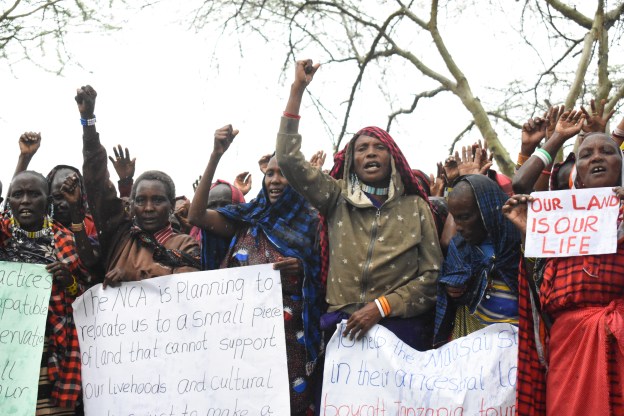
The government of Tanzania claims that the Maasai, the indigenous people of Tanzania,  present a threat to the ecosystem of the Serengeti National Park. The government says the seminomadic cattle farmers are a threat to the savannas and watering holes in an area that sustains the country’s money-spinning safari resorts and hunting reserves and, more recently, a swath of new carbon-credit projects.

To protect these areas, President Samia Suluhu Hassan’s government has outlawed human settlement there and begun evicting some of the more than 110,000 Maasai from the Ngorongoro Conservation Area—the vast zone of grass-, wood- and wetlands adjacent to the Serengeti that the Maasai have used for both herding and tourism for the past 65 years.

The area includes the famous Ngorongoro Crater, the world’s largest, fully-intact caldera and home of one of Africa’s densest populations of zebras, gazelles and other large mammals…The government argues that the number of Maasai living in Ngorongoro has expanded from just 8,000 in 1959, outpacing Tanzania’s overall population growth. The herders, along with their cattle, are overwhelming the area’s fragile ecosystem, it says. Similar warnings have been issued by the United Nations Educational, Scientific and Cultural Organization, or Unesco, which declared the Ngorongoro Conservation Area a World Heritage site in 1979.


But for the Maasai, the evictions are endangering a centuries-old way of life they say is much closer to nature than the rest of rapidly urbanizing Tanzania. They accuse the government of giving priority to revenue from foreign tourists, investors and conservation groups over the lives and livelihoods of some of its own citizens. ..Experts and activists focused on the rights of indigenous people say the Maasai are the latest group caught in the murky intersection of tourism, biodiversity protection and global climate goals. Similar conservation-related evictions have also targeted indigenous communities in the Brazilian Amazon and the Nouabalé-Ndoki rainforest in the Republic of Congo.

Revenue from tourism jumped 40% to $3.5 billion in 2023, about 17% of Tanzania’s gross domestic product, and according to government projections could reach $6 billion by 2025. The government has already set aside swaths of land around the Ngorongoro Crater previously reserved for the Maasai for the construction of a China-funded geological park, where tourists and researchers can explore fossils, rock paintings and other archaeological artifacts dating as far back as 4 million years ago. To the south of the Ngorongoro Conservation Area, a local company called Carbon Tanzania is selling carbon credits linked to about 273,000 acres of land that the Maasai have also used for grazing and limited cultivation. The project restricts the cutting down of trees but allows cultivation in some zones…

One of the most violent standoffs between the Maasai and Tanzanian authorities took place in mid-2022 in the grassy plains of Loliondo, about 100 miles west of Serengeti. Heavily armed police and rangers stormed Maasai villages, fired tear gas and live rounds, and bulldozed hundreds of houses as they sought to seize some 37,000 acres of land for a new game reserve. One police officer was killed by an arrow shot by the Maasai, authorities said. Many Maasai were wounded in the clashes, and thousands fled into neighboring Kenya to seek medical treatment. Dozens of others were arrested. After the mayhem in Loliondo, authorities appeared to have opted for a more tactical approach in neighboring Ngorongoro, closing down schools, water sources and hospitals to force residents out of homes, Maasai activists say.

Excerpts from Nicholas Bariyo, The Safaris and Carbon-Credit Projects Threatening the Serengeti’s Maasai, WSJ, Dec. 22, 2024
The Battle for Biodiversity and Human Rights

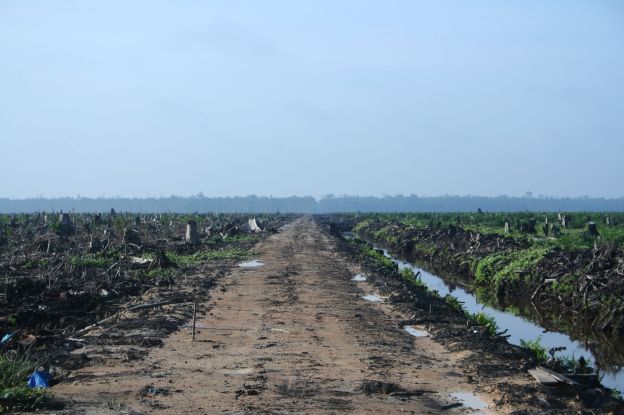
From the lush Amazon rainforest to the frigid Arctic Ocean, the world’s landscapes — and all the wildlife they contain — are under threat, and the world needs to set aside a third of all land and sea territories to save them, U.N. experts say.

The call is central to the global agreement being hashed out in December 2022 at the U.N. biodiversity summit in Montreal. If approved, governments would be agreeing to set aside 30% of their land and sea territories for conservation by 2030 – the so-called 30-by-30 goal, doubling the amount of land area and more than tripling the ocean territory currently under conservation…

A June 2022 study in the journal Science found, however, that at least 44% of global land area would be needed to protect areas with a high diversity of species, prevent the loss of intact ecosystems, and optimize the representation of different landscapes and species. But more than 1.8 billion people live in these areas

One of the key tension points that has emerged in the 30-by-30 debate at COP15 is whether the target should be carried out globally or at a national level…It is an important distinction, scientists and negotiators said. Some countries are small, without much land to set aside for nature. Others are vast and still contain a high degree of biodiversity, such as tropical forest nations like Brazil and Indonesia. Were such countries to protect only 30% of their territories, that could actually result in a significant loss of nature…Currently, just under 50% of the Amazon is under some form of official protection or indigenous stewardship, so a national pledge to conserve 30% would represent a significant downgrade.

The other dispute plaguing 30-by-30 is over what should count as protection. Some countries might allow people to live within protected areas or promote indigenous stewardship of these lands. Some might even allow for extractive industries to operate under permits and regulation. In other cases, conservation areas are off limits to everyone. The European Union has proposed allowing activities like logging, mining and fishing to be carried out under conservation management for 20% of protected areas, while 10% would be held under stricter protections.

The idea caused environmental nonprofit Greenpeace to accused the EU last week of trying to water down language on 30-by-30, which the EU denied.

Excerpts from Gloria Dickie, Protecting 30% of the planet to save nature is not as simple as it sounds, Reuters Dec. 14, 2022

Sins of Environmentalism

During the opening ceremony of the (Conference of the Parties) COP15 of the Biodiversity Convention taking place in early December 2022,  Canadian Prime Minister Justin Trudeau called for a global agreement to protect 30% of the world’s land and water by 2030. This so-called ’30×30′ plan is opposed by a number of groups that promote the rights of indigenous peoples. According to Survival International, an organization campaigning for Indigenous rights, 30 x 30 will be the biggest land grab in history.

Already in many Protected Areas around the world local people, who have called the land home for generations, are no longer allowed to live on and use the natural environment to feed their families, gather medicinal plants or visit sacred sites.

Fortress Conservation’ is one example of a conservation model that excludes Indigenous communities. It began with the formation of Yosemite, the world’s first national park, in North America over 150 years ago.  To preserve the ‘pristine wilderness’ humans needed to be expelled so the native Americans, who had lived in and cared for the region for thousands of years, were evicted.

Only 3 per cent of the world’s land remains ecologically intact, and biodiversity loss continues at an alarming rate.  In 2010, member states of the Convention on Biological Diversity (CBD) committed to placing 17 per cent of the world’s land within protected areas by 2020. Yet during that decade global biodiversity actually declined significantly.

There have also been systemic human rights abuses. Rainforest Foundation UK protects the world’s rainforests by supporting and empowering the Indigenous people and local communities which live in them.  But its research into 34 Protected Areas in the Congo Basin showed that without the presence of Indigenous communities, animal populations dwindled, and extractive activities increased. This was despite large investments having been channeled into them.  It also uncovered widespread disregard for local communities’ rights and livelihoods and conflict between forest peoples and conservationists in this region.

According to Joe Eisen, Executive Director of Rainforest Foundation UK, human rights abuses are commonplace in the Congo Basin. “Our research has shown these human rights abuses are not just the isolated actions of rogue park rangers but are rather part of a system in which displacement, torture, gender-based violence and extrajudicial killings are used to control Indigenous peoples and other local communities who live in, and depend on, areas of high conservation value,” he says.

Protected Areas are often managed by major international conservation organizations, who employ armed guards to evict the local population and prevent their return. These actions have long-term consequences and destroy Indigenous livelihoods and cultures.

There are calls for the development of a community-based conservation model, which empowers Indigenous people, rather than removing them from their ancestral lands.

Excerpts from Plans to protect 30% of the planet by 2030 could be ‘devastating’ for Indigenous people, Euronews, Dec. 8, 2022

Archipelago for the Military: Chagos

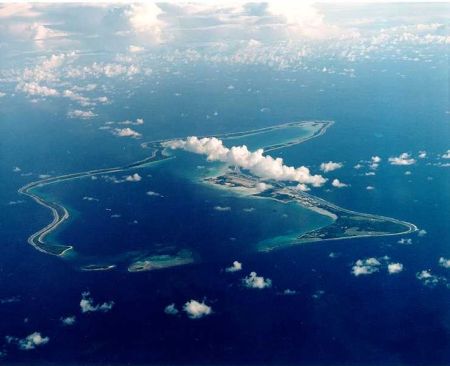
In November 1965, the UK purchased the entire Chagos Archipelago from the then self governing colony of Mauritius for £3 million to create the British Indian Ocean Territory (BIOT), with the intent of ultimately closing the plantations to provide the uninhabited British territory from which the U.S. would conduct its military activities in the region. On 30 December 1966, the U.S. and the UK executed an Agreement through an Exchange of Notes which permit the United States Armed Forces to use any island of the BIOT for defense purposes for 50 years (through December 2016), followed by a 20-year optional extension (to 2036) to which both parties must agree by December 2014. As of 2010, only the atoll of Diego Garcia has been transformed into a military facility.  The indigenous populations of the islands were relocated to Mauritius and the Seychelles to make way for a joint United States-United Kingdom military base on Diego Garcia.

There are two transnational political issues which affect the status of the Chagos archipelago.  First, the island nation of Mauritius claims the Chagos Archipelago (which is coterminous with the BIOT), including Diego Garcia. A subsidiary issue is the Mauritian opposition to the 1 April 2010 UK Government’s declaration that the BIOT is a Marine Protected Area with fishing and extractive industry (including oil and gas exploration) prohibited.

Second, the issue of compensation and repatriation of the former inhabitants of several of the archipelago’s atolls, exiled since 1973, continues in litigation and as of 23 August 2010 has been submitted to the European Court of Human Rights by a group of former residents.Litigation continues as of 2012 regarding the right of return for the displaced islanders and Mauritian sovereignty claims. In addition, advocacy on the Chagossians’ behalf continues both in the United States and in Europe.  According to a document released by wikileaks the marine protected area in the Chagos archipelago was established to prevent former inhabitants “to pursue their claim for resettlement on the islands.”

Excerpts from wikipedia Chagos Archipelago

More on IPS environment