Tag Archives: France nuclear energy

The Nuclear Waste Problem of Power-Hungry AI

A nuclear power renaissance—driven in part by power-hungry AI data centers—has revived a thorny problem: what to do with the radioactive waste left behind. Already, more than 90,000 metric tons of spent nuclear fuel is being stored at sites in 39 states. These include 73 commercial nuclear power plants and more than three dozen university and government facilities, according to a 2024 report by the Pacific Northwest National Laboratory…Meanwhile, nuclear reactors continue to provide almost 20% of U.S. electricity and produce about 2,000 metric tons of waste each year. As additional plants become available to meet the demands of data centers, industrial plants, homes and electric vehicles, the waste pile is poised to grow even more.  The US first new reactors in three decades were completed last year in Georgia. Plans are in the works to reopen closed reactors in Michigan, Iowa, Pennsylvania and South Carolina…

France generates 70% of its electricity from nuclear energy, recycles about 96% of its waste into new fuel and stores the remainder in a centralized cooling pool in Normandy. French officials expect to start construction in 2027 on a permanent underground repository in northeastern France to open by 2035.  In November 2025, Canadian officials selected a permanent site for nuclear waste to be dug out of bedrock in northwestern Ontario. But U.S. efforts stalled decades ago, when a $15 billion project to build a permanent, underground storage facility at Yucca Mountain, Nevada, was halted amid opposition by elected officials in the state. The Yucca Mountain failure cast a shadow over efforts to build a permanent disposal site, according to interviews with nuclear experts, policymakers and elected officials. 

Excerpts Eric Niiler, Nuclear Power’s Revival Is Here. What Do You Do With All the Radioactive Waste?, WSJ, Mar. 5, 2025
National Security and Nuclear Industry

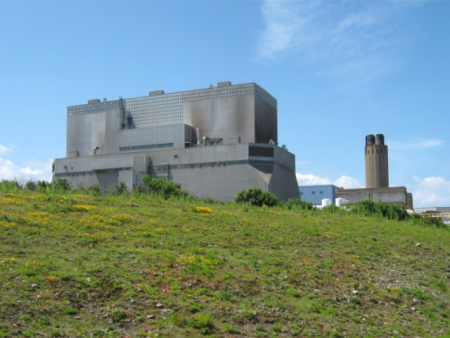
[A third nuclear reactor is to be built in Flamanville, France  by Electricité de France (EDF)]…Called Flamanville 3, is likely to become the focus of international attention because it is the model for an imminent expansion across the channel…EDF has agreed on October 21st agreed with China General Nuclear Power Corp (CGN), a state-owned entity, to build two reactors of the same design in south-west England called Hinkley Point C. EDF will own two-thirds of the project and CGN a third. The plant in Somerset is supposed to open by 2025, after construction that is forecast to cost £24.5 billion ($37.8 billion)…

The history of Flamanville 3, where work began in 2007, indicates how difficult that might be. It was planned as a five-year scheme, but this month EDF, which is mostly state-owned, formally asked officials to extend the deadline to 2020. Its original budget of €3.3 billion has more than tripled, to €10.5 billion ($11.9 billion). Getting its new European Pressurised Reactor (EPR) into service is proving harder than expected. One problem is the troubled condition of Areva, another mostly state-owned French firm, which supplies reactor components. It reported losses of nearly €5 billion in March, because of soaring costs and long delays at the only other EPR being built in Europe, Olkiluoto 3, in Finland. Work began in 2005 but it will not open before 2018 at the earliest.

The main technical problem at Flamanville 3 concerns suspicions of high levels of carbon in the steel of a crucial component, the vessel, already installed under the dome of the new reactor. Replacing it now, if inspectors conclude it is too brittle, would be costly. In June the company also said it was double-checking the working of safety valves.

Meanwhile EDF’s financial burden grows. It boasts of €73 billion in global revenues, but faces a threefold strain. Demand for electricity is stalling in France, its main market—and, as problematic, the country plans to cut nuclear’s share of electricity generation to half of the total, by 2025, from 75%. Next, though details are not finalised, EDF will absorb the nuclear unit of troubled Areva. Last, it has to upgrade, or at least maintain, France’s stock of ageing reactors. Mr Lévy told French radio on October 18th that capital expenditure for that alone would be around €50 billion.

No wonder ratings agencies judge that EDF’s financial prospects are secure only because of its state backing.  EDF’s prospects, indeed those of any nuclear company, depend on the backing of politicians who want to preserve nuclear expertise and jobs at home.

EDF’s Nuclear Ambitions: French Lessons, Economist,Oct. 24, 2015, at 63