Tag Archives: Nagoya Protocol

How to Strengthen the Immune System of Plants: biodiversity

In the past 150 years, the concentration of carbon dioxide in the atmosphere has risen from 280 parts per million (ppm) to 410 ppm. For farmers this is mixed news. Any change in familiar weather patterns caused by the atmospheric warming this rise is bringing is bound to be disruptive. But more carbon dioxide means more fuel for photosynthesis and therefore enhanced growth—sometimes by as much as 40%. And for those in temperate zones, rising temperatures may bring milder weather and a longer growing season. (In the tropics the effects are not so likely to be benign.) What is not clear, though, and not much investigated, is how rising CO2 levels will affect the relation between crops and the diseases that affect them…

Plant biology is altered substantially by a range of environmental factors. This makes it difficult to predict what effect a changing climate will have on particular bits of agriculture. Carbon dioxide is a case in point. It enhances growth of many plants but,  it also shifts the defences to favour some types of disease over others.

To make matters even more complicated, evidence is mounting that changes in temperature and water availability also shift plant immune responses. André Velásquez and Sheng Yang He, at Michigan State University, wrote an extensive review on the warfare between plants and diseases in Current Biology in 2018. They noted that though some valuable crops, such as potatoes and rice, experience less disease as moisture levels increase, this is not the case for most plants. High humidity, in general, favours the spread of botanical diseases. The same can be said for temperature—with some diseases, like papaya ringspot virus, thriving in rising temperatures while others, for example potato cyst, are weakened.

The problems are daunting, then, but there is a way to try to solve them… Genes which grant resistance to diseases that might become severe in the future need to be tracked down. Modern crops have been streamlined by artificial selection to be excellent at growing today. This means that they have the genes they need to flourish when faced with the challenges expected from current conditions, but nothing more. Such crops are thus vulnerable to changes in their environment.  One way to find genes that may alter this state of affairs is to look to crops’ wild relatives. Uncossetted by farmers, these plants must survive disease by themselves—and have been fitted out by evolution with genes to do so. Borrowing their dna makes sense. But that means collecting and cataloguing them. This is being done, but not fast enough. The International Centre for Tropical Agriculture, a charity which works in the area, reckons that about 30% of the wild relatives of modern crops are unrepresented in gene banks, and almost all of the rest are underrepresented….

[This is becuase] most countries are, rightly, protective of their genetic patrimony. If money is to be made by incorporating genes from their plants into crops, they want to have a share of it. It is therefore incumbent on rich countries to abide by rules that enable poor ones to participate in seed collecting without losing out financially. Poor, plant-rich countries are in any case those whose farmers are most likely to be hurt by global warming. It would be ironic if that were made worse because genes from those countries’ plants were unavailable to future-proof the world’s crops.

Excerpts from Blocking the Road to Rusty Death: Climate Change and Crop Disease, Economist,  Apr. 20, 2019
Who Owns the Genes in the Seas?

It’s an eye-catching statistic: A single company, the multinational chemical giant BASF, owns nearly half of the patents issued on 13,000 DNA sequences from marine organisms. That number is now helping fuel high-stakes global negotiations on a contentious question: how to fairly regulate the growing exploitation of genes collected in the open ocean, beyond any nation’s jurisdiction.

The negotiations that took place at the UN in September 2018 aim, inter alia, to replace today’s free-for-all scramble for marine genetic resources with a more orderly and perhaps more just regime.  Many developed nations and industry groups are adamant that any new rules should not complicate efforts to discover and patent marine genes that may help create better chemicals, cosmetics, and crops. But many developing nations want rules that will ensure they, too, share in any benefits. Scientists are also watching. A regulatory regime that is too burdensome could have “a negative impact” on scientists engaged in “noncommercial ocean research,” warns Robert Blasiak, a marine policy specialist at the Stockholm Resilience Centre.  It is not the first time nations have wrangled over how to share genetic resources. Under another U.N. pact, the 2010 Nagoya Protocol, 105 countries have agreed to rules to prevent so-called biopiracy: the removal of biological resources—such as plant or animal DNA—from a nation’s habitats without proper permission or compensation.

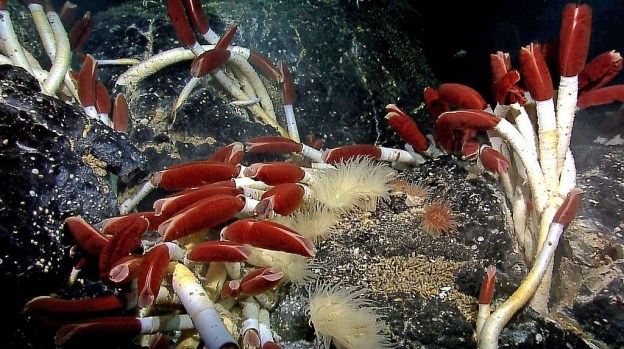
Those rules don’t apply in international waters, which begin 200 nautical miles from shore and are attracting growing interest from researchers and companies searching for valuable genes. The first patent on DNA from a marine organism was granted in 1988 for a sequence from the European eel, which spends part of its life in freshwater. Since then, more than 300 companies, universities, and others have laid claim to sequences from 862 marine species, a team led by Blasiak reported in June in Science Advances. Extremophiles have been especially prized. Genes from worms found in deep-sea hydrothermal vents, for example, encode polymers used in cosmetics. And BASF has patented other worm DNA that the company believes could help improve crop yields. The conglomerate, based in Ludwigshafen, Germany, says it found most of its 5700 sequences in public databases…

It may take years for nations to agree on a marine biodiversity treaty; [A]n “ideological divide” between developing and developed countries has, so far, “led to stalemate” on how to handle marine genetic resources, says Harriet Harden-Davies, a policy expert at the University of Wollongong in Australia.

Most developing nations want to expand the “common heritage” philosophy embedded in the 1982 United Nations Convention on the Law of the Sea, which declares that resources found on or under the seabed, such as minerals, are the “common heritage of mankind.” Applying that principle to genetic resources would promote “solidarity in the preservation and conservation of a good we all share,” South Africa’s negotiating team said in a recent statement. Under such an approach, those who profit from marine genes could, for example, pay into a global fund that would be used to compensate other nations for the use of shared resources, possibly supporting scientific training or conservation.

But developed nations including the United States, Russia, and Japan oppose extending the “common heritage” language, fearing burdensome and unworkable regulations. They argue access to high seas genes should be guaranteed to all nations under the principle of the “freedom of the high seas,” also enshrined in the Law of the Sea. That approach essentially amounts to finders keepers, although countries traditionally have balanced unfettered access with other principles, such as the value of conservation, in developing rules for shipping, fishing, and research in international waters.

The European Union and other parties want to sidestep the debate and seek a middle ground. One influential proposal would allow nations to prospect for high seas genes, but require that they publish the sequences they uncover. Companies could also choose to keep sequences private temporarily, in order to be able to patent them, if they contribute to an international fund that would support marine research by poorer nations. “Researchers all around the world should be put all on a level playing field,” says Arianna Broggiato, a Brussels-based legal adviser for the consultancy eCoast, who co-authored a paper on the concept this year in The International Journal of Marine and Coastal Law.

Exceprts from Eli Kintisch U.N. tackles gene prospecting on the high seas, Science, Sept. 7, 2018

An Earth Bank of Codes: who owns what in the biological world

A project with the scale and sweep of the original Human Genome Project…should be to gather DNA sequences from specimens of all complex life on Earth. They decided to call it the Earth BioGenome Project (EBP).

At around the same time as this meeting, a Peruvian entrepreneur living in São Paulo, Brazil, was formulating an audacious plan of his own. Juan Carlos Castilla Rubio wanted to shift the economy of the Amazon basin away from industries such as mining, logging and ranching, and towards one based on exploiting the region’s living organisms and the biological information they embody. At least twice in the past—with the businesses of rubber-tree plantations, and of blood-pressure drugs called ACE inhibitors, which are derived from snake venom—Amazonian organisms have helped create industries worth billions of dollars. ….

For the shift he had in mind to happen, though, he reasoned that both those who live in the Amazon basin and those who govern it would have to share in the profits of this putative new economy. And one part of ensuring this happened would be to devise a way to stop a repetition of what occurred with rubber and ACE inhibitors—namely, their appropriation by foreign firms, without royalties or tax revenues accruing to the locals.

Such thinking is not unique to Mr Castilla. An international agreement called the Nagoya protocol already gives legal rights to the country of origin of exploited biological material. What is unique, or at least unusual, about Mr Castilla’s approach, though, is that he also understands how regulations intended to enforce such rights can get in the way of the research needed to turn knowledge into profit. To that end he has been putting his mind to the question of how to create an open library of the Amazon’s biological data (particularly DNA sequences) in a way that can also track who does what with those data, and automatically distribute part of any commercial value that results from such activities to the country of origin. He calls his idea the Amazon Bank of Codes.

Now, under the auspices of the World Economic Forum’s annual meeting at Davos, a Swiss ski resort, these two ideas have come together. On January 23, 2018 it was announced that the EBP will help collect the data to be stored in the code bank. The EBP’s stated goal is to sequence, within a decade, the genomes of all 1.5m known species of eukaryotes. ..That is an ambitious timetable. The first part would require deciphering more than eight genomes a day; the second almost 140; the third, about 1,000. For comparison, the number of eukaryotic genomes sequenced so far is about 2,500…

Big sequencing centres like BGI in China, the Rockefeller University’s Genomic Resource Centre in America, and the Sanger Institute in Britain, as well as a host of smaller operations, are all eager for their share of this pot. For the later, cruder, stages of the project Complete Genomics, a Californian startup bought by BGI, thinks it can bring the cost of a rough-and-ready sequence down to $100. A hand-held sequencer made by Oxford Nanopore, a British company, may be able to match that and also make the technology portable…..It is an effort in danger of running into the Nagoya protocol. Permission will have to be sought from every government whose territory is sampled. That will be a bureaucratic nightmare. Indeed, John Kress of the Smithsonian, another of the EBP’s founders, says many previous sequencing ventures have foundered on the rock of such permission. And that is why those running the EBP are so keen to recruit Mr Castilla and his code bank.

The idea of the code bank is to build a database of biological information using a blockchain. Though blockchains are best known as the technology that underpins bitcoin and other crypto-currencies, they have other uses. In particular, they can be employed to create “smart contracts” that monitor and execute themselves. To obtain access to Mr Castilla’s code bank would mean entering into such a contract, which would track how the knowledge thus tapped was subsequently used. If such use was commercial, a payment would be transferred automatically to the designated owners of the downloaded data. Mr Castilla hopes for a proof-of-principle demonstration of his platform to be ready within a few months.

In theory, smart contracts of this sort would give governments wary of biopiracy peace of mind, while also encouraging people to experiment with the data. And genomic data are, in Mr Castilla’s vision, just the start. He sees the Amazon Bank of Codes eventually encompassing all manner of biological compounds—snake venoms of the sort used to create ACE inhibitors, for example—or even behavioural characteristics like the congestion-free movement of army-ant colonies, which has inspired algorithms for co-ordinating fleets of self-driving cars. His eventual goal is to venture beyond the Amazon itself, and combine his planned repository with similar ones in other parts of the world, creating an Earth Bank of Codes.

[I]f the EBP succeeds, be able to use the evolutionary connections between genomes to devise a definitive version of the tree of eukaryotic life. That would offer biologists what the periodic table offers chemists, namely a clear framework within which to operate. Mr Castilla, for his part, would have rewritten the rules of international trade by bringing the raw material of biotechnology into an orderly pattern of ownership. If, as many suspect, biology proves to be to future industries what physics and chemistry have been to industries past, that would be a feat of lasting value.

Excerpts from Genomics, Sequencing the World, Economist, Jan. 27, 2018

Fighting Biopiracy: European Union

The European Union is debating a biopiracy law requiring industry to compensate indigenous people if it makes commercial use of local knowledge such as plant-based medicines.  Under the law – based on the international convention on access to biodiversity, the Nagoya protocol – the pharmaceuticals industry would need the written consent of local or indigenous people before exploring their region’s genetic resources or making use of their traditional know-how. Relevant authorities would have the power to sanction companies which failed to comply, protecting local interests from the predatory attitude of big European companies.

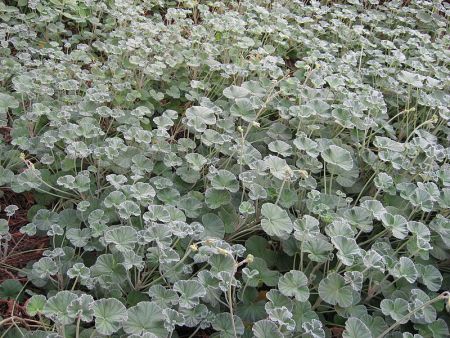
A German pharmaceutical company’s dealings in South Africa [is an example of biopiracy].  Pelargonium sidoides, a variety of geranium known for its antimicrobial and expectorant qualities, has been used traditionally by indigenous communities in South Africa for centuries to treat bronchitis and other respiratory diseases. It also stimulates the nervous system, so has been used in the treatment of AIDS and tuberculosis.  In 2000, the German company Schwabe made significant profits on Umckaloabo, a product derived from the geranium, without compensating local communities. It then filed patents claiming exclusive rights to the medical use of the plant.

But in 2010 the patents were cancelled following appeals from the African Centre for Biosafety in South Africa and the Bern Declaration in Switzerland, calling the patents “an illegitimate and illegal monopolization of genetic resources derived from traditional knowledge and a stark opposition to the Convention on Biodiversity.”…[The] law would help protect biodiversity and ensure that the people from the region are adequately compensated for their resource and their traditional know-how. …The need to ensure the property rights of indigenous populations becomes more pressing as industry looks more and more to plant and animal-based cures to common diseases.Only 16 countries have ratified the Nagoya protocol. The European Union and its 24 of its 27 member states have signed the convention, but are yet to ratify it. When they do, Nagoya should soon reach the 50 states needed for it to come into force…  “The 16 states are countries in the South…

Excerpts, EU ponders biopiracy law to protect indigeneous people, EurActiv, April 26,  2013

See also EU portal on Biodiversity and Benefits Sharing

See also article on Alice v. Schwabe