Tag Archives: nuclear test North Korea

Back to 2030: Nuclear Race is Hot Again

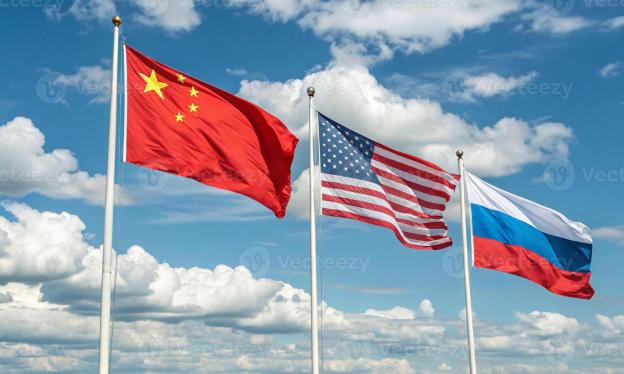
The new nuclear race has begun. But unlike during the Cold War, the U.S. must prepare for two peer rivals rather than one—at a time when it has lost its clear industrial and economic edge. China, which long possessed just a small nuclear force, is catching up fast, while Russia is developing a variety of new-generation systems aimed at American cities…Russian President Vladimir Putin has already used nuclear saber-rattling to throttle American support for Ukraine. He has deployed nuclear weapons to Belarus and, in 2025, tested a nuclear-powered missile and a nuclear-powered submarine drone that he claims are impervious to American defenses.

While Russia and the U.S. are still abiding by some arms-controls limit…China, unconstrained by any commitments, is quietly but rapidly leaping ahead. According to American estimates, Beijing will reach rough parity with the U.S. in deployed nuclear warheads by the mid-2030s.

Chinese leader Xi Jinping for the first time showcased China’s nuclear triad—its land, sea and air-launched ballistic nuclear missiles—at a Beijing parade honoring the 80th anniversary of victory over Japan in September 2025. Putin, sitting to his right atop the Gate of Heavenly Peace, took note. So did North Korea’s Kim Jong Un, sitting to his left.

Excerpt from Yaroslav Trofimov, The Nuclear-Arms Race Is Now a Three-Way Contest, WSJ, Nov. 16, 2025
Sniffing the Earth for Nuclear Exposions

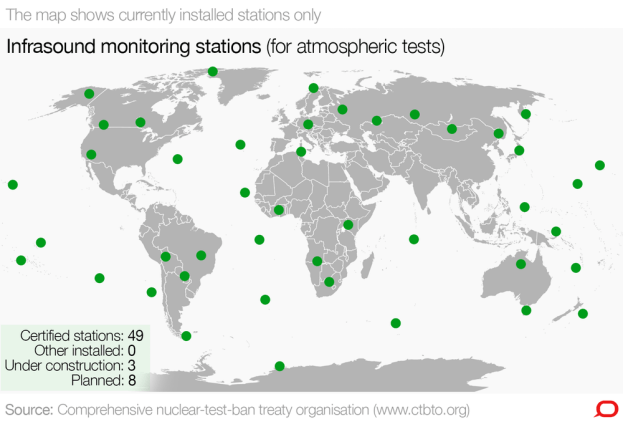
Australia’s infrasound station “IS03” in Davis Base, Antarctica, is one of nearly 300 certified stations of the Comprehensive Nuclear Test Ban Treaty (CTBT) Organization monitoring system, feeling and sniffing the Earth for any signs of a nuclear explosion. The global system will comprise 337 facilities when complete.  “The monitoring stations in Australia cover a large expanse of the Southern hemisphere. They are strategically positioned to contribute significantly to the International Monitoring System (IMS) detection and location capability. All six nuclear tests by North Korea were clearly detected by Australia’s IMS seismic stations,” Zerbo said.

“Australia ranks third among countries hosting the largest number of monitoring facilities.  It covers all four technologies used for nuclear test detection. Some of the stations are located in particularly remote and inaccessible areas of the Earth, such as Antarctica. This has been a 20 year-long joint effort by CTBTO and Australia and is truly an extraordinary achievement,” Zerbo said.

The CTBTO’s global monitoring network captures four types of data: vibrations through the ground and in water – seismic and hydroacoustic; sound beyond the range of the human ear and detection of radioactive particles – infrasound and radionuclide.

The network guards against violations of the Comprehensive Nuclear-Test-Ban Treaty (CTBT) banning nuclear explosions by everyone, everywhere: in the atmosphere, underwater and underground.  The global network detects nuclear tests with high reliability. For example, on 3 September 2017, over 100 stations in the network detected and alerted Member States to North Korea’s last announced nuclear test.

Excerpts from Comprehensive Nuclear Test  Ban Treaty Organization (CTBTO), Australia Completes Its Monitoring Stations in the Global Network to Detect Nuclear Tests, Nov 18, 2018, 15:45 ET