Tag Archives: privacy

Having What Nobody Can Have: The Superiors

Travel has always been a key feature of wealthy people’s lives, and more than ever they prioritize privacy, efficiency and customization, industry specialists say. Lauren Beall, owner of Travel Couture in Miami Beach, specializes in arranging custom travel experiences for the ultrawealthy. She has booked private islands for clients and flown in Michelin-starred chefs, yoga instructors and performers.

One coveted offering is a suite above the Christian Dior flagship store in Paris that can be rented, and includes an after-hours shopping excursion and a private dinner at Monsieur Dior restaurant. An estate Beall has reserved in Scotland comes with private chefs, horses to explore the countryside and a helicopter to visit towns for the day.

“We’re into that exclusive access right now—things that other people can’t get,” Beall said. “There’s a huge price tag that goes with it.”

Excerpt from Arias Campo-Flores, The Ultrarich Pay Big for Extreme Privacy, WSJ, Nov. 15, 2025

How Much Are Your Eyes Worth? Altman has an answer

Worldcoin is appealing a decision from Spain that temporarily banned it from scanning people’s eyes in exchange for cryptocurrency tokens…The Spanish Data Protection Agency, or AEPD, ordered a precautionary measure prohibiting Worldcoin’s activities in the country for up to three months after it received several complaints on the collection of data from minors, and what it said were other infringements.

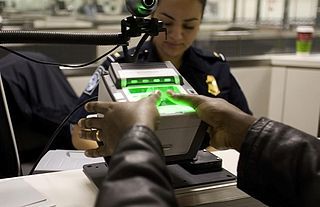
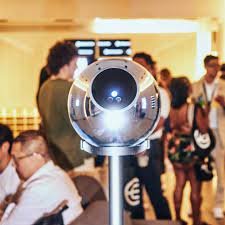
Worldcoin operates as an open-source protocol, according to its website. Users download a wallet app that supports a digital identity known as World ID. To get their identity verified, users stand in front of a physical imaging device known as the orb that relies on sensors to scan their eyes “to verify humanness and uniqueness.” More than 4 million users across 120 countries signed up for World ID, with orb verifications taking place in 36 countries, according to Worldcoin’s website.

The AEPD said its precautionary measure effectively called on Tools for Humanity—the company of which OpenAI Chief Executive Sam Altman is a co-founder—to cease the collection and processing of personal data through its Worldcoin project and to stop using the data it had gathered so far in Spain.

Excerpts from  Mauro Orru, Sam Altman’s Eye-Scanning Worldcoin Venture Appeals, WSJ, Mar. 7, 2024

What Do You Do When You Are Up for Sale?

Under an executive order issued on February 28, 2024, specific classes of Americans’ sensitive data, including genomic, biometric, personal health, geolocation, financial and certain types of personal identifiers, will generally be barred from being sold or transferred in vast tranches to “countries of concern” or vendors known to supply data to them. The countries of concern are China, Russia, North Korea, Iran, Cuba and Venezuela, and have a record of misusing data on Americans, an official said.

In 2023, the U.S. intelligence community issued a groundbreaking report acknowledging that the vast amount of Americans’ personal data available for sale, which are often bought and repackaged by data brokers and then resold through a labyrinthine ecosystem of vendors and resellers, has provided a valuable stream of intelligence for the U.S. government and adversaries alike. The report, commissioned by Director of National Intelligence Avril Haines, admitted that such streams created significant threats to privacy, and had rapidly grown in scale such that they had begun to replicate the results of intrusive surveillance techniques, such as hacking, that are typically more targeted.

The executive order is notably silent on the purchasing of commercially available data sets by the U.S. government.

Excerpts from Dustin Volz, U.S. Limits Sales of Americans’ Personal Data to China, Other Adversaries, WSJ, Feb. 129, 2024

The Rape of Europe by Internet Giants: tax avoiding, data mining

The raid by the European Commission’s antitrust gumshoes this month on Orange (formerly France Telecom), Deutsche Telekom and Telefónica of Spain seemed to come out of the blue. The companies professed a surprise verging on stupefaction. Even some Brussels insiders were caught on the hop.  Naming no names, the commission said the inquiry involved internet connectivity. The question is whether entrenched telecoms firms are abusing their strength in the market for internet traffic to deny video-streaming websites and other content providers full access to their networks to reach consumers. Besides the content providers themselves, the other potential plaintiffs are the “wholesalers” that the content providers use to ship their data across borders (and usually the Atlantic). These rely on incumbent internet-service providers (ISPs) such as Orange to take the data the last bit of the way to subscribers’ screens and mobiles.

All eyes turned to Cogent Communications, an American wholesaler which handles data for the likes of YouTube. Cogent has complained, fruitlessly, to French and German regulators that their former monopolies were asking too much to handle data, and throttling the flow to consumers when bigger fees were not forthcoming. It is appealing against the French decision.  In theory Orange and the other network providers might simply pass on to their customers the cost of all their streaming and downloading… But Europe’s market is fiercely competitive; and regulators place all sorts of constraints on how networks can charge for their services, while haranguing them to invest in new technology and new capacity to keep up with rising traffic. Though there are similar spats in America (for instance between Cogent and Verizon, a big network operator), it looks to some Europeans like another example of the rape of the old continent by America’s data-mining, tax-avoiding internet giants.

The broader issue—and the reason, perhaps, why the antitrust watchdogs chose to weigh in—is that Europe is on the brink of big regulatory change. A draft law to be published in September will subtly alter the principle of “net neutrality”, the idea that companies which own the infrastructure cannot give priority to some traffic (eg, from their own websites) over that of others.;”

Internet access: Congestion on the line, Economist, July 20, 2013

Open Government Data a Bonus to Mining Companies

On May 9th, 2013 Barack Obama ordered that all data created or collected by America’s federal government must be made available free to the public, unless this would violate privacy, confidentiality or security. “Open and machine-readable”, the president said, is “the new default for government information.”

This is a big bang for big data, and will spur a frenzy of activity. Pollution numbers will affect property prices. Restaurant reviews will mention official sanitation ratings. Data from tollbooths could be used to determine prices for nearby billboards. Combining data from multiple sources will yield fresh insights. For example, correlating school data with transport information and tax returns may show that academic performance depends less on income than the amount of time parents spend with their brats.

Over the next few months federal agencies must make an inventory of their data and prioritise their release. They must also take steps not to release information that, though innocuous on its own, could be joined with other data to undermine privacy—a difficult hurdle.  Many countries have moved in the same direction. In Europe the information held by governments could be used to generate an estimated €140 billion ($180 billion) a year. Only Britain has gone as far as America in making data available, however. For example, it requires the cost of all government transactions with citizens to be made public. Not all public bodies are keen on transparency. The Royal Mail refuses to publish its database of postal addresses because it makes money licensing it to businesses. On May 15th an independent review decried such practices, arguing that public-sector data belong to the public.

Rufus Pollock of the Open Knowledge Foundation, a think-tank, says most firms will eventually use at least some public-sector information in their business.

Open data: A new goldmine, Economist,  May 18, 2013, at 73

Keep Talking, the State Listens

DARPA is funding a project that uses crowdsourcing to improve how machines analyze our speech. Even more radical: DARPA wants to make systems so accurate, you’ll be able to easily record, transcribe and recall all the conversations you ever have... But it’s not just about better recordings of what you say. It’ll lead to more recorded conversations, quickly transcribed and then stored in perpetuity — like a Twitter feed or e-mail archive for everyday speech. Imagine living in a world where every errant utterance you make is preserved forever.

University of Texas computer scientist Matt Lease… has attracted enough attention for Darpa to award him a $300,000 award over two years to study the new project, called “Blending Crowdsourcing with Automation for Fast, Cheap, and Accurate Analysis of Spontaneous Speech.” The project envisions a world that is both radically transparent and a little freaky.

The idea is that business meetings or even conversations with your friends and family could be stored in archives and easily searched. The stored recordings could be held in servers, owned either by individuals or their employers….

How? The answer, Lease says, is in widespread use of recording technologies like smartphones, cameras and audio recorders — a kind of “democratizing force of everyday people recording and sharing their daily lives and experiences through their conversations.” But the trick to making the concept functional and searchable, says Lease, is blending automated voice analysis machines with large numbers of human analysts through crowdsourcing. That could be through involving people “strategically,” to clean up transcripts where machines made a mistake. Darpa’s older EARS project relied entirely on automation, which has its drawbacks….

Crowdsourcing is all about harnessing distributed networks of people — crowds — to do tasks better and more efficiently than individuals or machines. Recently, that’s meant harnessing large numbers of people to build digital maps, raising funds for a film project at Kickstarter, or doing odd-jobs at Amazon Mechanical Turk — one system being studied as part of the project. Darpa has also taken an interest in crowdsourcing as a way to analyze vast volumes of intelligence data, and Darpa’s sibling in the intelligence community, IARPA, has researched crowdsourcing as a way to find the best intelligence predictions.

It also raises some thorny legal and social questions about privacy. For one, there is an issue with “respecting the privacy rights of multiple people involved,” Lease says. One solution, for a business conference that’s storing and transcribing everything said by the participants, could be a mutual agreement between all parties. He adds that technical issues when it comes to archiving recorded speech are still open questions, but people could potentially hold their cell phone conversations on remote servers; or on individual, privately-held servers.

The other problem is figuring out how to search massive amounts of transcribed speech, like how search engines such as Google use complex algorithms to match and optimize search queries with results that are likely to be relevant. Fast and cheap web analytics — judging what people type and matching it up to what they click — is one way to do it. Studying focus groups are more precise, but expensive. A third way, Lease suggests, is using more crowdsourcing as a sort of a “middle-ground” between the two methods.

But it’s unknown how the research will be applied to the military. Lease wouldn’t speculate, and it’s still very much a basic research project. Though if it’s similar to EARS at all, then it may not be too difficult to figure out. A 2003 memorandum from the Congressional Research Service described EARS as focusing on speech picked up from broadcasts and telephone conversations, “as well as extract clues about the identity of speakers” for “the military, intelligence and law enforcement communities.” Though Lease didn’t mention automatically recognizing voices. But the research may not have to go that far — if we’re going to be recording ourselves.

Excerpt, BY ROBERT BECKHUSEN, Darpa Wants You to Transcribe, and Instantly Recall, All of Your Conversations, Wired, Mar. 4, 2013

Three Activists and their Twitter Accounts

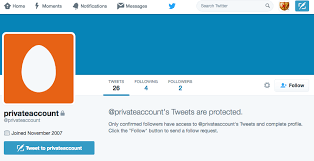
A federal appeals court ruled Friday (Jan. 25, 2012)  that prosecutors can demand Twitter account information of certain users in their criminal probe into the disclosure of classified documents on WikiLeaks.  The three-judge panel of the 4th U.S. Circuit Court of Appeals also said the government’s reasons as to why it is seeking the information can remain sealed.

The case involves three Twitter account holders with some connection to the secret-busting WikiLeaks website. They had argued that forcing Twitter to cooperate with the investigation by turning over data amounts to an invasion of privacy and has a chilling effect on the free speech rights of Twitter users.

The federal panel in Richmond rejected their appeal and affirmed a magistrate’s court order that Twitter must turn over limited account information to prosecutors. The court said it weighed the right of public access against the need to keep an investigation secret. The appeals court agreed with the magistrate that the government’s interest in keeping the documents secret outweigh the right to public access.

Prosecutors have said federal law specifically allows them to seek account information as a routine investigative tool. Specifically, the Stored Communications Act allows them to obtain certain electronic data without a search warrant or a demonstration of probable cause. The government must only show that it has a reasonable belief that the records it seeks are relevant to an ongoing criminal investigation.  “This is essentially a reasonable suspicion standard,” the court wrote.  Under the Stored Communications Act, the government can also keep sealed documents related to their investigation from the subscribers. The appeals panel concluded the subscribers had no First Amendment right to access the documents. Prosecutors submitted their rationale for seeking the Twitter information to U.S. Magistrate Judge Theresa Carroll Buchanan but it was kept secret and sealed also.

The court wrote that the “government’s interests in maintaining secrecy of its investigation, preventing potential subjects from being tipped off, or altering behavior to thwart the government’s ongoing investigation, outweighed” the subscribers’ claims.

The American Civil Liberties Union and the Electronic Frontier Foundation, representing the Twitter users, said the government can use those IP addresses as a sort of virtual tracking device to identify a specific computer used by an account holder and with it the user’s physical location.

The appeals panel also allows the government to keep secret any similar orders it sought from other social media sites.

“This case shows just how easy it is for the government to obtain information about what people are doing on the Internet, and it highlights the need for our electronic privacy laws to catch up with technology,” said ACLU attorney Aden Fine. “The government should not be able to get private information like this without getting a warrant and also satisfying the standard required by the First Amendment, and it shouldn’t be able to do so in secret except in unusual circumstances”

The original order issued in December 2010 at prosecutors’ request also sought Twitter account information from WikiLeaks founder Julian Assange and Pfc. Bradley Manning, who faces life in prison if he’s convicted of indirectly aiding the enemy by leaking U.S. secrets while working as an intelligence analyst in Baghdad in 2009 and 2010.  Neither Assange nor Manning was a party in the lawsuit challenging the legality of the Twitter order.

WikiLeaks Case: U.S. Appeals Court Rules On Investigation, Huffington Post, Jan. 25, 2013