Tag Archives: space mission

If You Control Space, You Control Everything: Space as War Domain

The North Atlantic Treaty Organization (NATO) is looking to classify space as a domain for warfare in an attempt to deter China’s growing military power.  If NATO’s proposal succeeds, the international alliance could move forward with the development and use of space weapons.  According to NATO diplomats, the international organization is preparing to release an agreement that will officially declare space as a war domain. This means that aside from land, air and sea, space could also be used for military operations during times of war.

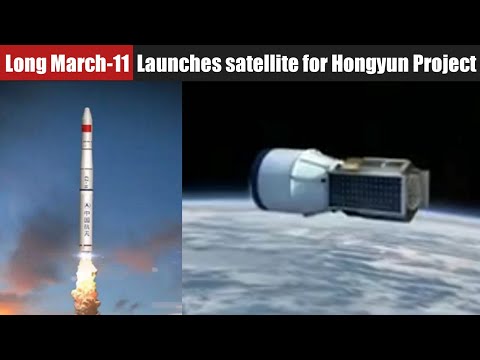
Although NATO’s partner countries currently own 65% of the satellites in space, China is reportedly preparing to launch a massive project that involves releasing constellations of satellites in low Earth orbit.  China Aerospace Science and Industry Corp (CASIC)  is planning to put in orbit 150 or more Hongyun satellites by 2023. Some of these satellites will provide commercial services like high-speed internet while others would be controlled by the Chinese military. These militarized satellites can be used to coordinate ground forces and to track approaching missiles.

“You can have warfare exclusively in space, but whoever controls space also controls what happens on land, on the sea and in the air,” according to Jamie Shea, a former NATO official. “If you don’t control space, you don’t control the other domains either.”

Excerpts from Inigo Monzon , NATO Prepares For Space Warfare By Militarizing Low Earth Orbit, International Business Times, June 24, 2019
Plutonium and Space Travel

In places where the sun’s rays do not penetrate…a different power source is required for space travel. One of the favourites used in space missions is a radioisotope thermoelectric generator (RTG).  RTGs were developed by America in the 1950s and work by converting heat produced by the decay of a radioactive material into electricity directly. This is not the same as nuclear fission, a more complex process used in power plants to split radioactive material and release a much larger amount of energy. The former Soviet Union also used RTGs to run hundreds of lighthouses and navigation beacons in remote areas… While the isotopes used are not much use in bombs, they can still make people ill, even when partially depleted.

America’s RTGs use plutonium-238 (238Pu). The American plant that produced it closed in 1988 and the isotope was then imported from Russia. That stopped in 2009, leaving NASA with 35kg in stock, although only about 17kg of that is estimated to be still suitable for RTGs. After years of hand-wringing about being cut off from space without the material to make an RTG, a deal was reached in 2013 for NASA to pay the Department of Energy to resume production…

America has used RTGs in 27 space missions since 1961. Despite continuing improvements in collecting solar energy, NASA says it still needs RTGs—and not just to reach destinations beyond Saturn. The space agency’s planetary-science division has a list of places where solar power cannot be relied upon, including the dark side of Mercury, craters on the Moon and the poles of Mars, which are partly obscured from the sun.  NASA has been working on a system called the Advanced Stirling Radioisotope Generator, which offers four times the efficiency of a current RTG.

Excerpts from Powering space travel: NASA’s dark materials, Economist, Apr. 4, 2015, at  75