Tag Archives: steel cement and chemicals

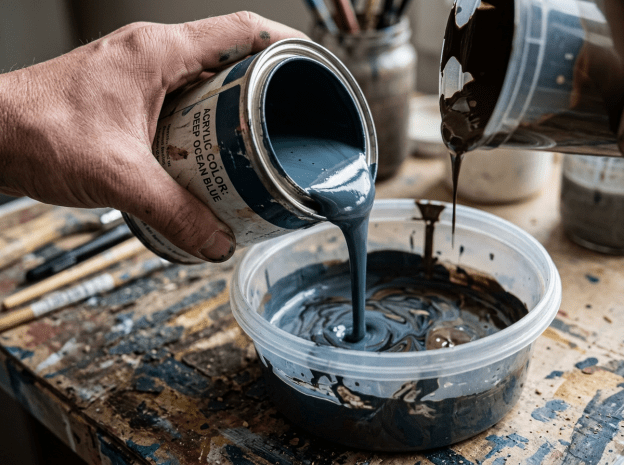
Close-up of cracked and peeling black, yellow, and brown paint on wood surface

Who Knew We Painted with PFAS?

According to US Environmental Protection Agency (EPA), PFAS are widely used, long lasting chemicals, components of which break down very slowly over time. Because of their widespread use and their persistence in the environment, many PFAS are found in the blood of people and animals all over the world and are present at low levels in a variety of food products and in the environment. PFAS are found in water, air, fish, and soil at locations across the nation and the globe. Scientific studies have shown that exposure to some PFAS in the environment may be linked to harmful health effects in humans and animals.

In 2026, Daqian Jiang and his colleagues has created a model that has quantified PFAS retention and emissions associated with paints in the US starting from 2000 with projections up to 2060…Results revealed that in 2020, around 565 tonnes of PFAS were stored in in-use paint in the US…. By 2060, the model predicted that around 486 tonnes of these retained PFAS would accumulate in landfill sites, emitting 25 times more PFAS into the environment than in 2020, with hotspots driven by demolition activity and waste routing. ‘So even if PFAS use in paints were reduced or phased out today, substantial future emissions could still occur from the large quantities already present in existing buildings.’

Excerpt from James Urquhar, Paint in buildings a huge reservoir of PFAS waiting to enter the environment, Chemistry World, June 30, 2026
Taming the Apocalypse Horsemen: Steel Cement Chemicals

Heavy industry has long seemed irredeemably carbon-intensive. Reducing iron ore to make steel, heating limestone to produce cement and using steam to crack hydrocarbons into their component molecules all require a lot of energy. On top of that, the chemical processes involved give off lots of additional carbon dioxide. Cutting all those emissions, experts believed, was either technically unfeasible or prohibitively expensive.

Both the economics and the technology are at last looking more favorable. Europe is introducing tougher emissions targets, carbon prices are rising and consumers are showing a greater willingness to pay more for greener products. Several European countries have crafted strategies for hydrogen, the most promising replacement for fossil fuels in many industrial processes. Germany is launching the Hydrogen Intermediary Network Company, a global trading hub for hydrogen and hydrogen-derived products. Most important, low-carbon technologies are finally coming of age. The need for many companies to replenish their ageing assets offers a “fast-forward mechanism”, says Per-Anders Enkvist of Material Economics…Decarbonising industry has turned from mission impossible to “mission possible”, says Adair Turner of the Energy Transitions Commission, a think-tank.

In July 2022 the board of Salzgitter, a German steel company, gave the nod to a €723m project called SALCOS that will swap its conventional blast furnaces for direct-reduction plants by 2033 (it will use some natural gas until it can secure enough hydrogen). Other big European steel producers, including ArcelorMittal and Thyssenkrupp, have similar plans.

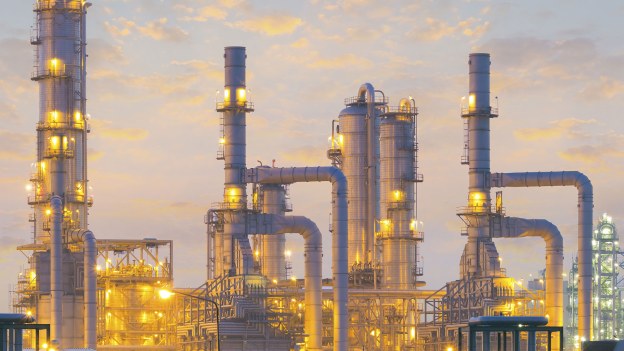
HeidelbergCement, the world’s fourth-largest manufacturer of the cement has launched half a dozen low-carbon projects in Europe. They include a carbon capture storage (CCS) facility in the Norwegian city of Brevik and the world’s first carbon-neutral cement plant on the Swedish island of Gotland…The chemicals industry faces the biggest challenge. Although powering steam crackers with electricity instead of natural gas is straightforward in principle, it is no cakewalk in practice, given the limited supply of low-carbon electricity. Moreover, the chemicals business breathes hydrocarbons, from which many of its 30,000 or so products are derived. Even so, it is not giving up. BASF, a chemicals colossus, is working with two rivals, SABIC and Linde, to develop an electrically heated steam cracker for its town-sized factory in Ludwigshafen. It wants to make its site in Antwerp net-zero by 2030. 

A few dozen pilot projects—even large ones—do not amount to a green transition. The hard part is scaling them up.  However, the first movers will be able to  set the standards and grabbing a slice of potentially lucrative businesses such as software to control hydrogen- and steelmaking equipment. 

Excerpts from Green-dustrialization, Economist, Sept. 24, 2022