Tag Archives: trees as carbon sinks

Indigenous Peoples against Netflix and Meta: Northern Kenya Rangelands Carbon Project

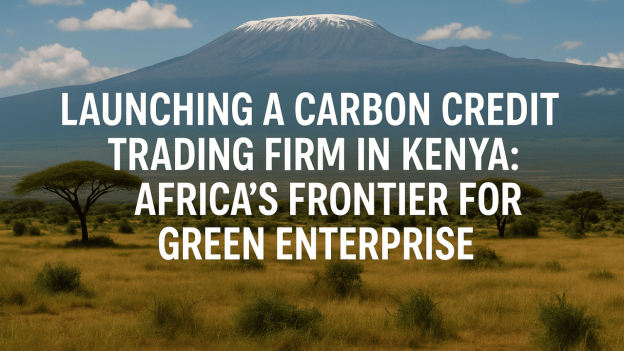
The Northern Kenya Rangelands Carbon Project managed by the Northern Rangelands Trust, a Kenyan nonprofit, is the world’s largest soil-carbon plan, its boosters say. Launched in 2012, it was designed to preserve some 4.7 million acres of grasslands to lock in carbon on land communally owned by the Maasai, Borana and other pastoralist groups, which is part of a network of protected areas hosting threatened species such as cheetahs, black rhinos and… giraffes.

On May 13, 2025, an international nonprofit , Verra, that certifies carbon credits suspended approval for the project, adding to the questions about the credibility of similar carbon-capture projects and whether they actually benefit the people who live off the land….A spokesperson for the group, Verra, said credits are now on hold as it reviews the program after a long-running dispute between the conservationists who created the rangelands project and local herders, who say the project disrupts grazing patterns built over the course of centuries…

The dispute reached a flashpoint in 2021, when 165 pastoralists from two conservation areas sued the Northern Rangelands Trust in Kenyan court for allegedly using their land without consent. The plaintiffs accused the trust of creating the conservancies—which acted as the herders’ representatives in the carbon deal—through pressure and intimidation rather than informed consent. The court ruled in their favor in January 2025.

Lawyers and rights groups representing pastoralists say the ruling, which applies to one of the biggest conservancies, invalidates around 20% of the entire project’s credits. They say credits in around half of the project’s 14 wildlife conservancies could be vulnerable to similar lawsuits. That could leave big corporations holding invalid offsets and open to charges from rights groups that they overstate their commitment to environmentally friendly practices.

The trust has sold over six million carbon credits, worth between $42 million and $90 million depending on market prices, to buyers including Netflix and Facebook parent Meta. Tech companies use credits to offset emissions from their energy-intensive operations, such as producing movies, running data centers to stream video, powering social media and training cutting-edge artificial-intelligence models, as well as from employee travel. Meta became carbon neutral—that is, it purchased enough credits to compensate for all of its emissions—in 2020, and Netflix followed suit two years later.

Excerpts from Caroline Kimeu, Netflix and Meta’s Carbon Credits Snared in Dispute With Maasai Herders, WSJ, May 13, 2025

See also Kenya: Landmark court ruling delivers devastating blow to flagship carbon offset project
How Forests Create Clouds and Cool the Earth

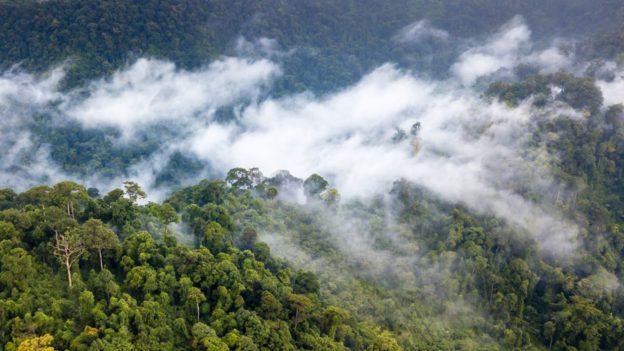
Tropical forests have a crucial role in cooling Earth’s surface by extracting carbon dioxide from the air. But only two-thirds of their cooling power comes from their ability to suck in CO2 and store it. The other one-third comes from their ability to create clouds, humidify the air and release cooling chemicals. This is a larger contribution than expected for these ‘biophysical effects’ says Bronson Griscom, a forest climate scientist.

The analysis, published in Frontiers in Forests and Global Change in March 2022, could enable scientists to improve their climate models, while helping governments to devise better conservation and climate strategies. The findings underscore growing concerns about rampant deforestation across the tropics. Scientists warn that one-third of the world’s tropical forests have been mown down in the past few centuries, and another one-third has been degraded by logging and development. This, when combined with climate change, could transform vast swathes of forest into grasslands

Trees in the tropics provide shade, but they also act as giant humidifiers by pulling water from the ground and emitting it from their leaves, which helps to cool the surrounding area in a way similar to sweating, Griscom says. “If you go into a forest, it immediately is a considerably cooler environment,” he says.

This transpiration, in turn, creates the right conditions for clouds, which like snow and ice in the Arctic, can reflect sunlight higher into the atmosphere and further cool the surroundings. Trees also release organic compounds — for example, pine-scented terpenes — that react with other chemicals in the atmosphere to sometimes create a net cooling effect… When they considered only the biophysical effects, the researchers found that the world’s forests collectively cool the surface of the planet by around 0.5 °C.

Threats to tropical rainforests are dangerous not only for the global climate, but also for communities that neighbour the forests, Lawrence says. She and her colleagues found that the cooling caused by biophysical effects was especially significant locally. Having a rainforest nearby can help to protect an area’s agriculture and cities from heatwaves, Lawrence says. “Every tenth of a degree matters in limiting extreme weather. And where you have forests, the extremes are minimized.”

Excerpts from Freda Kreier, Tropical forests have big climate benefits beyond carbon storage, Nature, 

Planting Trees Can be Bad for the Planet

Some scientists argue that deforestation is not always harmful for the planet. Christopher A. Williams, a professor at Clark University’s Graduate School of Geography (Worcester, Massachusetts), says that instead of warming up the Earth, deforestation can actually cool it down. (See Climate impacts of U.S. forest loss span net warming to net cooling, Feb. 2021) But some experts are concerned that Williams’ work is likely to be misconstrued as permission to continue deforesting, which is not his intention.

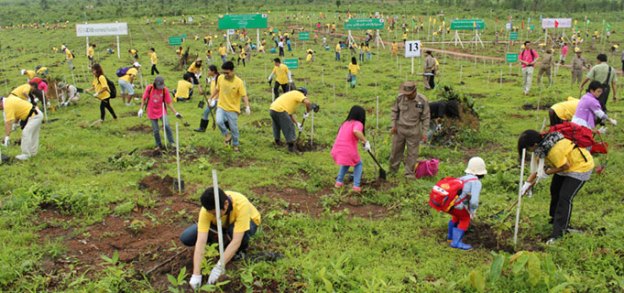
It’s widely accepted that our existing forests are vital carbon sinks, and the best course of action is to stop deforestation, while rewilding and reforesting areas already lost. Deforestation contributes to climate change, can cause wildfires, desertification, soil erosion and most of all – releases huge amounts of carbon dioxide which causes global warming.

While the above may be true, Williams’ new research argues that there are two factors we are not acknowledging: the significance of location and something known as ‘the albedo effect’. Put simply, ‘the albedo effect’ is the process in which forests retain heat. Forests tend to be darker than other surfaces, which means they absorb more sunlight and hold onto heat, explains Williams. As a result, some scientists believe that deforestation gets rid of unwanted heat which is contributing to global warming.

“We found that in some parts of the country like the Intermountain West, more forest actually leads to a hotter planet when we consider the full climate impacts from both carbon and albedo effects,” says Professor Williams. He adds that it is important to consider the albedo effect of forests alongside their well-known carbon storage when aiming to cool the planet.

The team discovered that for approximately one quarter of the US, forest loss causes a persistent net cooling because the albedo effect outweighs the carbon effect.  “It is all about putting the right trees in the right place,” explains Williams, “and studies like ours can help identify where the potential for cooling is greatest.”

For instance, loss of forests east of the Mississippi River caused planetary warming, while forest loss in the Intermountain and Rocky Mountain West led to a net cooling. “If we fail to consider both the carbon and the albedo effects, large-scale tree-planting initiatives, such as Canada’s 2Billion Trees Initiative and The Nature Conservancy’s Plant a Billion Trees campaign, could end up placing trees in locations that are counterproductive for cooling the climate system,” he says.

Maeve Campbell, DEFORESTATION COULD BE COOLING THE PLANET DOWN, Euronews, SAY SCIENTISTS, Feb. 17,2021