Tag Archives: Aclara Resources mine rare earths Brazil

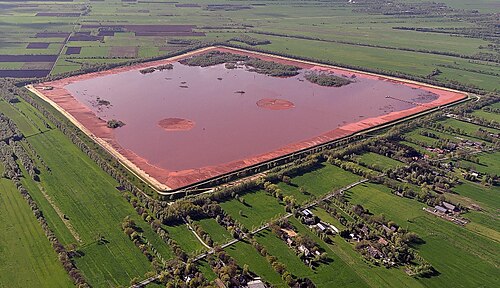
We Should Have Done it 30 Years Ago: Gallium

Gallium is processed with nitrogen and arsenic to make substrates for high-performance semiconductors. In chips, gallium can handle high levels of electricity and is more heat- and moisture-resistant than silicon. Beyond cellphones and laptops, it is also used in satellites to protect components from radiation in space.

China, which accounts for most of the world’s production of critical minerals, introduced export controls on gallium in 2023. In 2024, it banned gallium exports to the U.S. outright. China later suspended the ban, but could reinstate it later in 2026….Benchmark prices for gallium outside of China have roughly tripled over the past two years. January’s 2026 average price was a record high at nearly $1,572 a kilogram,. 

One project the Trump administration has targeted is in Wagerup, Western Australia. Alcoa has operated a refinery there since the 1980s that processes bauxite to make alumina. The bauxite also contains trace amounts of gallium, so Alcoa intends to build a plant to extract it.  The U.S. government plans to provide funding for the effort, along with Australia and Japan. In return, Alcoa said, the governments will receive a share of the metal from the plant. The plant is expected to eventually account for about 100 metric tons of gallium, or 10% of global gallium demand, according to Alcoa. Worldwide, 760 tons of gallium were produced in 2024…“There’s a lot of work to be done on how we do collaborate and work together to develop this industry,” Madeleine King, Australia’s mining minister, said Feb. 4, 2026.

“We should have done it 20 or 30 years ago.”

Excerpt from Bob Tita, The Defense Department Is Infatuated With This Drippy Silver Metal, WSJ, Feb. 9, 2025
De-Chinafication of Rare Earths: an Uphill Battle

China mines some 70% of the world’s rare earths, the 17 metallic elements primarily used in magnets needed for civilian and military technologies. But its 90% share of processing for rare earths mined around the world is what really concerns officials from other countries working to secure their supply.

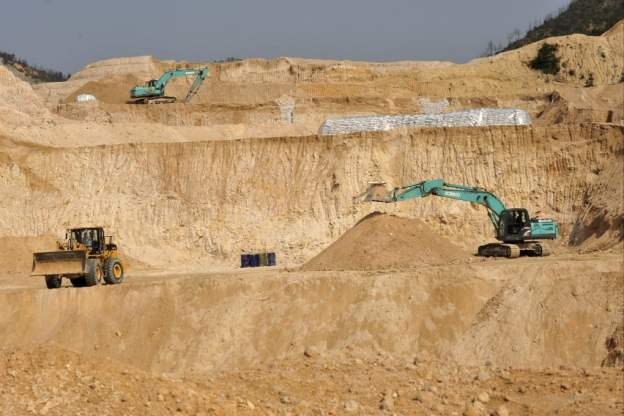
“China is a formidable competitor,” said Ramón Barúa, chief executive of Canada’s Aclara Resources, which is opening a rare-earths mine in Brazil to supply a processing plant it plans to build in the U.S. Aclara said it plans by August to decide where in the U.S. to build its plant for separating rare-earths deposits into individual elements. Aclara signed an agreement in 2024 to supply rare earths to VAC, a German company that is building a factory in South Carolina with $94 million in Pentagon funding to make magnets for clients including General Motors…

Brazil has the world’s second-largest rare-earth reserves after China, some 21 million tons, according to the U.S. Geological Survey. That represents more than a fifth of known global reserves—and more than 10 times those in the U.S…Despite its huge reserves, Brazil has been a small player in rare earths because of its complex mining regulations and the difficulty of attracting financing from companies willing to confront entrenched Chinese competitors. Costs to mine and process Brazilian rare earths are estimated to be around three times China’s, meaning Western buyers would likely pay a substantial premium for Brazilian minerals. Only a few companies outside China have mastered rare-earth processing, and the learning curve is steep

Brazil’s first big rare-earths mine opened in 2024 by a US private equity company some 90 miles west of the town of Nova Roma…but the mine is contracted to ship most of its production to China !…Aclara plans to invest some $600 million to complete work on a larger plant next to the mine in Nova Roma to start full production in 2028.

Excerpt from Samantha Pearson, Rare-Earths Plants Are Popping Up Outside China, WSJ, May 18, 2025

The New Trump Doctrine: Kiss the Hand you Cannot Bite

Four US major automakers are racing to find workarounds to China’s stranglehold on rare-earth magnets, which they fear could force them to shut down some car production within weeks. Several traditional and electric-vehicle makers—and their suppliers—are considering shifting some auto-parts manufacturing to China to avoid looming factory shutdowns, people familiar with the situation said.

Ideas under review include producing electric motors in Chinese factories or shipping made-in-America motors to China to have magnets installed. Moving production to China as a way to get around the export controls on rare-earth magnets could work because the restrictions only cover magnets, not finished parts, the people said.

If automakers end up shifting some production to China, it would amount to a remarkable outcome from a trade war initiated by President Trump with the intention of bringing manufacturing back to the U.S.  “If you want to export a magnet [from China] they won’t let you do that. If you can demonstrate that the magnet is in a motor in China, you can do that,” said a supply-chain manager at one of the carmakers.

China in April 2025 began requiring companies to apply for permission to export magnets made with rare-earth metals, including dysprosium and terbium. The country controls roughly 90% of the world’s supply of these elements, which help magnets to operate at high temperatures. Much of the world’s modern technology, from smartphones to F-35 jet fighters, rely on these magnets….In May 2025, industry groups representing most major automakers and parts suppliers told the Trump administration that vehicle production could be reduced or shut down imminently without more rare-earth components from China.

Excerpt from Sean McLain et al., Automakers Race to Find Workaround to China’s Stranglehold on Rare-Earth Magnets, WSJ, June 4, 2025

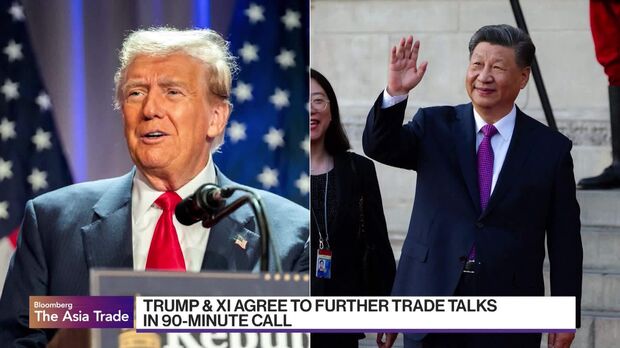
Two days after the publication of this WSJ article, Trump announced, on June 6, 2024, that Xi agreed to let rare earth minerals flow to US (in exchange of? not revoking Chinese student visas? what else?)