Tag Archives: battlefield nuclear weapons

Back to 2030: Nuclear Race is Hot Again

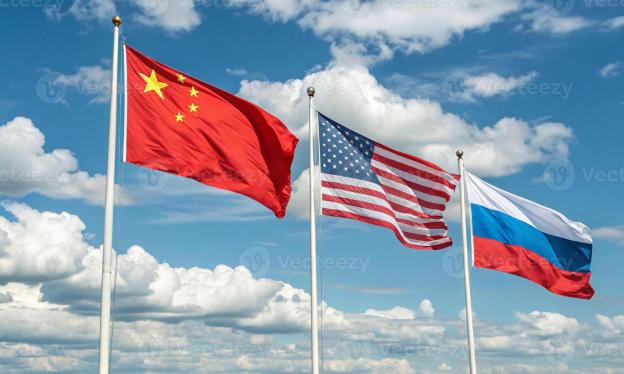
The new nuclear race has begun. But unlike during the Cold War, the U.S. must prepare for two peer rivals rather than one—at a time when it has lost its clear industrial and economic edge. China, which long possessed just a small nuclear force, is catching up fast, while Russia is developing a variety of new-generation systems aimed at American cities…Russian President Vladimir Putin has already used nuclear saber-rattling to throttle American support for Ukraine. He has deployed nuclear weapons to Belarus and, in 2025, tested a nuclear-powered missile and a nuclear-powered submarine drone that he claims are impervious to American defenses.

While Russia and the U.S. are still abiding by some arms-controls limit…China, unconstrained by any commitments, is quietly but rapidly leaping ahead. According to American estimates, Beijing will reach rough parity with the U.S. in deployed nuclear warheads by the mid-2030s.

Chinese leader Xi Jinping for the first time showcased China’s nuclear triad—its land, sea and air-launched ballistic nuclear missiles—at a Beijing parade honoring the 80th anniversary of victory over Japan in September 2025. Putin, sitting to his right atop the Gate of Heavenly Peace, took note. So did North Korea’s Kim Jong Un, sitting to his left.

Excerpt from Yaroslav Trofimov, The Nuclear-Arms Race Is Now a Three-Way Contest, WSJ, Nov. 16, 2025

The Never-Ending Nuclear Arms Race

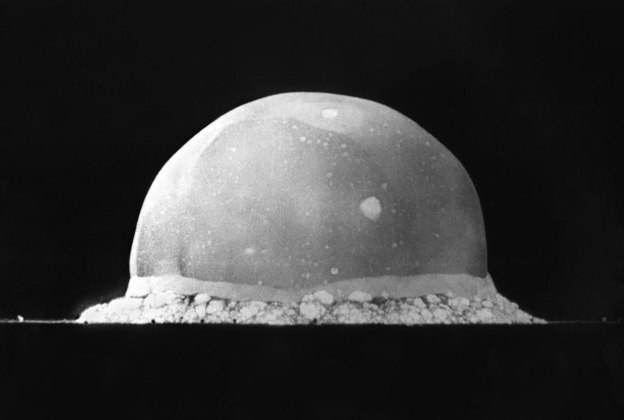
The United States Los Alamos National Laboratory (LANL) announced in October 2024 it had manufactured its first plutonium “pit”—used in the core of a thermonuclear warhead to initiate an nuclear explosion—since the United States largely halted such production in 1989. Under a nuclear arsenal modernization plan launched in 2008, the lab will scale up production to 30 pits per year, with an additional 50 to be produced annually starting in the mid-2030s at the Savannah River Site in South Carolina. But the work faces opposition from critics who say it could help fuel a new international nuclear arms race and also risks the health of workers and the environment. In September 30 2024, opponents won a ruling in federal district court in South Carolina when a judge ruled the U.S. Department of Energy failed to adequately consider other options for locating the production facilities. The judge is considering a request to pause production at LANL. The United States halted pit manufacturing in 1989 at the Rocky Flats Plant, near Denver, after an inspection revealed hazardous waste contamination.

Excerpt from U.S. resumes making nuke triggers, Science, Oct. 11, 2024

Who is Ready for the Future Global War?

The Economist magazine estimates that the new defense commitments of all countries …will generate over $200bn-$700bn in extra defense spending globally each year…
China’s defense budget has grown by about 75% in real terms in the past ten years. It wants to “basically complete modernization” of its forces by 2035, and become a “world class” military power by 2049. America thinks China wants the capability to invade Taiwan as early as 2027… Overall America’s advantage over its rivals has eroded in the past century…During the first, second and cold wars America’s adversaries had much smaller economies than America did. No longer. Today China’s GDP alone is nearly 80% of America’s.

In the decades after the cold war, the thinking was that to spend less on armies meant to spend more on infrastructure and public services and to lower debt or taxes. Since the 1960s the world has “released” about $4trn a year of spending at current prices in this way, equivalent to the global government budget for education. Now the peace dividend is turning into a “war tax”. How heavy will it be?…

America, by far the world’s largest defense spender, is devoting growing sums to research and development of future weapons. This includes hypersonic missiles, to catch up with China and Russia; “directed energy” such as powerful lasers to shoot down drones and missiles; and artificial intelligence and robotics. It is also buying as many munitions as its factories can produce—from 155mm artillery shells to anti-ship missiles. The war in Ukraine has exposed the extraordinary quantities of munitions needed in a conflict, as well as the inability of peacetime production lines to meet such demand.

America, Russia and China are investing in their nuclear arsenals, too. America is upgrading all legs of its “triad” of ground-, air- and submarine-launched nukes. Russia is working on esoteric weapons, such as the long-distance, nuclear-powered Poseidon torpedo designed to set off an underwater nuclear explosion that, propagandists boast, can cause destructive tidal waves. China is quickly expanding its arsenal, from several hundred warheads to 1,500 by 2035, according to the Pentagon…

Cyber-security, drones and satellite technology straddle both the civilian and military worlds. SpaceX, founded by Elon Musk, has launched American military satellites. Ukrainian warriors make extensive use of his Starlink constellation of satellites. It all amounts to a change of cultural mindset from tech firms that once shunned defense as morally tainted. A defense-tech ecosystem has sprung up in America…

One way or another, a new era of rearmament beckons. As General Mark Milley, chairman of America’s joint chiefs of staff, told the Senate recently: “Preventing great-power war through readiness and deterrence is very expensive, but not as expensive as fighting a war.” And the only thing more costly than that, as he explained, is losing one.

Excerpts from Farewell peace dividend: The Cost of the Global Arms Race, Economist, May 27, 2023 
Tactical Nuclear Warhead to Respond ‘in Kind’ to Attack: W76-2

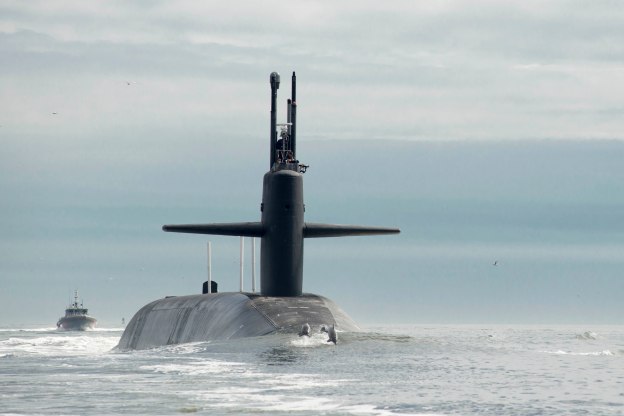
The US Navy has now deployed the new W76-2 low-yield Trident submarine warhead. The first ballistic missile submarine scheduled to deploy with the new warhead was the USS Tennessee (SSBN-734)…The W76-2 warhead was first announced in the Trump administration’s Nuclear Posture Review (NPR) unveiled in February 2018. There, it was described as a capability to “help counter any mistaken perception of an exploitable ‘gap’ in U.S. regional deterrence capabilities,” a reference to Russia. The justification voiced by the administration was that the United States did not have a “prompt” and useable nuclear capability that could counter – and thus deter – Russian use of its own tactical nuclear capabilities…

We estimate that one or two of the 20 missiles on the USS Tennessee and subsequent subs will be armed with the W76-2, either singly or carrying multiple warheads. Each W76-2 is estimated to have an explosive yield of about five kilotons.* The remaining 18 missiles on each submarine like the Tennessee carry either the 90-kiloton W76-1 or the 455-kiloton W88. Each missile can carry up to eight warheads under current loading configurations…

The National Nuclear Security Administration (NNSA) has further explained that the “W76-2 will allow for tailored deterrence in the face of evolving threats” and gives the US “an assured ability to respond in kind to a low-yield nuclear attack.”

Excerpt from William M. Arkin and Hans M. Kristensen, US Deploys New Low-Yield Nuclear Submarine Warhead, FAS, Jan. 29, 2020

*The Hiroshima bomb was 15 kilotons.