Tag Archives: China Brazil India claims Arctic

China’s Polar Silk Road — A U.S. Nightmare

Chinese research submarines for the first time traveled thousands of feet beneath the Arctic ice the summer of 2025, a technical feat with chilling military and commercial implications for America and its allies. Beijing views future sea routes through the High North as a shortcut for global commerce, a so-called Polar Silk Road. China sent a cargo ship, in the summer of 2025, to the Polish port of Gdansk by skirting the North Pole, a route twice as fast as travel times using the Suez Canal..

Chinese and Russian military planes in 2025 flew patrols near Alaska for the first time, with Chinese long-range bombers operating from a Russian air base. Such cooperation not only gives China new abilities to strike North America but raises the prospect of a joint attack by America’s most powerful adversaries….In the Arctic, the U.S. and NATO worry most about subsea warfare. Submarine navigation relies on detailed knowledge of ocean-floor topography and undersea conditions. China is cataloging the world’s oceans to build computer models to guide submarines and help them evade detection, military experts say…U.S. analysts say data China gathered from its Arctic dives north of Alaska and Greenland isn’t just about studying climate change, but also to educate the Chinese navy, which operates relatively noisy submarines that are easily tracked by U.S. forces. ..

China’s ultimate aim, said Adm. Samuel Paparo, head of U.S. Indo-Pacific Command, is to end “American undersea dominance,” he told a conference in Canada in 2024.

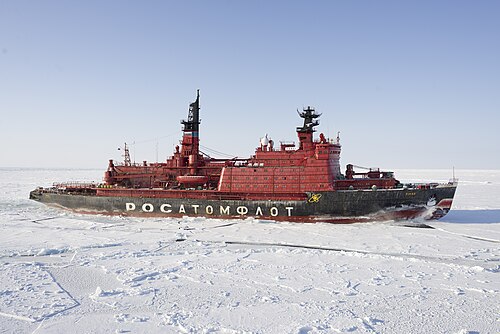
Both Beijing and the U.S. are short of vessels capable of navigating thick Arctic ice compared with Russia, which has more than 40. China in 2025 commissioned its fifth icebreaker. The U.S. has only two such vessels in operation, and Trump is buying more. After years of development, China launched its first domestically built icebreaker in 2019 with Finnish help. In 2025, it built and deployed its first domestically designed icebreaker in 10 months, a swift accomplishment noted with worry in Arctic countries.

Excerpt from Daniel Michaels, China’s Push to Master the Arctic Opens an Alarming Shortcut to U.S., WSJ
Who Owns the Riches of the Melting North Pole

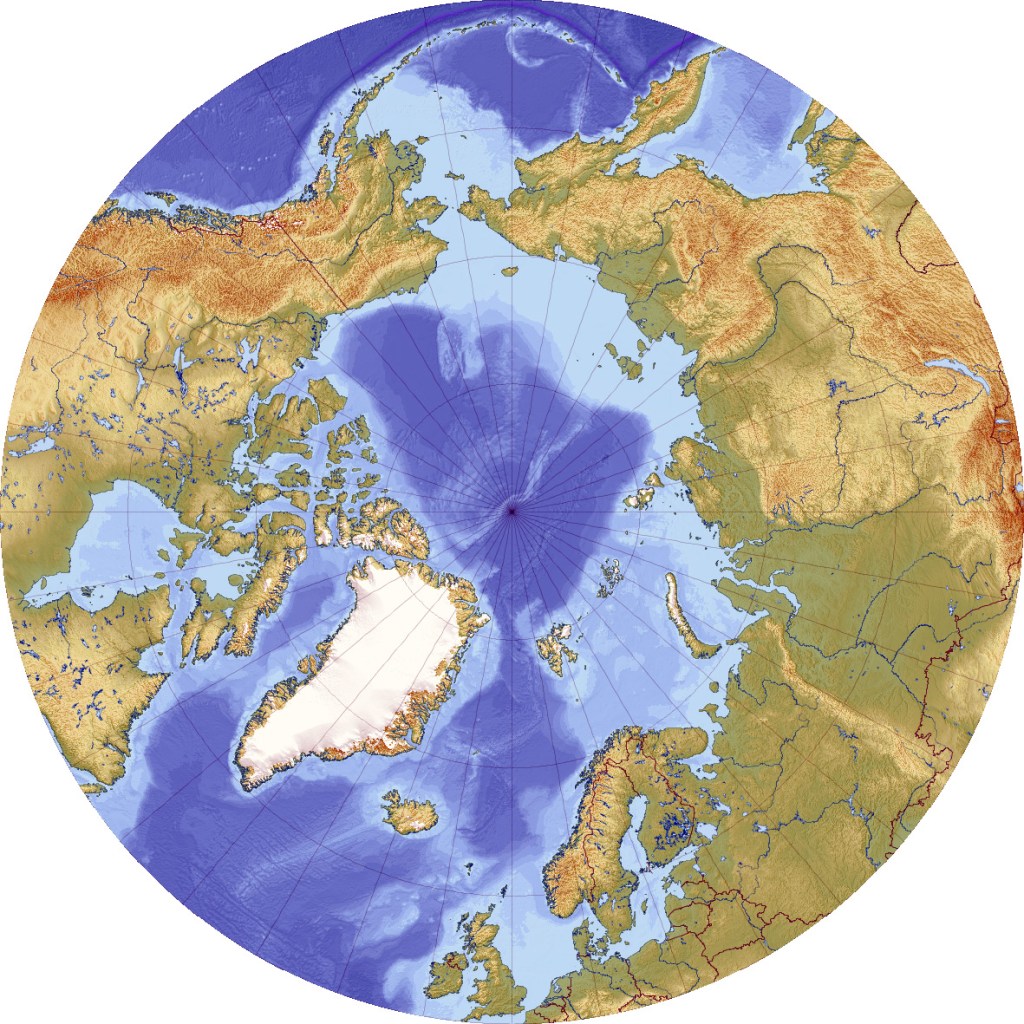
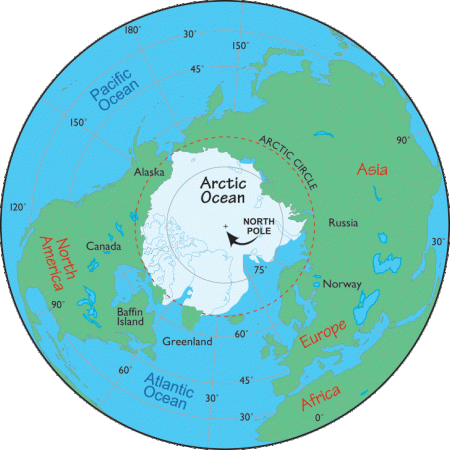
A competition for the North Pole heated up in May 2019, as Canada became the third country to claim—based on extensive scientific data—that it should have sovereignty over a large swath of the Arctic Ocean, including the pole. Canada’s bid, submitted to the United Nations’s Commission on the Limits of the Continental Shelf (CLCS), joins competing claims from Russia and Denmark. Like theirs, it is motivated by the prospect of mineral riches: the large oil reserves believed to lie under the Arctic Ocean, which will become more accessible as the polar ice retreats. And all three claims, along with dozens of similar claims in other oceans, rest on extensive seafloor mapping, which has proved to be a boon to science…

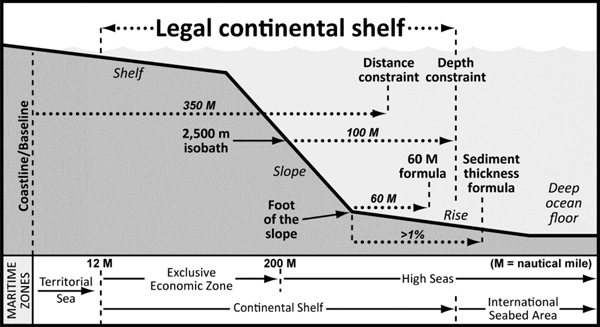
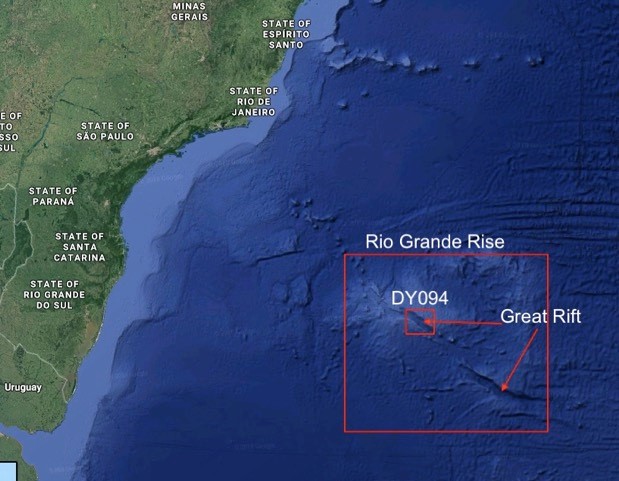
Coastal nations have sovereign rights over an exclusive economic zone (EEZ), extending by definition 200 nautical miles (370 kilometers) out from their coastline. But the 1982 United Nations Convention on the Law of the Sea opened up the possibility of expanding that zone if a country can convince CLCS that its continental shelf extends beyond the EEZ’s limits…..Most of the 84 submissions so far were driven by the prospect of oil and gas, although advances in deep-sea mining technology have added new reasons to apply. Brazil, for example, filed an application in December 2018 that included the Rio Grande Rise, a deep-ocean mountain range 1500 kilometers southeast of Rio De Janeiro that’s covered in cobalt-rich ferromanganese crusts.

The Rio Grande Rise, Brazil

To make a claim, a country has to submit detailed data on the shape of the sea floor and on its sediment, which is thicker on the shelf than in the deep ocean. …CLCS, composed of 21 scientists in fields such as geology and hydrography who are elected by member states, has accepted 24 of the 28 claims it has finished evaluating, some partially or with caveats; in several cases, it has asked for follow-up submissions with more data. Australia was the first country to succeed, adding 2.5 million square kilometers to its territory in 2008. New Zealand gained undersea territory six times larger than its terrestrial area. But CLCS only judges the merit of each individual scientific claim; it has no authority to decide boundaries when claims overlap. To do that, countries have to turn to diplomatic channels once the science is settled.

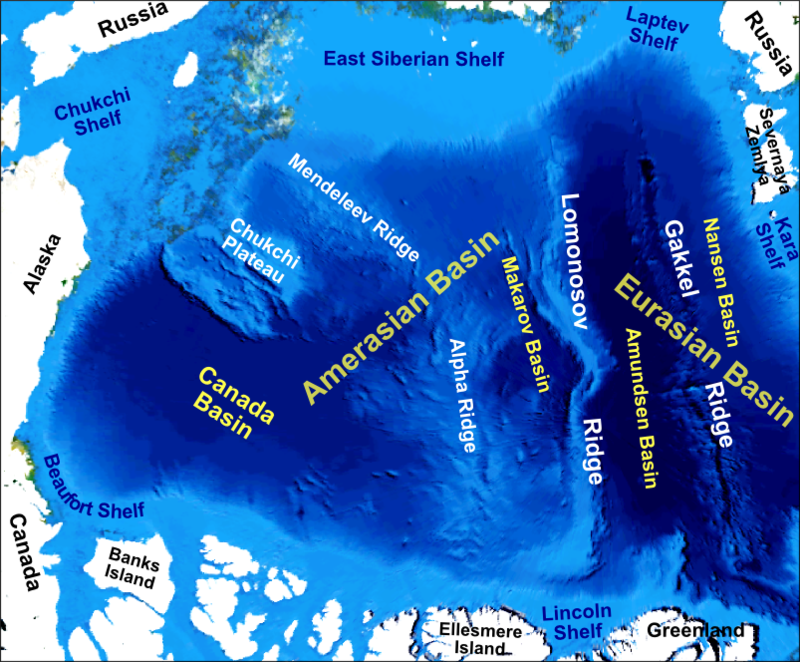
The three claims on the North Pole revolve around the Lomonosov Ridge, an underwater mountain system that runs from Ellesmere Island in Canada’s Qikiqtaaluk region to the New Siberian Islands of Russia, passing the North Pole. Both countries claim the ridge is geologically connected to their continent, whereas Denmark says it is also tied to Greenland, a Danish territory. As the ridge is thought to be continental crust, the territorial extensions could be extensive)

Lomonosov Ridge, Amerasian Basin

Tensions flared when Russia planted a titanium flag on the sea floor beneath the North Pole in 2007, after CLCS rejected its first claim, saying more data were needed. The Canadian foreign minister at the time likened the move to the land grabs of early European colonizers. Not that the North Pole has any material value: “The oil potential there is zip,” says geologist Henry Dick of the Woods Hole Oceanographic Institution in Massachusetts. “The real fight is over the Amerasian Basin” where large amounts of oil are thought to be locked up…

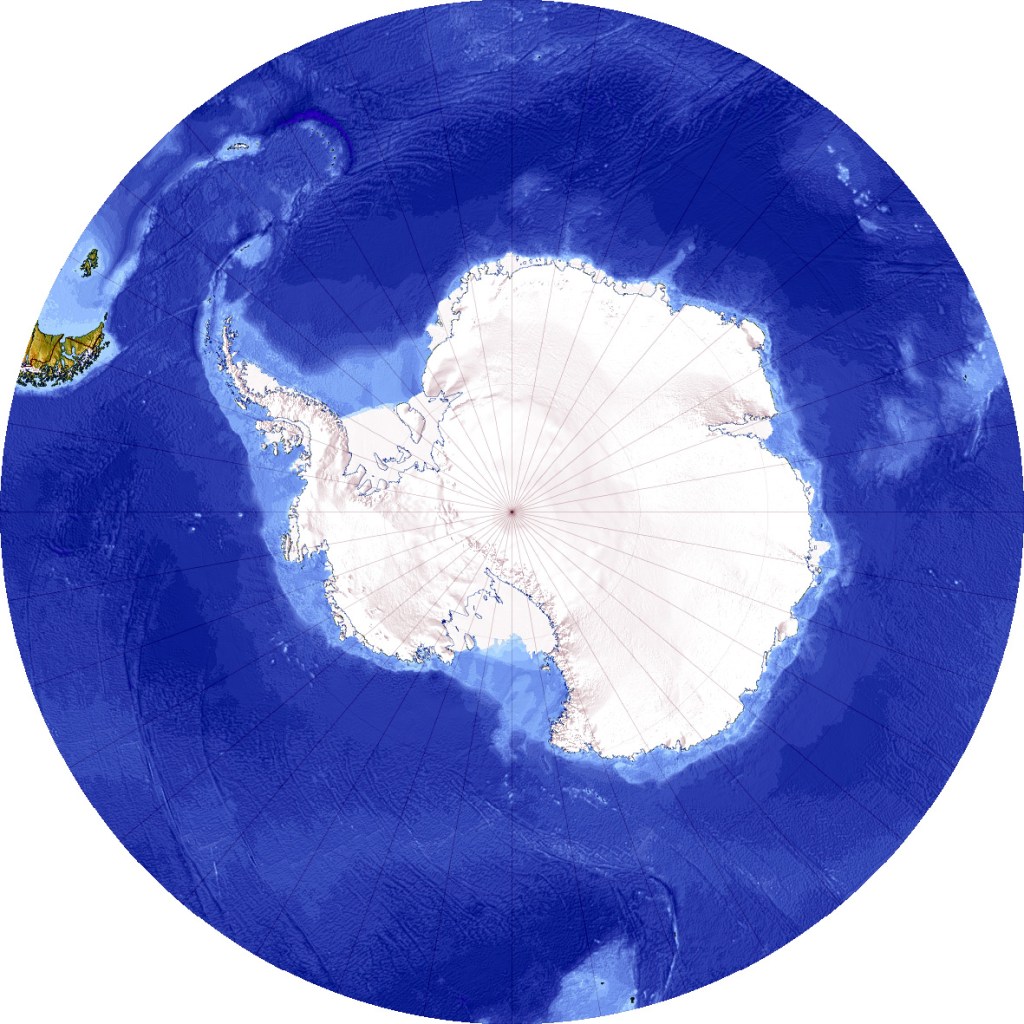
There’s also a proposal to make the North Pole international, like Antarctica (South Pole), as a sign of peace, says Oran Young, a political scientist at the University of California, Santa Barbara. “It seems a very sensible idea.”

Richard Kemeny, Fight for the Arctic Ocean is a boon for science, June 21, 2019

The Arctic through China’s Eyes

China on  January 25, 2018 outlined its ambitions to extend President Xi Jinping’s signature Belt and Road Initiative to the Arctic by developing shipping lanes opened up by global warming.  Releasing its first official Arctic policy white paper, China said it would encourage enterprises to build infrastructure and conduct commercial trial voyages, paving the way for Arctic shipping routes that would form a “Polar Silk Road”…China, despite being a non-Arctic state, is increasingly active in the polar region and became an observer member of the Arctic Council in 2013.

Among its increasing interests in the region is its major stake in Russia’s Yamal liquefied natural gas project which is expected to supply China with four million tonnes of LNG a year.

Shipping through the Northern Sea Route would shave almost 20 days off the regular time using the traditional route through the Suez Canal. COSCO Shipping has also previously sailed vessels through the Arctic’s northeast passage.

China’s increasing prominence in the region has prompted concerns from Arctic states over its long-term strategic objectives, including possible military deployment…The white paper said China also eyes development of oil, gas, mineral resources and other non-fossil energies, fishing and tourism in the region. China’s Belt and Road initiative aims to connect China to Europe, the Middle East and beyond via massive infrastructure projects across dozens of countries…

Excerpts from China unveils vision for ‘Polar Silk Road’ across Arctic, Reuters, Jan. 25, 2018