Tag Archives: conflict minerals

How Murder, Torture and Rape Fuel the Technological Revolution

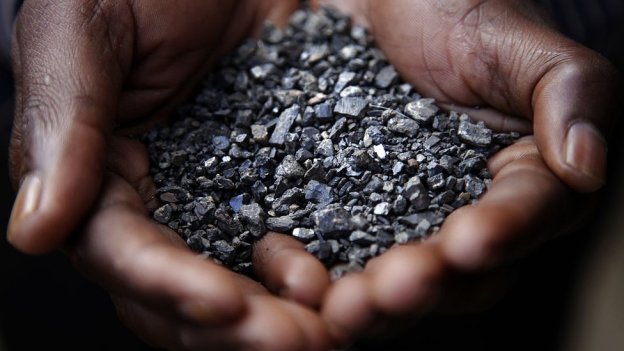
Congo is the world’s leading producer of coltan, from which tantalum is extracted. Tantalum is in hot demand because of its growing use in consumer products, from smartphones to laptops and it is critical for the defense industry (e.g., Apple iPhones, SpaceX rockets, IBM computers).

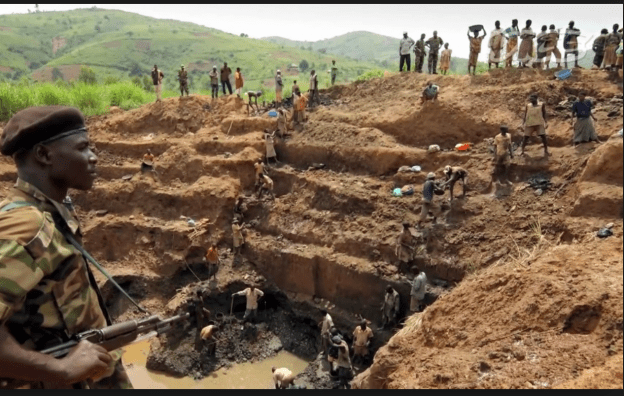
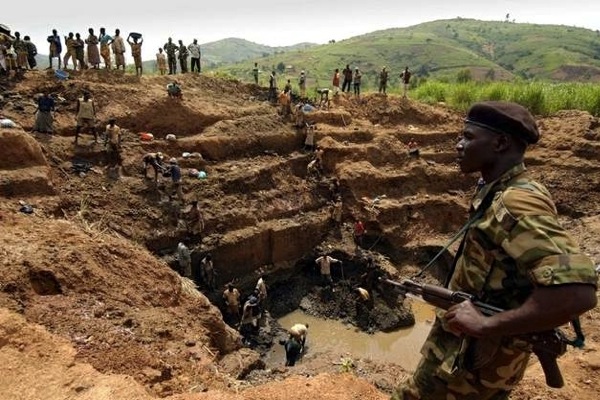
Coltan is mined in the country’s restive east, a region that has been engulfed in a decadeslong war between rebel groups and the Congolese army…A powerful militia backed by neighboring Rwanda has taken over swaths of eastern Congo, driving some two million people from their homes as fighters kill, torture and rape civilians. The militia, known as M23, has also seized control of Congo’s coltan production and transport, according to United Nations investigators, supply-chain experts, researchers and local traders. 

Now, a network of smuggling routes is increasingly being used to move ore illegally from militia-controlled mines in eastern Congo to neighboring Rwanda. From there, it is sold as Rwandan, and hence “conflict-free,” to smelters around the world, but primarily in China. 

M23 fighters levy taxes on informal coltan miners, who dig the ore from the ground, mostly by hand. The fighters also tax the movement of coltan, providing the militia with revenue to purchase weapons and other supplies. Overall, the trade generates around $300,000 a month for the fighters, according to Bintou Keita, the head of the U.N. mission in Congo….U.S. lawmakers have sought to prevent minerals commonly mined in eastern Congo—tin, tungsten, tantalum and gold—from financing conflict in the region. Legislation embedded in the 2010 Dodd-Frank Act requires U.S.-listed companies to disclose their use of the minerals, known as the 3TGs, as well as steps they are taking to prevent inadvertently financing armed groups. It doesn’t, however, oblige companies to remove potentially tainted materials from their supply chains…

Other armed groups are also profiting from the illegal coltan trade, including an alliance of militias that is helping the Congolese military fight M23, according to rights groups and U.N. researchers. The alliance, known as the Wazalendo, which U.N. investigators say is armed by Congo’s military, includes groups that are under international sanctions for war crimes. M23 and the Wazalendo are both recruiting child soldiers, raping women and girls, looting, murdering civilians and committing other atrocities, according to rights groups and U.N. investigators. Like M23, the Wazalendo are collecting illegal taxes on coltan at roadblocks along transportation routes, as well as from some mining sites. 

Excerpt from Alexandra Wexler, How This Conflict Mineral Gets Smuggled Into Everyday Tech,  WSJ, Oct. 6, 2024

At Gunpoint in Congo: Is Coltan Worse than Oil?

Tantalum, a metal used in smartphone and laptop batteries, is extracted from coltan ore. In 2019 40% of the world’s coltan was produced in the Democratic Republic of Congo, according to official data. More was sneaked into Rwanda and exported from there. Locals dig for the ore by hand in Congo’s eastern provinces, where more than 100 armed groups hide in the bush. Some mines are run by warlords who work with rogue members of the Congolese army to smuggle the coltan out.

When demand for electronics soared in the early 2000s, coltan went from being an obscure, semi-valuable ore to one of the world’s most sought-after minerals. Rebels fought over mines and hunted for new deposits. Soldiers forced locals to dig for it at gunpoint. Foreign money poured into Congo. Armed groups multiplied, eager for a share.

Then, in 2010, a clause in America’s Dodd-Frank Act forced American firms to audit their supply chains. The aim was to ensure they were not using minerals such as coltan, gold and tin that were funding Congo’s protracted war. For six months mines in eastern Congo were closed, as the authorities grappled with the new rules. Even when they reopened, big companies, such as Intel and Apple, shied away from Congo’s coltan, fearing a bad press.

The “Obama law”, as the Congolese nickname Dodd-Frank, did reduce cash flows to armed groups. But it also put thousands of innocent people out of work. A scheme to trace supply chains known as ITSCI run by the International Tin Association based in London and an American charity, Pact, helped bring tentative buyers back to Congo.  ITSCI staff turn up at mining sites to see if armed men are hanging about, pocketing profits. They check that no children are working in the pits. If a mine is considered safe and conflict-free, government agents at the sites put tags onto the sacks of minerals. However, some unscrupulous agents sell tags on the black market, to stick on coltan from other mines. “The agents are our brothers,” Martin says. It is hard to police such a violent, hilly region with so few roads. Mines are reached by foot or motorbike along winding, muddy paths.

For a long time those who preferred to export their coltan legally had to work with itsci, which held the only key to the international market. Miners groaned that itsci charged too much: roughly 5% of the value of tagged coltan. When another scheme called “Better Sourcing” emerged, Congo’s biggest coltan exporter, Société Minière de Bisunzu, signed up to it instead.

Excerpts from Smugglers’ paradise: Congo, Economist, Jan. 23, 2021

Saving Lives (if you can): Conflict Minerals and Covid-19

The Dodd-Frank Section 1502 forces manufacturers to disclose if any of their products contain “conflict minerals” mined in the Democratic Republic of the Congo and nine adjoining countries in Africa. Under the law, companies listed on U.S. stock exchanges must audit their supply chains and disclose if their products contain even traces of the designated minerals—gold, tantalum, tin and tungsten—that might have been mined in areas controlled by warlords.

The provision was sold as protecting Congolese citizens from warlords who profited from the mining and sale of these minerals…Manufacturers spent about $709 million and more than six million man-hours attempting to trace their supply chains for conflict minerals in 2014. And 90% of those companies still couldn’t confirm their products were conflict-free. Many decided to avoid the Congo region altogether and source materials from other countries and continents

When mining dropped off due to Dodd-Frank’s effects, Congolese villages were hit by reductions in education, health care and food supply. In 2014, 70 activists, academics and government officials signed a letter blasting initiatives like the Dodd-Frank provision for “contributing to, rather than alleviating, the very conflicts they set out to address”…

Then there is the race for Covid-19 vaccines and related medical supplies. including ventilators, x-ray machines and oxygen concentrators that are manufactured by using “conflict minerals.” The minerals restricted by the Dodd-Frank Act are frequently used in the composition and production of needles, syringes and vials necessary to transport and administer billions of doses of vaccines. The compressors used to refrigerate vaccines also use these minerals to function…Countries, such as China, which are not bound by Dodd-Frank, have access to Congolese tantalum that the U.S. lacks.

Excerpts from John Berlau and Seth Carter,  Dodd-Frank Undermines the Fight Against Covid, WSJ, Oct 28, 2020