Tag Archives: dams

The Unquenchable Thirst: water mismanagement

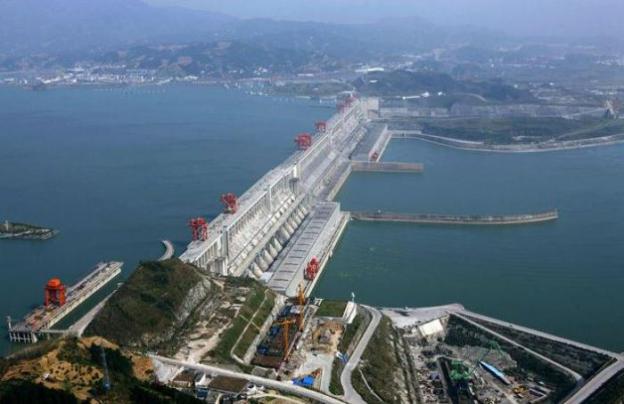
Most of the drinking water consumed in Beijing has travelled 1,432km (895 miles), roughly the distance from New York to Orlando, Florida. Its journey begins in a remote and hilly part of central China at the Danjiangkou reservoir, on the bottom of which lies the drowned city of Junzhou. The water gushes north by canal and pipeline, crosses the Yellow river by burrowing under it, and arrives, 15 days later, in the water-treatment plants of Beijing. Two-thirds of the city’s tap water and a third of its total supply now comes from Danjiangkou.

This winter and spring, the reservoir was the capital’s lifeline. No rain or snow fell in Beijing between October 23rd 2017 and March 17th 2018—by far the longest drought on record. Yet the city suffered no supply disruptions, unlike Shanxi province to the west, where local governments rationed water. The central government is exultant, since the project which irrigates Beijing was built at vast cost and against some opposition.

The South-to-North Water Diversion Project—to give the structure its proper name—is the most expensive infrastructure enterprise in the world. It is the largest transfer of water between river basins in history, and China’s main response to its worst environmental threat, which is (despite all the pollution) lack of water.

The route between Beijing and Danjiangkou, which lies on a tributary of the Yangzi, opened in 2014. An eastern route opened in 2013 using the ancient Grand Canal between Hangzhou and the capital. (Jaw-dropping hydrological achievements are a feature of Chinese history.) A third link is planned on the Tibetan plateau, but since that area is prone to earthquakes and landslides, it has been postponed indefinitely…

Downstream from Danjiangkou, pollution has proved intractable. By diverting water from the Yangzi, the project has made the river more sluggish. It has become less able to wash away contaminants and unable to sustain wetlands, which act as sponges and reduce flooding. To compensate for water taken from their rivers, local governments are also building dams wherever they can to divert it back again. Shaanxi province, for example, is damming the Han river to transfer water to its depleted river Wei….Worst of all, the project diverts not only water but money and attention from China’s real water problem: waste and pollution.

Excerpts from Water: Massive Diversion, Economist, Apr. 7, 2018
Water Shortage Mekong Basin

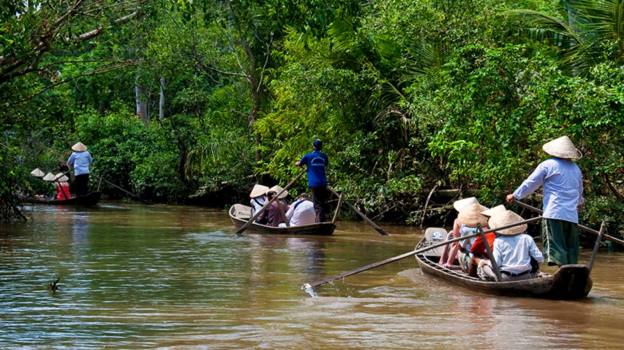
2016: Drought is plaguing much of mainland South-East Asia, including Myanmar, Laos and Cambodia. Thailand’s shortages are the worst for two decades,  Vietnam has been hit as hard as any. The Mekong basin is home to one-fifth of the population. It produces about half of the country’s rice. The government says the amount available for export in the three months to June will be 11% less than originally forecast. Drought in the country’s Central Highlands has affected a third of coffee plantations there and now endangers the region’s supply of drinking water. These woes are weighing on the economy. Growth in the first quarter slowed by half a percent year-on-year to 5.5%.

The immediate cause is El Niño…People living near the Mekong say there is another problem: hydroelectric dams built in China near the head of the river that are holding up its flow. Since March China has loosened some of the dam gates, ostensibly as a favour to its neighbours. But locals say the effect on water levels has been measly. The episode has only heightened fears that China (with which Vietnam has an enormous trade deficit and an intense territorial dispute) can use water flow to hold the country to ransom.

The dams are certainly stripping the Mekong of essential sediment. But many of Vietnam’s water woes are self-inflicted. In the delta, for example, a booming population has built more than 1m wells since the 1960s. These have made saline contamination worse, and are also causing subsidence. In 2014 an American study found that the delta, which mostly lies less than two metres above sea level, could be nearly a metre lower by 2050.

A related problem is the ruling Communist Party’s obsession with maximising rice production. Straining to hit absurd targets—inspired by memories of post-war food shortages—the government has pushed delta farmers to produce three rice crops per year.

This policy has caused the poisoning of paddies with pesticides and has discouraged farming of more profitable, less thirsty crops. It has also prompted the building of a massive network of dykes, canals and sluice gates, which spread pollution from fertilisers and pesticides and restrict the flow of sediment. Koos Neefjes, a climate-change expert in Hanoi, the capital, reckons all this infrastructure has done more to harm the delta than China’s dams.

Fixing this will mean taking on powerful state-owned rice traders and exporters, who benefit from intensive production.

Excerpts Vietnam’s drying delta: Salt of the earth, Economist, Apr. 30, 2016, at 37

Blackstone, China, Secrecy: Guyana

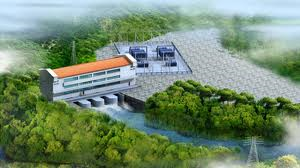
The government of Guyana wants to move forward with an $840m project at Amaila Falls, deep in the forested interior. At full capacity of 165MW, it could supply more power than Guyana’s present needs.  The lead developer is Sithe Global, part of the Blackstone Group. Sithe wants a guaranteed 19% return on its equity stake, and plans to start construction this year. China Railway First Group signed an engineering contract in September. The China Development Bank will lend most of the money. The Inter-American Development Bank has been asked to chip in $175m; the World Bank was initially involved, but has pulled out.

Amaila’s supporters point out that it will flood less than 55 square km (21 square miles). No villages will be displaced and little wildlife will be disturbed. Guyana would no longer rely on fossil fuels for electricity. After two decades, ownership would pass to the government, construction costs paid off.

Opponents worry that clean electricity will not come cheap. Guyana Power and Light (GPL), the state-owned electricity company, will pay about $100m a year to the Amaila consortium. Electricity bills are unlikely to fall (three people were killed last year in protests over electricity charges). And Amaila’s power may not be reliable. The El Niño weather pattern can bring a year-long drought. In normal years, the plant will run below capacity between October and April. GPL will have to pay for backup thermal power. The IMF has urged “careful consideration of the [financial] risks”.

Plans to build Amaila date from 1997, though Sithe only got involved in 2009. The estimated cost has risen steadily. An access road is unfinished. There is as yet no economic feasibility study for the project; when completed, the study will remain confidential, as is GPL’s outline power-purchase agreement. Opposition parties complain that the government is being “secretive” about Amaila. On April 24th they blocked funds for a government equity-stake in the project. If Amaila is as beneficial as its backers claim, an open debate might generate broader support for the project, and cut its $56m bill for political risk insurance.

Hydropower in Guyana: Shrouded in secrecy, Economist, May, 4, 2013, at 39

Divide and Conquer: the Mekong River

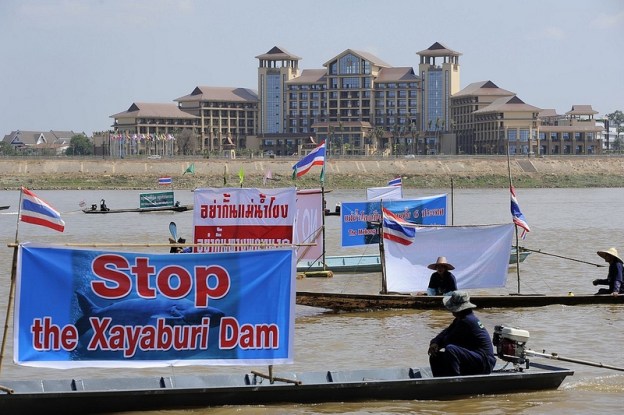
Laos has given the go-ahead to build a massive dam on the lower Mekong river, despite opposition from neighbouring countries and environmentalists.  Landlocked Laos is one of South-east Asia’s poorest countries and its strategy for development is based on generating electricity from its rivers and selling the power to its neighbours, says the BBC’s Jonah Fisher in Bangkok.  Xayaburi is being built by a Thai company with Thai money – and almost all of the electricity has been pre-sold to Thailand, BBC says.

Countries such as Cambodia and Vietnam point to a report last year that said the project should be delayed while more research was done on the dam’s environmental impact. Up to now, Laos had promised not to press ahead while those concerns remained…

Laos has followed the letter, if not the spirit, of the 1995 Mekong Agreement. Under its terms, the countries that share the Mekong agree to prior consultations on the possible cross-border impact of any development on the river before deciding to proceed. Laos believes it has just done that.  Cambodia and Vietnam expressed concerns about the dam’s impact on fish migration and the flow of sediment downstream. So the Laos authorities brought in their own contractors and now say the problems have been solved.  Critics of the dam say many of the modifications to it are untested and the decision to proceed amounts to a huge experiment on one of the world’s great rivers.

Four dams already exist in the narrow gorges of the Upper Mekong in China but until now there have been none on the slower-moving lower reaches of the river..Laos deputy energy minister Viraphonh Virawong said work on the Xayaburi dam itself would begin this week, and hoped it would be the first of many….

Excerpt, Laos approves Xayaburi ‘mega’ dam on Mekong, BBC, Nov. 5, 2012