China’s thirst for oil drove global demand for decades…Chinese officials have long worried that the U.S. and its allies could hamstring the nation’s economy by choking off its supply of foreign oil. So China has poured hundreds of billions of dollars into weaning itself off the imported stuff by reviving domestic production and swiftly building the world’s leading electric-vehicle industry. “The energy rice bowl must be held in our own hands,” Chinese leader Xi Jinping has said.
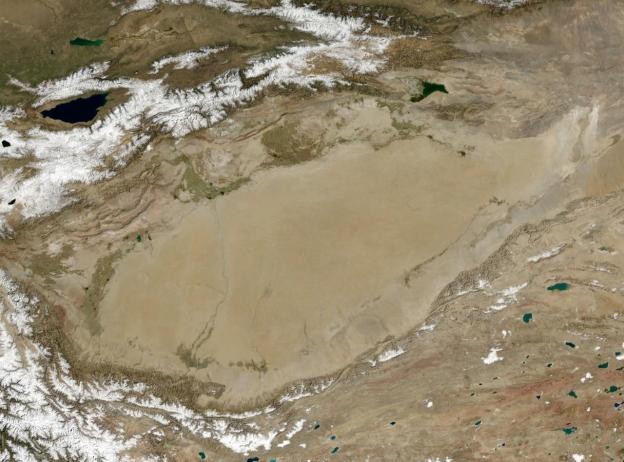
In a remote corner of China. the Tarim Basin, called the “sea of death” for its harsh conditions, oil workers are trying to coax more crude out of the ground by drilling holes as deep as Mt. Everest is high. State-owned PetroChina reported $38 billion of capital expenditures in 2024, nearly as much as Exxon Mobil’s and Chevron’s combined. China’s desire for energy independence dates all the way back to former leader Mao Zedong, who once dispatched tens of thousands of workers to search for oil in China’s northeast to ensure China wouldn’t be dependent on imports…
In July 2018, Xi personally ordered state-owned companies to revive domestic oil production to safeguard national security. Three state-owned oil majors invested an additional $10 billion the following year in exploration and production. They zeroed in on offshore areas such as the South China Sea and the Bohai Sea off the country’s northeast coast, as well as remote reserves near China’s western border with Kyrgyzstan, in a region called the Tarim Basin…
In the deserts of the Tarim Basin crews are exploring some of the nation’s deepest reserves. Summer temperatures can top 120 degrees, and in the winter they can hit minus 20. Such ultradeep exploration is expensive, with some wells costing three times as much as shallower traditional wells, a Chinese oil executive told state media. In 2023, Xi held a video call with Tarim Basin oil workers, praising their “indispensable contributions” to the nation. About 5% of China’s total oil and gas output in 2024 came from the basin’s deep reservoirs, a number Chinese oil executives intend to increase.
As of May 2024, PetroChina’s parent company, China National Petroleum, said it had drilled 193 wells in the Tarim Oilfield at least 5 miles deep. In the U.S., many wells are a mile or two deep.
Excerpt from Brian Spegele, How China Curbed Its Oil Addiction—and Blunted a U.S. Pressure Point, WSJ, July 21,2025

 Law-In-Action