Tag Archives: groundwater

Coke as a Scapegoat

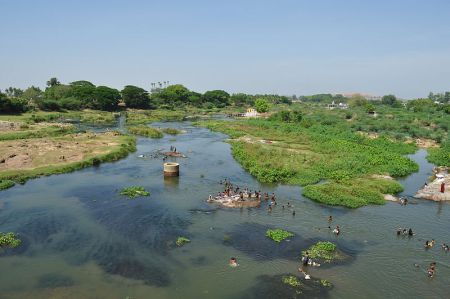
A potent blend of pride, economic nationalism and mounting concern over water security have the world’s two biggest cola brands in a bind in southern India.  Shopkeepers in drought-hit Kerala state decided on March 15, 2017 to promote local brands over Coca-Cola Co. and PepsiCo Inc. beverages after counterparts in neighboring Tamil Nadu boycotted the multinational drinks. While retail groups claim the companies are siphoning off groundwater and selling products tainted with pesticides, academics and analysts say the soda giants have become scapegoats for a water crisis that’s become mired in politics and patriotism.

India is one of the most water-challenged nations, and fights over water have erupted between users periodically for decades. Failed monsoon rains over as many as the past three years in some states have parched rivers and dams, forcing farmers, manufacturers and municipal water suppliers to rely more on wells to meet their needs. Problem is, those too are drying up, and that’s hurting farmers, India’s economic mainstay.

“The root cause for the boycott isn’t the multinational companies, but the enduring fight between industrial users and farmers, especially in several drought-hit states,” said P.L. Beena, an associate professor with the Centre for Development Studies in Thiruvananthapuram, Kerala.  On top of that, Prime Minister Narendra Modi’s call to companies to “make in India” has given rise to a pro-India push — and, in some cases, an anti-foreigner backlash — that’s supporting local brands….

The latest action means drinks from Coca-Cola and PepsiCo, which together have a 96 percent hold on India’s $4.9 billion soda market, will be kept off the shelves of more than 1 million shops.  Vendors would rather lose business than sell the products, said A. M. Vikrama Raja, president of a retailers’ association in Tamil Nadu with about 1.5 million members. The boycott started March 1, 2017 a day before the Madras High Court dismissed a petition seeking a ban on the American soda-makers drawing water from the local Thamirabarani river.

“Instead of foreign sodas, we will promote local beverages,” said T. Naseeruddin, president of a retailers’ group that says it has more than 700,000 retailers in Kerala, which is facing its worst drought in 115 years.

The group stopped short of joining the boycott in Tamil Nadu after a meeting Wednesday with Kerala Chief Minister Pinarayi Vijayan, a spokesman said. Instead, retailers will pursue “sensitization against multinational products” via a state-level conference, and seek a policy response from the state government.  India has at least 50 local drink brands, which are typically 20 percent cheaper than the global cola brands, brokerage Kotak Securities Ltd. said in a Feb. 23 report.  Manpasand Beverages Ltd., based in Vadodara, Gujarat state’s cultural capital, is “aggressively expanding its reach in Tamil Nadu to take advantage of the ongoing cola ban,”….

Excerpts from PepsiCo, Coca-Cola Fight Patriotism in Parched Indian State, Bloomberg Business Week, Mar. 15, 2017
Buying their Way out of Water Crisis: Gulf States

Scientists are now warning of “Peak Salt” – the point at which the Gulf becomes so salty that relying on it for fresh water stops being economically feasible.  “The average Arab citizen has eight times less access to renewable water than the average global citizen, and more than two thirds of surface water resources originate from outside the region,” says the U.N.Development Programme (UNDP) in a new study released this week.  Titled “Water Governance in the Arab Region: Managing Scarcity and Securing the Future,” the report warns that water scarcity in the region is fast reaching “alarming levels, with dire consequences to human development”….

A recent satellite study by the U.S. National Aeronautics and Space Administration (NASA) found the region has lost, since 2003 alone, far more groundwater than previously thought – an amount the size of the Dead Sea…Threatened by future scarcities, several Arab countries, including the UAE, have expanded their use of non-conventional water resources including desalination; treated wastewater; rainwater harvesting; cloud seeding; and irrigation drainage water.

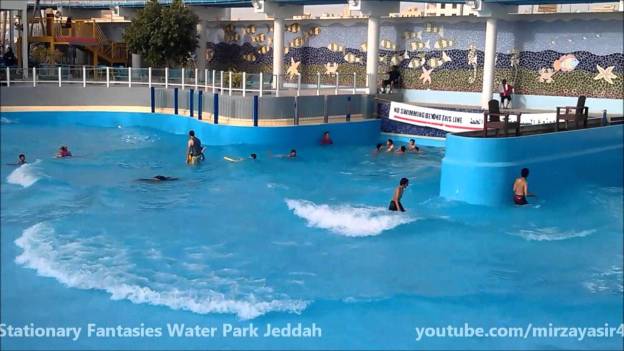
Currently, the Arab region leads the world in desalination, with more than half of global capacity.  Desalinated water is expected to expand from 1.8 percent of the region’s water supply to an estimated 8.5 percent by 2025.  Most of the increase is expected to concentrate in high-income, energy-exporting countries, particularly the Gulf countries, because desalination is energy- and capital-intensive…According to the UNDP study.Arab region’s oil wealth has allowed some states to mask their water poverty, giving them the false impression they can buy their way of out of the coming crisis…

Excerpt, By Thalif Deen, Arab World Sinks Deeper into Water Crisis, Warns UNDP, IPS, Nov. 29, 2013

Japan and the Polluted Radioactive Water

Japan’s crippled nuclear power plant is struggling to find space to store tens of thousands of tonnes of highly contaminated water used to cool the broken reactors, the manager of the water treatment team has said.About 200,000 tonnes of radioactive water, enough to fill more than 50 Olympic-sized swimming pools, are being stored in hundreds of gigantic tanks built around the Fukushima Daiichi plant.

Operator Tokyo Electric Power Company (TEPCO) has already chopped down trees to make room for more tanks and predicts the volume of water will be more than tripled within three years.  “It’s a time-pressing issue because the storage of contaminated water has its limits, there is only limited storage space,” the water-treatment manager, Yuichi Okamura, told the AP news agency in an exclusive interview this week.  The Yotukura fishing village was one of the areas devastated by the Mar. 11, 2011 tsunami that caused the nuclear plant meltdown.

Dumping massive amounts of water into the melting reactors was the only way to avoid an even bigger catastrophe after the meltdown at TEPCO’s Fukushima Daiichi nuclear power reactor, caused by the Mar. 11, 2011 tsunami.  Okamura remembers frantically trying to find a way to get water to spent fuel pools located on the highest floor of the 50m high reactor buildings.  Without water, the spent fuel likely would have overheated and melted, sending radioactive smoke for miles and affecting possibly millions of people.

But the measures to keep the plant under control created another huge headache for the utility: What to do with all the radioactive water that leaked out of the damaged reactors and collected in the basements of reactor buildings and nearby facilities.  “At that time, we never expected high-level contaminated water to turn up in the turbine building,” Okamura said.  He was tasked with setting up a treatment system that would make the water clean enough for reuse as a coolant, and was also aimed at reducing health risks for workers and at curbing environmental damage.  At first, the utility shunted the tainted water into existing storage tanks near the reactors.

Meanwhile, Okamura’s 55-member team scrambled to get a treatment unit up and running within three months of the accident, a project that would normally take about two years, he said.  Using that equipment, TEPCO was able to circulate reprocessed water back into the reactor cores.  But even though the reactors now are being cooled exclusively with recycled water, the volume of contaminated water is still increasing, mostly because groundwater is seeping through cracks into the reactor and turbine basements….

Masashi Goto, a nuclear engineer and university lecturer, said the contaminated water build-up posed a major long-term threat to health and the environment.  He said he was worried that the radioactive water in the basements may already be getting into the underground water system, where it could reach far beyond the plant via underground water channels, possibly reaching the ocean or public water supplies.  “There are pools of some 10,000 or 20,000 tonnes of contaminated water in each plant, and there are many of these, and to bring all of these to one place would mean you would have to treat hundreds of thousands of tonnes of contaminated water which is mind-blowing in itself,” Goto said.  “It’s an outrageous amount, truly outrageous,” Goto added.

The plant will have to deal with contaminated water until all the melted fuel and other debris is removed from the reactor, a process that will easily take more than a decade.

Japan Struggling to Store Nuclear Water, Inter Press Service, Oct. 25, 2012