Tag Archives: Onkalo encapsulation plant

The Nuclear Waste Problem of Power-Hungry AI

A nuclear power renaissance—driven in part by power-hungry AI data centers—has revived a thorny problem: what to do with the radioactive waste left behind. Already, more than 90,000 metric tons of spent nuclear fuel is being stored at sites in 39 states. These include 73 commercial nuclear power plants and more than three dozen university and government facilities, according to a 2024 report by the Pacific Northwest National Laboratory…Meanwhile, nuclear reactors continue to provide almost 20% of U.S. electricity and produce about 2,000 metric tons of waste each year. As additional plants become available to meet the demands of data centers, industrial plants, homes and electric vehicles, the waste pile is poised to grow even more.  The US first new reactors in three decades were completed last year in Georgia. Plans are in the works to reopen closed reactors in Michigan, Iowa, Pennsylvania and South Carolina…

France generates 70% of its electricity from nuclear energy, recycles about 96% of its waste into new fuel and stores the remainder in a centralized cooling pool in Normandy. French officials expect to start construction in 2027 on a permanent underground repository in northeastern France to open by 2035.  In November 2025, Canadian officials selected a permanent site for nuclear waste to be dug out of bedrock in northwestern Ontario. But U.S. efforts stalled decades ago, when a $15 billion project to build a permanent, underground storage facility at Yucca Mountain, Nevada, was halted amid opposition by elected officials in the state. The Yucca Mountain failure cast a shadow over efforts to build a permanent disposal site, according to interviews with nuclear experts, policymakers and elected officials. 

Excerpts Eric Niiler, Nuclear Power’s Revival Is Here. What Do You Do With All the Radioactive Waste?, WSJ, Mar. 5, 2025

Bury It and Forget It: Nuclear Waste

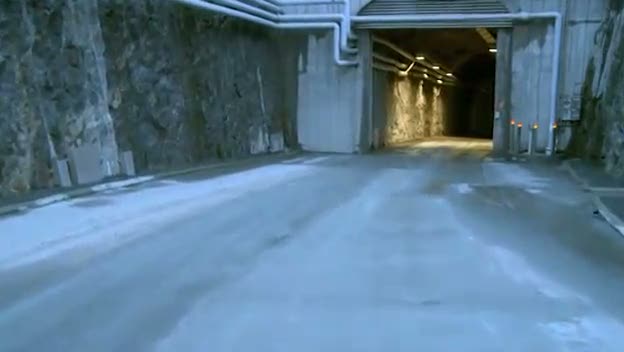
The first nuclear burial site has been built in Finland, the Onkalo spent nuclear fuel repository]. Deep geological disposal of this sort is widely held to be the safest way to deal with the more than 260,000 tons of spent nuclear fuel which has accumulated in 33 countries since the first nuclear plants began churning out electricity in the mid-1950s, and the still large…. Spent fuel is a high-level nuclear waste. That means it is both physically hot (because of the energy released by radioactive decay) and metaphorically so—producing radiation of such intensity that it will kill a human being in short order. Yet unlike the most radioactive substances of all, which necessarily have short half-lives, spent fuel will remain hot for hundreds of thousands of years—as long, in fact, as Homo sapiens has walked Earth—before its radioactivity returns to roughly the same level as that of the ore it came from.

Once full, the waste repository will be backfilled with bentonite before their entrances are sealed with a reinforced-concrete cap. In 100 years’ time, Finland will fill the whole site in, remove all traces of buildings from the surface and hand responsibility over to the Finnish government. The thinking is that leaving no trace or indication of what lies below is preferable to signposting the repository for the curious to investigate.

[Unless someone decides to drill?]

Excerpt from Nuclear Waste: Oubliette, Economist, June 25, 2022

Taking Pride in Nuclear Waste: Finland and Sweden

The site for Posiva’s repository at Eurajoki for the disposal of Finland’s high-level radioactive waste (used nuclear fuel), near the Olkiluoto nuclear power plant, was selected in 2000. The Finnish parliament approved the the repository project the following year in 2001… The government granted a construction licence for the project in November 2015 and construction work on the repository started iin 2016.  Posiva’s plan is for used nuclear fuel to be packed inside copper-steel canisters at an above-ground encapsulation plant, from where they will be transferred into the underground tunnels of the repository, located at a depth of 400-450 meters, and further into deposition holes lined with a bentonite buffer. Operation of the repository is expected to begin in 2023. The cost estimate of this large-scale construction project totals about EUR500 million (USD570 million), the company said.

Posiva  announced on June 25, 2019  the start of construction of the used fuel encapsulation plant. Janne Mokka, Posiva’s President, noted, “In Finland, full lifecycle management of nuclear fuel is a precondition for the production of climate-friendly nuclear electricity. Posiva will execute the final disposal of the spent fuel of its owners’ Olkiluoto and Loviisa nuclear power plants responsibly.”

Sweden is planning a similar used fuel encapsulation and disposal facility using the same storage method. Under its current timetable, national radioactive waste management company Svensk Kärnbränslehantering AB plans to start construction of the used fuel repository and the encapsulation plant sometime early in the 2020s and they will take about 10 years to complete.

Exceprts from Work starts on Finnish fuel encapsulation plant, World Nuclear News, June 25, 2019

See also documentary “Into Eternity” (YouTube)