Tag Archives: shale oil

Energy Self-Sufficiency: Argentina

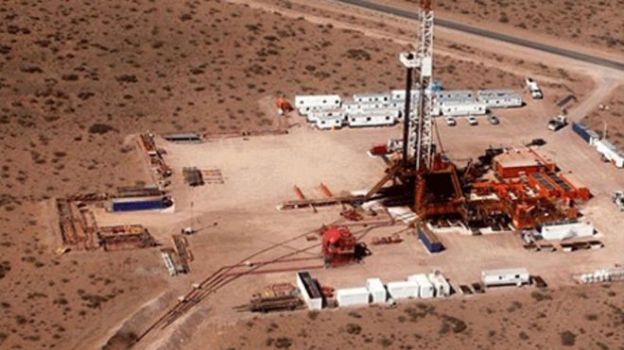
Despite the precipitous fall in global oil prices (from 110 dollars in 2014 to under 50 dollars in 2015), Argentina has continued to follow its strategy of producing unconventional shale oil, although in the short term there could be problems attracting the foreign investment needed to exploit the Vaca Muerta shale deposit,  Argentina’s energy trade deficit climbed to almost seven billion dollars in 2014, partly due to the decline in the country’s conventional oil reserves.  Eliminating that deficit depends on the development of Vaca Muerta, a major shale oil and gas deposit in the Neuquén basin in southwest Argentina. At least 10 billion dollars a year in investment are needed over the next few years to tap into this source of energy…

According to the state oil company Yacimientos Petrolíferos Fiscales (YPF), Vaca Muerta multiplied Argentina’s oil reserves by a factor of 10 and its gas reserves by a factor of 40, which will enable this country not only to be self-sufficient in energy but also to become a net exporter of oil and gas. YPF has been assigned 12,000 of the 30,000 sq km of the shale oil and gas deposit in the province of Neuquén.  The company admits that to exploit the deposit, it will need to partner with transnational corporations capable of providing capital.

It has already done so with the U.S.-based Chevron in the Loma Campana deposit, where it had projected a price of 80 dollars a barrel this year….YPF has also signed agreements for the joint exploitation of shale deposits with Malaysia’s Petronas and Dow Chemical of the United States, while other transnational corporations have announced their intention to invest in Vaca Muerta.

Excerpts from Fabiana Frayssinet, Plunging Oil Prices Won’t Kill Vaca Muerta, PS, Apr. 10, 2015
Oil Shale: Costs and Benefits

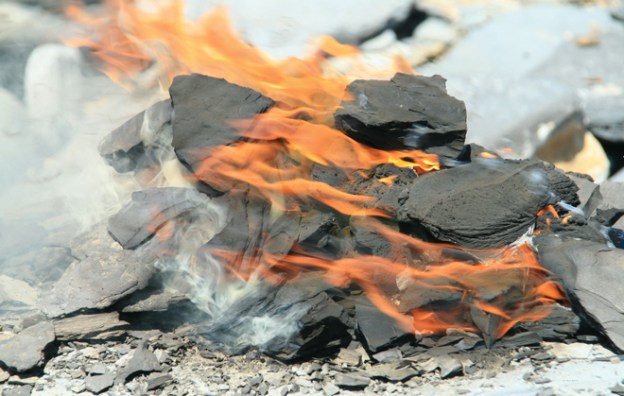
[A] second shale revolution is in prospect, in which cleaner and more efficient ways are being found to squeeze the oil and gas out of the stone. The Jordanian government said on June 12th that it had reached agreement with Enefit, an Estonian company, and its partners on a $2.1 billion contract to build a 540MW shale-fuelled power station. Frustratingly for Jordan, as it eyes its rich, oil-drenched Gulf neighbours, the country sits on the world’s fifth-largest oil-shale reserves but has to import 97% of its energy needs.

In Australia, Queensland Energy Resources, another oil-shale company, has just applied for permission to upgrade its demonstration plant to a commercial scale. Production is expected to start in 2018. Questerre Energy, a Canadian company, also said recently that it would start work on a commercial demonstration project, in Utah in the United States.

In all these projects, the shale is “cooked” cheaply, cleanly and productively in oxygen-free retorts to separate much of the oil and gas. In Enefit’s process the remaining solid is burned to raise steam, which drives a generator. So the process produces electricity, natural gas (a big plus in Estonia, a country otherwise dependent on Russian supplies) and synthetic crude, which can be used to make diesel and aviation fuel. The leftover ash can be used to make cement. Enefit’s chief executive, Sandor Liive, says his plants, the first of which started production in December 2012, should be profitable so long as oil prices stay above $75 a barrel (North Sea Brent oil was around $113 this week).

Although the new methods of exploiting the rock are cleaner than old ones, environmentalists still have plenty to worry about. Oil shale varies hugely in quality. Estonia’s is clean, Jordan’s has a high sulphur content, Utah’s is laden with arsenic. Like opencast coal mining, digging up oil shale scars the landscape. Enefit has solved that in green-minded Estonia, by landscaping and replacing the topsoil. Other countries may be less choosy.

Some of the world’s biggest energy firms have also experimented with mining and processing oil shale, only to give up, after finding that it took so much energy that the sums did not add up. However, Shell says it is making progress with a new method it is trying, also in Jordan, in which the shale is heated underground with an electric current to extract the oil.

These rival technologies have yet to prove their reliability at large scale—and they are far from cheap. Mr Liive reckons it will cost $100m to get a pilot project going in Utah (where his firm has bought a disused oil-shale mine), and another $300m to reach a commercial scale. A fall in the oil price could doom the industry, as happened in the 1980s when a lot of shale mines went out of business…America this week loosened its ban on crude exports. If the second shale revolution succeeds, it will have a lot more oil to sell.

Oil shale: Flaming rocks, Economist, June  28, 2014, at 58