Tag Archives: Sudan Nile River

How the Drug War has Fueled Sudan’s Conflict

The war in Sudan between the country’s military and the rebel Rapid Support Forces (RSF) has turned in 2024 into a battleground for more foreign powers, drawing in fighters and weapons from as far as Latin America and Europe. Several regional governments are vying to assert their influence as the fighting escalates, led by the United Arab Emirates on one side and Egypt on the other—with devastating consequences for Sudan’s 48 million people, some of whom are now in the grip of famine. At stake is control of Red Sea shipping lanes, some of Africa’s largest gold reserves and the contested waters of the Nile.

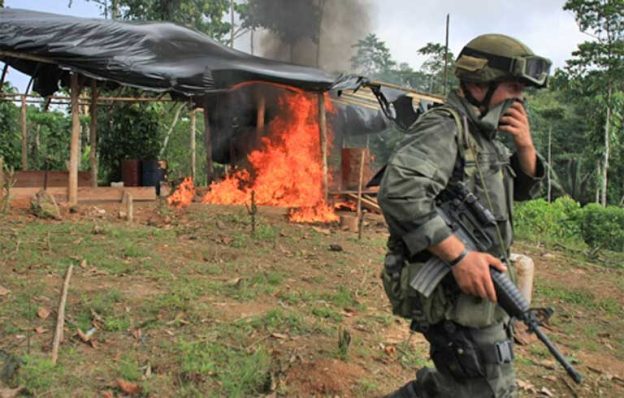
The Colombian fighters seized in November 2024 in Darfur were hired earlier this year by an Abu Dhabi-based company called Global Security Services Group (GSSC)…The company describes itself as the only armed private security provider to the Emirati government and lists as its clients the Gulf state’s ministries of presidential affairs, interior and foreign affairs.  In Uganda, where GSSG has trained local troops in counterterrorism operations and VIP protection, the company presented itself as acting on behalf of the Emirati government, an army spokesman said. 

With its large stock of drug-war veterans trained on American weapons, Colombia has long been a target for recruiters from overseas security and mercenary groups. A decade ago, the U.A.E., through military contractors, sent Colombians to fight in the civil war in Yemen. In September 2024, a Bogotá, Colombia-registered recruitment company called International Services Agency, or A4SI, began posting ads on its website looking for drone operators, cybersecurity specialists and bodyguards to deploy in Africa…

By some estimates, as many as 150,000 people have been killed in Sudan. About 25 million, more than half of the population, are suffering crisis levels of hunger and one in four Sudanese have been forced from their homes. Famine has been declared in a Darfur camp hosting between 500,000 and a million displaced people.

Excerpts from Benoit Faucon and Gabriele Stein, The Global War Machine Supplying Colombian Mercenaries to Fight in Sudan, WSJ, Dec. 11, 2024
Water Conflicts: Who Owns the Nile River

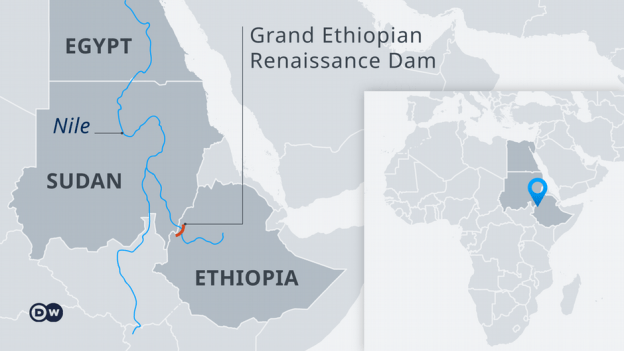
The Grand Ethiopian Renaissance Dam is a giant edifice that would span the Blue Nile, the main tributary of the Nile river.  Half a century in the making, the hydro-electric dam is Africa’s largest, with a reservoir able to hold 74bn cubic metres of water, more than the volume of the entire Blue Nile. Once filled it should produce 6,000 megawatts of electricity, double Ethiopia’s current power supply. Millions of people could be connected to the grid for the first time. More than an engineering project, it is a source of national pride.

For Egypt, however, it seems a source of national danger. Over 90% of the country’s 100m people live along the Nile or in its vast delta. The river, long seen as an Egyptian birthright, supplies most of their water. They fear the dam will choke it off. Pro-regime pundits, not known for their subtlety, have urged the army to blow it up….Ethiopia wants to start filling the reservoir during this summer’s rainy season. On June 26th, 2020 after another round of talks, Egypt, Ethiopia and Sudan pledged to reach a deal within two weeks. Ethiopia agreed not to start filling the dam during that period.

Diplomats say most of the issues are resolved. But the outstanding one is big: how to handle a drought. Egypt wants Ethiopia to promise to release certain amounts of water to top up the Nile. But Ethiopia is loth to “owe” water to downstream countries or to drain the reservoir so much that electric output suffers. It wants a broader deal between all riparian states, including those on the White Nile, which flows out of Lake Victoria down through Uganda and Sudan.

Even if talks fail and Ethiopia starts filling without a deal, Egyptians will not find their taps dry. There is enough water in the reservoir behind Egypt’s Aswan High Dam to make up for any shortfall this year. But the mood in both countries is toxic. Egyptians have cast Ethiopia as a thief bent on drying up their country. In Ethiopia, meanwhile, Egypt is portrayed as a neocolonial power trampling on national sovereignty. The outcome of the talks will have political consequences in both countries, and perhaps push them to the brink of conflict—at a time when Egypt is already contemplating involvement in a war in Libya.

Ethiopia’s grand dam became a reality and a national obsession under Meles Zenawi, the longtime prime minister who ruled until 2012. His political masterstroke was asking Ethiopians to finance it through donations and the purchase of low-denomination bonds…. Most contributed voluntarily, but there was always an element of coercion. Civil servants had to donate a month’s salary at the start. Local banks and other businesses were expected to buy bonds worth millions of birr. ….

Excerpts from The Grand Ethiopian Renaissance Dam: Showdown on the Nile, Economist, July 4, 2020

.