Tag Archives: Transocean

Anadarko Fined for Gulf of Mexico Spill

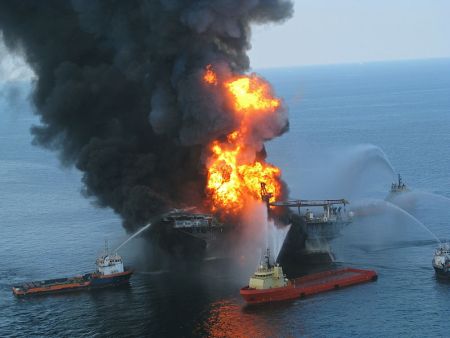
Anadarko Petroleum Corp. was ordered to pay almost $160 million for its role as part-owner of the doomed Gulf of Mexico well that in 2010 caused the biggest offshore oil spill in U.S. history.  The fine was the last big uncertainty hanging over Anadarko from the disaster. The order on November 30, 2015  comes after the government told U.S. District Judge Carl Barbier in New Orleans that the company should be fined more than $1 billion for its role in the well’s blowout, which killed 11 people and spewed oil for almost three months. Anadarko, which had a 25 percent stake in the Macondo well, argued it shouldn’t be required to pay fines simply because it owned part of the well, as the accident wasn’t its fault. In 2014, The Woodlands, Texas-based company set aside $90 million for the case when it offered to settle for that amount.

Barbier said the fine reflected his finding that Anadarko didn’t have a role in causing the spill. Under the law, he could have imposed as much as $1,100 per barrel of oil spilled, or about $3.5 billion.  The fine is “only 4.5 percent of the maximum penalty, and therefore on the low end of the spectrum,” Barbier said in his order. “The court finds this amount strikes the appropriate balance between Anadarko’s lack of culpability and the extreme seriousness of this spill.”

Barbier rejected Anadarko’s argument that a heavy penalty could cause minority partners to seek a larger role in offshore operations, which might complicate safety and drilling decisions. “A penalty of this size might encourage non-operators to avoid investing with careless operators,” he said.  The company said it’s pleased the penalty is less than what the government sought and that it’s reviewing whether to file an appeal. “While we respect the court’s decision, we continue to believe that penalizing a non-operator for events beyond its control is inconsistent with the intent of the Clean Water Act,” Anadarko said in a statement posted on its website.

David Berg, a Houston attorney who has tracked the oil spill litigation and often sues polluters on behalf of municipalities, said given the damage from the spill, the fine is “not a slap on the wrist; it’s a tongue kiss from the judge.”  David Uhlmann, former head of the Justice Department’s environmental crimes unit, said the fine is “too small to be an effective deterrent.” It “will not have a significant effect on a company worth approximately $30 billion,” said Uhlmann, now a University of Michigan law professor.

The professor said Anadarko wasn’t a silent partner in its dealings with BP Plc, which owned 65 percent of the well.  “Anadarko urged BP to continue drilling deeper, even when BP wanted to stop,” he said. “Yet the judge refused to consider evidence of Anadarko’s risky behavior, which may explain the small size of Anadarko’s fine.”

Excerpt from Anadarko Ordered to Pay $159.5 Million for 2010 Gulf Spill, Bloomberg Business, Nov. 30, 2015
What Transocean Pays for the Gulf Oil Spill

Transocean Ltd. appeared in federal court in New Orleans after reaching a $1.4 billion settlement with the U.S. over the 2010 Gulf of Mexico oil spill….The company agreed last week to plead guilty to a misdemeanor count of violating the Clean Water Act and to pay $400 million in criminal fines and $1 billion plus interest in civil penalties. Under the agreement, Transocean will undergo five years’ probation and establish a technology innovation group to focus on drilling safety, devoting a minimum of $10 million to this effort…..

The agreement doesn’t cover costs to Transocean for natural-resources damage under the Oil Pollution Act of 1990, the company said. That law requires responsible parties to reimburse governments for restoring natural resources to pre- incident conditions.  Transocean said last week that the company’s liability for these damages was limited by a 2012 court ruling that it wouldn’t be liable under the Oil Pollution Act for subsurface discharge from the well.

The blowout and explosion aboard Transocean’s drilling rig sent millions of barrels of crude leaking into the gulf. The accident prompted hundreds of lawsuits against Transocean, London-based BP, the well’s owner, and Houston-based Halliburton Co. (HAL), which provided cementing services. BP previously agreed to pay $4 billion to the Justice Department to resolve charges connected to the spill and $525 million to settle the U.S. Securities and Exchange Commission’s claim that the company misled investors about the rate of oil flowing into the gulf.  BP announced Nov. 15 that it reached a deal with the Justice Department to plead guilty to 14 counts, including 11 for felony seaman’s manslaughter. U.S. District Judge Sarah S. Vance said last month that she would determine at a Jan. 29 hearing whether to accept BP’s plea.

The criminal case is U.S. v. Transocean Deepwater Inc., 13- cr-001, U.S. District Court, Eastern District of Louisiana (New Orleans). (pdf)

Margaret Cronin Fisk & Allen Johnson Jr, Transocean Appears in Court After $1.4 Billion Spill Pact, Bloomberg, Jan. 9, 2013

BP: Culture of Corporate Recklessness

The Obama administration has accused BP of gross negligence and willful misconduct in causing the Deepwater Horizon oil spill of 2010. In a new court filing, the Department of Justice appears bent on blaming BP for the worst oil disaster in U.S. history.  The court document blasts BP’s leadership in no uncertain terms. Referring to “A Culture of Corporate Recklessness,” it states that “The behaviour, words and actions of these BP executives would not have been tolerated in a middling size company manufacturing dry goods for sale in a suburban mall.” It criticizes “the utter lack of any semblance of investigation of the systemic management causes deeply implicating the corporate managers and leadership who caused and allowed the rig-based mechanical causes to fester and ultimately explode in a fireball of death, personal injury, economic catastrophe, and environmental devastation.”

Referring to a “negative pressure test” performed by BP and Transocean hours before the blowout, the report states, “That such a simple, yet fundamental safety-critical test could have been so stunningly, blindingly botched in so many ways, by so many people, demonstrates gross negligence.”  The designation of “gross negligence” under the Clean Water Act, is an important distinction because it would mean the company could face $21 billion in civil damages alone—almost quadruple the penalty if “gross negligence” is not confirmed. BP also faces criminal charges.

The case may not go to trial, which is scheduled to begin January 14. Both sides are negotiating to reach a settlement to resolve both civil and criminal violations.  The Justice Department reportedly sought a $25 billion agreement from BP, but now may be willing to settle for $15 billion.

Justice Dept. Accuses BP of “Gross Negligence” over Gulf Oil Spill, AllGov.com, Sept. 7, 2012