Tag Archives: voice surveillance technologies

Big Tech and Military: Microsoft – Israel Force

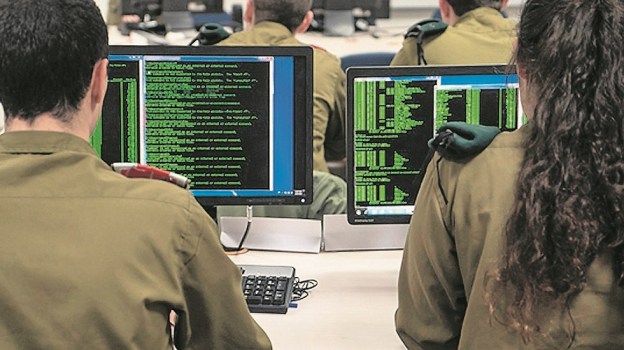
Microsoft terminated in September 2025 the Israeli military’s access to technology it used to operate a powerful surveillance system that collected millions of Palestinian civilian phone calls made each day in Gaza and the West Bank, according to Guardian. Microsoft told Israeli officials that Unit 8200, the military’s elite spy agency, had violated the company’s terms of service by storing the vast trove of surveillance data in its Azure cloud platform.

Equipped with Azure’s near-limitless storage capacity and computing power, Unit 8200 had built an indiscriminate new system allowing its intelligence officers to collect, play back and analyze the content of cellular calls of an entire population.

The project was so expansive that, according to sources from Unit 8200 – which is equivalent in its remit to the US National Security Agency – a mantra emerged internally that captured its scale and ambition: “A million calls an hour.

The enormous repository of intercepted calls – which amounted to as much as 8,000 terabytes of data – was held in a Microsoft data center in the Netherlands. Within days of the Guardian publishing, Unit 8200 appears to have swiftly moved the surveillance data out of the country.

Excerpt from Harry Davies and Yuval Abraham, Microsoft blocks Israel’s use of its technology in mass surveillance of Palestinians, Guardian, Sept. 25, 2025

How to Categorize Individuals: Surveillance Pricing

The United States Federal Trade Commission issued orders to eight companies offering surveillance pricing products and services that incorporate data about consumers’ characteristics and behavior. The orders seek information about the potential impact these practices have on privacy, competition, and consumer protection.

The orders are aimed at helping the FTC better understand the opaque market for products by third-party intermediaries that claim to use advanced algorithms, artificial intelligence and other technologies, along with personal information about consumers—such as their location, demographics, credit history, and browsing or shopping history—to categorize individuals and set a targeted price for a product or service. The study is aimed at helping the FTC better understand how surveillance pricing is affecting consumers, especially when the pricing is based on surveillance of an individual’s personal characteristics and behavior.

“Firms that harvest Americans’ personal data can put people’s privacy at risk. Now firms could be exploiting this vast trove of personal information to charge people higher prices,” said FTC Chair Lina M. Khan. “Americans deserve to know whether businesses are using detailed consumer data to deploy surveillance pricing, and the FTC’s inquiry will shed light on this shadowy ecosystem of pricing middlemen.”

The FTC is using its 6(b) authority, which authorizes the Commission to conduct wide-ranging studies that do not have a specific law enforcement purpose, to obtain information from eight firms that advertise their use of AI and other technologies along with historical and real-time customer information to target prices for individual consumers. The orders were sent to: Mastercard, Revionics, Bloomreach, JPMorgan Chase, Task Software, PROS, Accenture, and McKinsey & Co.

FTC Issues Orders to Eight Companies Seeking Information on Surveillance Pricing, Press Release, July 23, 2024

The Uses and Abuses of Alexa

Excerpts from the Interview with Robert Lewis Shayon author of “The Voice Catchers: How Marketers Listen In to Exploit Your Feelings, Your Privacy, and Your Wallet” published  at the Pennsylvania Gazette July 2021

There is  emerging industry that is deploying immense resources and breakthrough technologies based on the idea that voice is biometric—a part of your body that those in the industry believe can be used to identify and evaluate you instantly and permanently. Most of the focus in voice profiling technology today is on emotion, sentiment, and personality. But experts tell me it is scientifically possible to tell the height of a person, the weight, the race, and even some diseases. There are actually companies now trying to assess, for example, whether you have Alzheimer’s based upon your voice…

The issue is that this new voice intelligence industry—run by companies you know, such as Amazon and Google, and some you don’t, such as NICE and Verint—is sweeping across society, yet there is little public discussion about the implications. The need for this conversation becomes especially urgent when we consider the long-term harms that could result if voice profiling and surveillance technologies are used not only for commercial marketing purposes, but also by political marketers and governments, to say nothing of hackers stealing data.

There are hundreds of millions of smart speakers out there, and far more phones with assistants, listening to you and capturing your voice. Voice technology already permeates virtually every important area of personal interaction—as assistants on your phone and in your car, in smart speakers at home, in hotels, schools, even stores instead of salespeople. 

Amazon and Google have several patents centering around voice profiling that describe a rich future for the practice…But consider the downside: we could be denied loans, have to pay much more for insurance, or be turned away from jobs, all on the basis of physiological characteristics and linguistic patterns that may not reflect what marketers believe they reflect.

The first thing to realize is that voice assistants are not our friends no matter how friendly they sound. I argue, in fact, that voice profiling marks a red line for society that shouldn’t be crossed.