Category Archives: Markets

Industrial Revolution in Genetic Engineering: Military

From DARPA’s Website: Living Foundries

Current approaches to engineering biology rely on an ad hoc, laborious, trial-and-error process, wherein one successful project often does not translate to enabling subsequent new designs. As a result, the state of the art development cycle for engineering a new biologically manufactured product often takes 7+ years and tens to hundreds of millions of dollars (e.g. microbial production of artemisinic acid for the treatment of malaria and the non-petroleum-based production 1,3-propanediol).

[DARPA Goal]

Transforming biology into an engineering practice would enable on-demand production of new and high-value materials, devices and capabilities for the Department of Defense (DoD) and address complex challenges that today have no or few solutions.

The Living Foundries Program seeks to create the engineering framework for biology, speeding the biological design-build-test cycle and expanding the complexity of systems that can be engineered. The Program aims to develop new tools, technologies and methodologies to decouple biological design from fabrication, yield design rules and tools, and manage biological complexity through abstraction and standardization. These foundational tools would enable the rapid development of previously unattainable technologies and products, leveraging biology to solve challenges associated with production of new materials, novel capabilities, fuel and medicines. For example, one motivating, widespread and currently intractable problem is that of corrosion/materials degradation. The DoD must operate in all environments, including some of the most corrosively aggressive on Earth, and do so with increasingly complex heterogeneous materials systems. This multifaceted and ubiquitous problem costs the DoD approximately $23 Billion per year. The ability to truly program and engineer biology, would enable the capability to design and engineer systems to rapidly and dynamically prevent, seek out, identify and repair corrosion/materials degradation.

Accomplishing this vision requires an approach that is more than multidisciplinary – it requires a new engineering discipline built upon the integration of new ideas, approaches and tools from fields spanning computer science and electrical engineering to chemistry and the biological sciences. The best innovations will introduce new architectures and tools into an open technology platform to rapidly move new designs from conception to execution.  Performers must ensure and demonstrate throughout the program that all methods and demonstrations of capability comply with national guidance for manipulation of genes and organisms and follow all guidance for biological safety and Biosecurity.

A Broad Agency Announcement (BAA) solicitation for phase one, Advanced Tools and Capabilities for Generalizable Platforms (ATCG), closed in November, 2011. The BAA called for the development of the advanced, translatable tools and capabilities that will make up an end-to-end technology platform for rapidly, safely and predictably engineering biological production systems. The goals of these advanced tools and capabilities are to compress the biological design-build-test cycle by at least 10x in both time and cost while increasing the complexity of the systems that can be designed and executed by orders of magnitude. These advancements should enable the ability to rapidly design and build new systems to create novel capabilities and to address complex challenges.

Kamikaze Drones: Shortening the Kill Chain

The 2-foot-long Switchblade drone [unmanned aerial vehicle (UAV)] is so named because its wings fold into the fuselage for transport and spring out after launch. It is designed to fit into a soldier’s rucksack and is fired from a mortar-like tube. Once airborne, it begins sending back live video and GPS coordinates to a hand-held control set clutched by the soldier who launched it.  When soldiers identify and lock on a target, they send a command for the drone to nose-dive into it and detonate on impact. Because of the way it operates, the Switchblade has been dubbed the “kamikaze drone.”

The Obama administration, notably the CIA, has long been lambasted by critics for its use of combat drones and carelessly killing civilians in targeted strikes in Pakistan, Afghanistan, Iraq, Yemen and Somalia. In 2010, a United Nations official said the CIA in Pakistan had made the United States “the most prolific user of targeted killings” in the world.

The Switchblade drone appears to be an improvement as an alternative to traditional drone strikes, in terms of minimizing civilian harm, but it also raises new concerns, said Naureen Shah, associate director of the Counterterrorism and Human Rights Project at Columbia Law School.  She pointed out that when a drone strike is being considered there are teams of lawyers, analysts and military personnel looking at the data to determine whether lethal force is necessary. But the Switchblade could shorten that “kill chain.”  “It delegates full responsibility to a lower-level soldier on the ground,” she said. “That delegation is worrisome. It’s a situation that could end up in more mistakes being made.”  Arms-control advocates also have concerns. As these small robotic weapons proliferate, they worry about what could happen if the drones end up in the hands of terrorists or other hostile forces.

The Switchblade “is symptomatic of a larger problem that U.S. military and aerospace companies are generating, which is producing various more exotic designs,” said Daryl Kimball, executive director of the Arms Control Assn. “This technology is not always going to be in the sole possession of the U.S. and its allies. We need to think about the rules of the road for when and how these should be used so we can mitigate against unintended consequences.”

The Switchblade is assembled in Simi Valley by AeroVironment Inc., the Pentagon’s top supplier of small drones, which include the Raven, Wasp and Puma. More than 50 Switchblades will be sent to the war zone in Afghanistan this summer under a $10.1-million contract, which also includes the cost of repairs, spare parts, training and other expenses. Officials would not provide details about where the weapons would be used, how many were ordered and precisely when they would be deployed.  AeroVironment, based in Monrovia, developed the weapon on its own, thinking the military could use a lethal drone that could be made cheaply and deployed quickly by soldiers in the field, said company spokesman Steven Gitlin.

“It’s not inexpensive to task an Apache helicopter or F-16 fighter jet from a base to take out an [improvised explosive device] team when you consider fuel, people, logistics support, etc.,” he said.

About a dozen Switchblades were tested last year by special operations units in Afghanistan, according to Army officials, who said the drone proved effective.  The Army is considering buying $100 million worth of the drones in a few years under a program called the Lethal Miniature Aerial Munition System, Nichols said. The Air Force and the Marine Corps have also expressed interest in the technology.

AeroVironment is not the only company pursuing small, lethal drones. Textron Defense Systems is also working on a small kamikaze-style drone. Named the BattleHawk Squad-Level Loitering Munition, the drone is being tested at an Army facility in New Mexico.

Excerpts, W.J. Hennigan, Pentagon to soon deploy pint-sized but lethal Switchblade drones, LA Times, June 11, 2012

Drug Markets, Patents and the Developing World

Sales of antiretroviral drugs in America and the five biggest European markets reached $13.3 billion in 2011, according to Datamonitor, a research outfit…. Publicly funded research has played a larger role in developing drugs for HIV than for other diseases. A study published last year in Health Affairs found that HIV drugs were three times as likely to involve a patent from the public sector. HIV also has special status among regulators. America’s Food and Drug Administration (FDA) created a faster way to review HIV drugs, allowing them on the market before the most expensive stage of clinical trials.

In total, public and private investment has yielded more than two dozen HIV drugs. In 1987 Burroughs-Wellcome (now part of GlaxoSmithKline) introduced the first one, tackling an enzyme that helps the virus progress inside human cells. In 1995 Hoffmann-La Roche, a Swiss drug firm, launched the first protease inhibitor, which interrupts the virus at a later stage of replication….One company stands out: Gilead, of California. A late entrant to the HIV race, Gilead quickly took the lead. Its strategy was simple: the more convenient the treatment, the better. In 2004 Gilead launched Truvada, a once-a-day, one-pill combination of two drugs. In 2006 it introduced Atripla, a once-a-day, one-pill combination of Truvada and another treatment. Atripla’s average wholesale price in America is nearly $25,000 per patient, per year. In 2011 its global sales reached $3.2 billion.  More good news for Gilead has come in recent weeks. An FDA panel recommended Truvada for preventive use: ie, to protect healthy people from contracting the virus. Another FDA panel endorsed Gilead’s new Quad pill, which is the simplest, most effective combination drug to date.

If the process for developing HIV drugs has been unusual, selling them has been even more so. America is the rich world’s biggest market, with 841,000 patients diagnosed—ten times as many as in Britain. More than 60% of HIV drugs in America are bought with public money. Insurers give HIV special treatment: patients are rarely pressed to buy the cheapest pills, as they might be if they had another disease.

Distributing drugs in poor countries is harder. A decade ago, hardly any poor people could afford them. At first, drugs firms handled this badly. In 1998, 39 big Western firms sued South Africa to protect their HIV patents. Global uproar ensued; the firms backed down in 2001.  Then two things changed. First, rich countries started donating vast sums to fight AIDS in poor ones. In 2000 there was less than $2 billion for HIV programmes each year; by 2010 there was $15 billion, thanks to the Global Fund to Fight AIDS, Tuberculosis and Malaria and George Bush junior’s President’s Emergency Plan for AIDS Relief (PEPFAR).

Second, the price of AIDS drugs plunged. In May 2000 a year’s “triple cocktail” therapy cost $10,000 or so. By 2011 the same pills sold for $62 in poor countries. PEPFAR cash buys generic versions of patented drugs, which may be supplied only to poor countries. Last year two drugmakers won most of PEPFAR’s contracts: Aurobindo, an Indian firm, and Matrix, an Indian firm acquired in 2007 by Mylan, an American one. PEPFAR’s bidding system keeps margins slim even by the standards of the generics industry, says Rajiv Malik, the president of Mylan. But volumes are huge.

Can treatment expand further? Despite the subsidies and the plunge in prices, less than half of those infected with HIV take HIV drugs. Those who do, however, live a long time, and they have to keep taking the pills. What’s more, new studies show that it helps to start treating patients early, so demand is sure to rise.  Alas, aid dipped in 2009 and 2010, thanks to the financial crisis. To make matters more complicated, there is a trade-off between more drugs and better ones. Most patients in poor countries get outdated pills, according to Médecins Sans Frontières. Allowing generics firms to copy yet more patented drugs might help. Since 2006 Gilead has licensed drugs to generics firms for 5% royalties. Last year it went further, agreeing to license drugs to a “patent pool” to centralise royalty deals for a range of firms. So far, however, Gilead is the only Western company to join….

There are two distinct HIV markets. In rich countries, many good treatments jostle for market share. The best will generate fat profits, since patients have to take their pills every day. But Datamonitor predicts that growth will slow after 2017, as many drugs lose patent protection and prices crash. In poor countries, by contrast, Big Pharma makes very little money but the most efficient copycats thrive. Meanwhile, the world still waits for a cure.

The business of HIV: Battling the virus, Economist, June 2, 2012,at 80

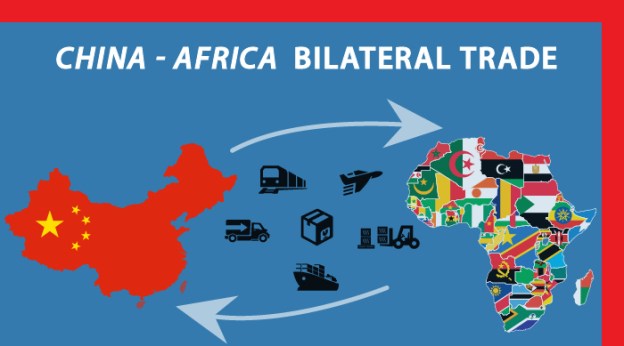
China and its Collaborators in Africa

Congolese critics accuse Sassou-Nguesso [President of Congo] of using the Chinese-backed building boom to move from his ‘authoritarian-authoritarian’ model to something nearer the ‘developmental authoritarian’ style of Rwanda’s President Paul Kagame. However, Sassou-Nguesso was in triumphant mode as he inaugurated a spate of Chinese construction projects in the country’s hinterland on 14-18 May. These projects are intended to bring the benefits of oil-backed growth to regions previously isolated from the bustling cities of Brazzaville and Pointe-Noire.  Now known locally as ‘The Cutter of Ribbons’, Sassou-Nguesso is using oil money and plans to develop Congo-Brazzaville’s mineral resources to shape a new relationship with China. Once a key commercial and diplomatic ally of France, Sassou-Nguesso’s headlong rush to Beijing coincides with the election of President François Hollande. Hollande’s African policy team promises to break with the old Françafrique networks. Among their advisors is the activist lawyer William Bourdon, who has been pursuing a case against Sassou-Nguesso in France for stealing Congolese state assets…..

From fibre-optic installation and new dams to more than 1,000 kilometres of paved roads, companies like China Road and Bridge Corporation and China State Construction Engineering Corporation have quietly landed most of the major contracts issued by the Brazzaville government.  That means large profits and more deals to come.

Congo-Brazzaville, for so long the preserve of European companies, is drawing serious attention from China. The two countries have signed deals to develop special economic zones, build a new oil port and revamp an ageing refinery. For the Chinese investors, the lure is Congo-Brazzaville’s rich but under-exploited resource base. Having relied for decades on offshore oil riches and forestry, the country has until recently made little effort to exploit its mineral deposits, develop its more remote regions or diversify the economy into commerce and services. That could change if the new Asian relationships live up to their billing. For Sassou-Nguesso, the big attraction is an engagement based purely on economic and financial criteria, with a partner who does not impose awkward governance or human rights conditions.

This is not Congo’s first encounter with Asian investment. South Korean and Malaysian companies, via the Consortium Congo Malaisie Corée, had proposed a huge resources-for-infrastructure deal that would build new rail lines in exchange for access to forestry and mining permits in 2008. That deal didn’t work out but the Chemin de Fer Congo Océan received part of its order of engines and cars from Korail in August 2011. Malaysian investors have looked at opportunities in the hydrocarbons sector and – building on their experience of rural Congo in the timber business – palm oil production. In 2010 Atama Plantation agreed to invest $300 million in new oil palm plantations and processing capacity.

The most recent interest from Chinese entities takes the engagement a step further. Alain Akouala Atipault, a Minister in the Presidency, was China’s guest at an international infrastructure and investment forum in Macau where, on 24 April, he signed an agreement with the China Friendship Development International Engineering Design and Consult Corporation (FDDC) – an offshoot of the Trade Ministry in Beijing.  FDDC will seek out Chinese investors interested in setting up operations in four special economic zones, which Congo plans to establish in Brazzaville, Pointe- Noire, Ouesso and the Oyo-Ollombo area. FDDC will also help to mobilise financing for the zones, build their infrastructure and carry out feasibility studies……

China’s engagement in Congo is typical of its strategy elsewhere in Africa. Beijing often takes a long-term view of whether projects will generate an economic return. Viability is seen in broad terms, encompassing not just the specific project’s concerns but also the wider trade and political benefits of partnership and the political goodwill that could open up access to valuable natural resources. Congo has both major reserves of high-value timber – a sector where Congo Dejia Wood Industry, Jua Ikié, Million Well Congo Bois, Sino-Congo Forêt and Société d’Exploitation Forestière Yuan Dong are already active – and reserves of minerals such as iron ore and potash, which are largely untouched.

China National Complete Plant Import & Export Corporation is developing the potash reserves at Mengo with Canada’s MagIndustries; Australia’s Sundance Resources relies on finance and expertise from Hanlong Mining and other Chinese infrastructure companies to make its designs on iron-ore projects in Cameroon (Mbarga) and Congo-Brazzaville (Nabeba) viable. Sundance is waiting for final approvals from Yaoundé and Brazzaville and expects all the paperwork to be signed before the end of 2012.

Beijing’s policy of ignoring questions of democracy and human rights is certainly helpful to Sassou-Nguesso’s regime – which has a poor human rights record, is marred by widespread corruption and remains fundamentally authoritarian despite the trappings of a multiparty system.

Excerpt, Congo-Brazzaville: Sassou Draws in Beijing,AllAfrica.com, June 2, 2012

Chevron and Amazon: the $18 billion Ecuador Liability

The D.C. Circuit Court of Appeals  on June 12, 2012  (pdf) dealt another setback to Chevron over its $18 billion Ecuador liability, reversing a lower court decision that allowed the oil giant access to documents from a prominent consulting group for the Amazon rainforest communities that sued the company.