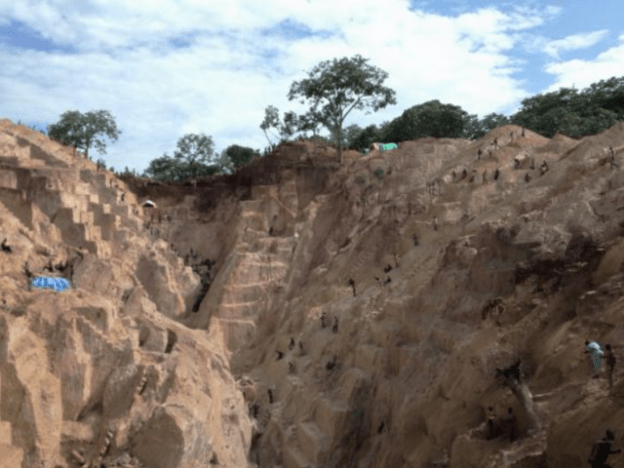
Civilization would not exist were it not for miners. Every year the world’s oldest industry supplies hundreds of megatons of the primary metals and minerals that are essential to all subsequent industries—from medical devices to kitchen appliances, aircraft, toys, power plants, computers and cars. Hence it’s consequential when the governments of Europe and the U.S. implement policies requiring that global mining expand, and soon, by 400% to 7,000%. Those policies are meant to force a transition away from the oil, natural gas and coal that supply 80% of global energy. But it’s an unavoidable fact that building the favored transition machines—wind turbines, solar panels, electric cars—will require astonishing quantities of minerals to produce the same amount of energy.
The other challenge involves people. Mining has always been as much about people as it has about geology, technology and money. In “The War Below: Lithium, Copper, and the Global Battle to Power Our Lives,” Ernest Scheyder highlights the myriad difficulties faced by the people who build mines, as well as those hurt by or opposed to them. As Mr. Scheyder notes, mining is “dirty work.” That’s no invective; it’s just reality…He focuses on the social and political dynamics that accompany big mining projects because, as he writes, there’s “no way around the fact that mines are gargantuan creations that maim the Earth’s surface.” He makes clear that his goal isn’t to question the need for more mines but to understand “whether these lands should be dug up in an attempt to defuse climate change,” especially when some lands are considered sacred by their neighbors and inhabitants.
Excerpts, ‘Mark P. Mills, The War Below’ Review: Digging for Minerals, WSJ, Mar. 3, 2024

 Law-In-Action