Tag Archives: Alphamin Corp mine DR Congo

The Scramble for Congo 21st Century Style

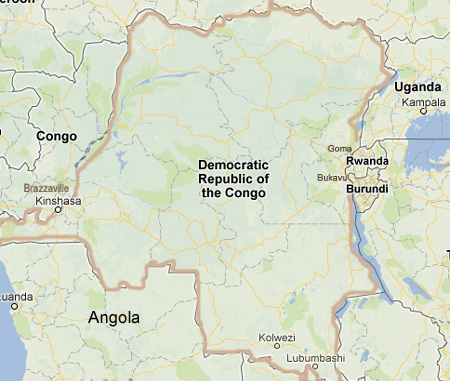
During the 19th century’s Scramble for Africa, European countries raced to secure territory and wealth across the continent. Now, African powers are grabbing resources from a neighbor crippled by infighting and ill-equipped to defend itself. Caught in the middle is the Democratic Republic of Congo, a country the size of Western Europe whose forests conceal a wealth of gold, diamonds and coltan, a key component in smartphones and computers. These mineral riches are turning what was already a region plagued by militia violence into a battleground, as Rwanda and its local allies seize coltan supplies while Uganda and its proxies move to take over gold mines to the northeast, according to United Nations and Ugandan officials…Ugandan President Yoweri Museveni and Rwandan President Paul Kagame are pouring troops and weapons into Congo, while their Congolese allies, who control strategic border crossings, secure smuggling routes to move more minerals to the global markets.

In 2024, Rwanda-backed M23 rebels seized the coltan-mining town of Rubaya, where fighters bring in around $800,000 each month by taxing traders. Rebel fighters have doubled diggers’ wages to encourage them to keep working, and they rely on forced labor to widen roads to accommodate trucks transporting coltan into Rwanda along with gold. According to the U.N., some 4,000 Rwandan soldiers are fighting inside Congo, a report that Rwandan authorities have denied.

Excerpt from While War Rages, Congo’s Neighbors Smuggle Out Its Gold and Mineral Wealth, WSJ, Apr. 7, 2025
Tin, Tantalum and Tungsten: Congo

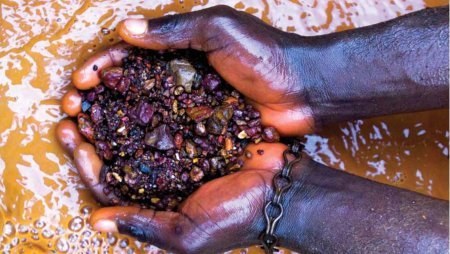
Congo’s tin, tantalum and tungsten are used in electronics around the world. Although some of these minerals come from big industrial copper mines in Katanga, Congo’s south, and a gold mine in South Kivu, there is not yet a single modern mine in North Kivu.

Until now the province’s metal has been dug out almost entirely by hand. Yet Alphamin hopes to show that it can run a modern industrial mine in a part of the world that scares other modern miners away.

Alphamin says that the investment is attractive—even at a time of low commodity prices—because the ore that it plans to extract is richer than that found anywhere else in the world. Behind the company’s camp on the hill are stacks of carefully ordered cylinders of rock drilled out to map the riches beneath the mountain. (Like almost everything else in the camp, the drill rig had to be lifted in by helicopter.) The ore they contain is 4.5% grade. That means that for every 100 tonnes of ore extracted, the firm will be able to sell 3.25 tonnes of tin (not all the tin can be extracted from the rock). Most other mines would be happy to produce 0.7 tonnes…..

If the gamble pays off Alphamin’s investors will make juicy returns. But to do so they may have to convince locals that the project is in their interest. If not, they risk protests and sabotage  .In 2007 some 18,000 people lived at Bisie, working the site with pickaxes and shovels. They produced some 14,000 tonnes of tin that year—or perhaps 5% of world production. To get it to market people carried concentrated ore on their heads through the jungle to an airstrip where small planes could land to carry it out. It was back-breaking work but lucrative for many Congolese. That era began to come to an end in 2011, thanks in part to an American law.

Under the Dodd-Frank act, a law aimed mainly at tightening bank regulation, firms operating in the United States must be able to show where the minerals used in their products came from. The idea was to stop rebels in poor countries from selling gold and diamonds to fund wars. The law all but shut down artisanal mining in much of eastern Congo.

Elsewhere in eastern Congo artisanal mines have gradually reopened thanks to a verification scheme under which the UN and the government check mines and allow certified ones to “tag and bag” minerals. The site at Bisie has, however, never been certified. And although Alphamin will provide some well-paid jobs to locals, as well as pay taxes to the central government, its mechanised operations will never employ anything like the thousands of people who once toiled there with pick and shovel. Alphamin has promised to fund local projects, such as a new school, that are intended to benefit 44 villages.

Excerpts from Mining in the Democratic Republic of Congo: The richest, riskiest tin mine on Earth, Economist, Aug. 27, 2016