Tag Archives: chemicals found in plastics

How Microplastics Enter Plants

Plastic production is increasing sharply. This has raised concerns about the effects of microplastics (typically defined as plastic particles smaller than 5 millimetres in diameter) and nanoplastics (smaller plastic particles that are less than 1,000 nanometres in diameter) on human health. These concerns are partly influenced by alarming findings of the presence of microplastics in various human tissues, including the brain and placenta.

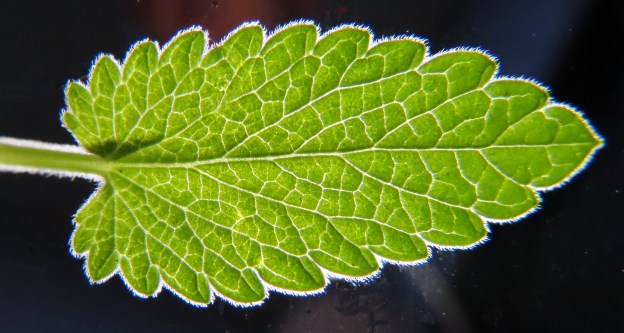
Most attention is focused on soil and water as common sources of plastics that enter the food chain. However, writing in Nature, Li et al. provide strong evidence supporting the air as being a major route for plastics to enter plants. Plants can absorb plastic particles directly from the air. Particles in the air can enter leaves through various pathways, such as through structures on the leaf surface called the stomata and through the cuticle. Stomata are small openings made of cells, and the cuticle is a membrane, covered in insoluble wax, that is well suited for absorbing microplastics…

Microplastics can also travel to and enter the plant’s water- and nutrient-transporting system (called the vascular bundle) and from there reach other tissues… Given that leaves are a key part of the food chain, microplastic particles that accumulate here can easily pass to herbivores and crop leaves, both of which can be directly consumed by humans.

Excerpt from Willie Peijnenburg, Plant Leaves Absorb Microplastics—And They End Up in Our Food, Scientific American, Apr. 18, 2025
Why Plastic is the Salvation of Oil Industry

As people switch to electric cars, or at least buy more fuel-efficient versions of traditional vehicles, energy companies will have too much oil on their hands. ..Energy companies hope consumers will soak up the glut through their clothing, food and electronic goods. Exxon Mobil expects demand for products that have fossil fuel-derived components and shells like “cellphones and medical supplies, as well as products necessary to preserve food and improve hygiene” to increase.

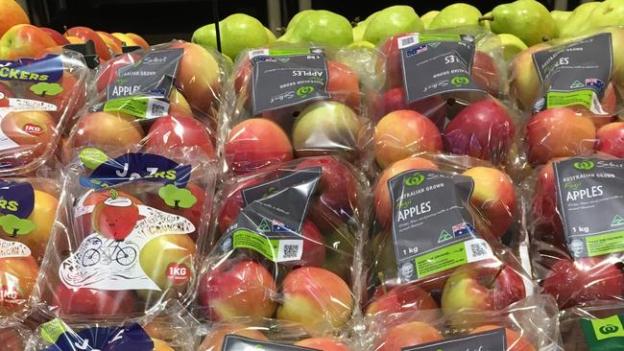
Crude oil and natural gas are turned into petrochemical feedstocks such as naphtha or natural gas liquids in a gas-processing plant or at an oil refinery. They are then “cracked” into the building blocks of common plastics. Ethylene is processed into polyethylene, which winds up in plastic bags, shampoo bottles and children’s toys. Polypropylene is used for everything from car bumpers to carpets. ..Today, 15.4% of global oil demand is driven by petrochemicals, according to data from Wood Mackenzie. The share is expected to rise to 19.1% by 2035 as emerging markets become wealthier and swelling middle classes spend more on synthetic clothing and do their grocery shopping at big supermarket chains, where food is more likely to be wrapped in plastic to prolong its shelf life.  Advanced economies like the U.S. use up to 20 times more plastic than developing nations on a per capita basis, according to the IEA. Big Oil’s bet is that shoppers in emerging markets will close at least part of that gap.

Energy companies are pouring billions of dollars into petrochemical facilities, notably in China where ethylene capacity has almost doubled since 2019. Capacity is also rising in the U.S. and Middle East. Saudi Arabia wants to invest $600 billion into petrochemicals by the end of the decade to secure nonfuel uses of its crude oil. 

But the global petrochemical industry is already saturated and capacity is expected to outstrip demand until at least 2030. This points to weak profit margins and less-than-ideal utilization rates at petrochemical facilities.  Plants in high-cost regions are shutting down. Exxon Mobil sold refineries in Italy last year and plans to close an ethylene cracker in Normandy, France…Pumping money into petrochemicals as governments are trying to solve the problem of plastic waste feels risky…. A worldwide ban on single-use plastic would wipe out a third of global plastic demand that comes from things like mini hotel toiletries, fast-food packaging and disposable cutlery, although there would probably be exemptions for categories like medical intravenous bags that are hard to substitute. 

Excerpts from Carol Ryan, Driving an EV? Big Oil Hopes You Don’t Cut Down on Plastic Too, WSJ, Dec. 24, 2024

What is the Difference between Recycling and Fake Recycling?

Chemical companies, oil-and-gas incumbents and startups around the world are touting plans for new recycling facilities, promising to turn old bottles and bags into usable material. But policymakers are questioning whether some of these methods, broadly termed chemical or advanced recycling, should be considered recycling at all.

In 2024, Eastman Chemical began processing plastic at a new plant in Kingsport, Tenn., that it calls the largest material-to-material molecular recycling facility in the world. The company uses a chemical procedure called methanolysis to break down hard-to-recycle plastics and turn them into “virgin quality” polyesters. When operating at capacity, the facility will process 110,000 tons of plastic waste a year, the equivalent of 11 billion water bottles a year, said Mark Costa, Eastman’s chief executive. 
In July 2024, Australian company Samsara Eco announced a $65 million funding round that attracted investment from Singapore’s state-investment company Temasek and apparel company Lululemon, among others. Using a process it calls enzymatic recycling, it aims to recycle 1.5 million tons of plastic a year by 2030. 

Yet in June 2024, during last-minute negotiations on a New York state packaging bill that would have forced companies to meet ambitious recycling standards and reduce their packaging waste by 30%, state legislators agreed that technologies like Eastman’s or Samsara Eco’s would not initially be considered “recycling.”   “We had a serious concern about the pseudo solution pushed by the industry called chemical recycling,” said Judith Enck, a former Environmental Protection Agency official and founder of Beyond Plastics, an advocacy group that supported the bill. In a report published last October, Beyond Plastics raised doubts about advanced recycling plants’ yield, emissions, byproducts and energy use. The group has argued that advanced recycling amounts to little more than a marketing tactic deployed to distract decision makers from proven waste-reduction methods, like using less packaging… 

A recent ProPublica investigation found that the dominant advanced recycling technique, pyrolysis, yields 15% to 20% usable plastic materials. The rest turns into fuel and other chemicals. Traditional mechanical recycling yields 55% to 85% new plastic…

Excerpts from Claire Brown, A Fight Over the Future of Recycling Brews as Plastics Legislation Gains Traction, WSJ, July 2, 2024

Plastics, Nanoplastics and Heart Attacks

A Landmark treaty on plastic pollution scheduled to be adopted by the end of 2024  must put scientific evidence front and center. In the run-up to the final negotiations, researchers have been publishing more reports, data sets and models about plastics than ever before….Researchers have also organized groups, such as the Scientists’ Coalition for an Effective Plastics Treaty


The treaty was originally conceived as a mechanism to end plastic pollution, which is sometimes taken to mean driving the amount of ‘mismanaged waste’ to zero by 2040. Mismanaged waste is plastic that isn’t recycled or disposed of in a well-managed landfill or incinerator, but rather ends up loose in the environment or burned in an open pit. Annual production of plastics has grown exponentially, from about 2 million tonnes in 1950 to 460 million tonnes in 2019 (current levels are on track to triple by 2060). Mismanaged waste is hard to measure–estimates put it at 74 million tonnes each year., expect to reach, by 2050, 122 million tonnes per year, under business-as-usual projections. Unless policies change, the peak of mismanaged plastic waste “is nowhere yet in sight”, he says.

A new report from environmental-policy researcher Nihan Karali and her colleagues at Lawrence Berkeley National Laboratory in California concludes that plastic production generated the equivalent of 2.24 gigatonnes of carbon dioxide in 2019, mainly from the energy-intensive process of extracting and refining the fossil fuels used to generate the petrochemicals that make up most virgin plastic.


An individual plastic typically contains hundreds of chemicals — many of which are toxic and can leach out — that make the material more flexible, water repellent, flame retardant or resistant to ultraviolet light. Last month, researchers released a report listing 16,000 chemicals associated with plastics, of which they found at least to be 4,200 hazardous… A study published in February 2024 of some 250 people undergoing surgery showed that nano- and microplastics in carotid-artery blockages were linked to increased risk of heart attacks, strokes and death.

Excerpt from Nicola Jones, Plastic pollution: three numbers that support a crackdown,  Nature, April 2024

What Do We Know about the Plastic Chemicals that Leach into Food?

Countries are currently negotiating a global plastics treaty to end plastic pollution. It is essential that the treaty addresses plastic chemicals because all plastics, from food packaging to car tires, contain thousands of chemicals that can leach into foodstuffs, homes, and the environment. Since many of these chemicals are hazardous, they can damage human health and the environment.

Plastic chemicals comprise all chemicals in plastics, including additives, processing aids, and impurities. A previous report by the United Nations Environment Program (UNEP) and other international institutions identified 13,000 plastic chemicals. The new PlastChem Report shows that there are more plastic chemicals than previously known, with over 16,000 chemicals included in the new PlastChem database that accompanies the report.
Further key findings of the report include:
• At least 4,200 plastic chemicals (or 26%) are of concern because of their high hazards to human health and the environment,
• More than 400 chemicals of concern can be present in each major plastic type, including in food packaging, and all tested plastics leached hazardous chemicals,

The report recommends : Increased transparency on the chemical composition of plastics is essential for closing data gaps, promoting a comprehensive management of plastic chemicals, and creating accountability across plastic value chains. A unified reporting, disclosure of the chemical composition of plastic materials and products as well as a “no data, no market” approach are recommended to ensure that essential
information about plastic chemicals becomes publicly available.

Excerpts from New Report Identifies Plastic Chemicals of Concern and Highlights
Approaches Towards Safer Plastics, Press Release of PlastChem, Mar. 14, 2024