Tag Archives: children use in war Congol

Getting Raped as a Way of Life

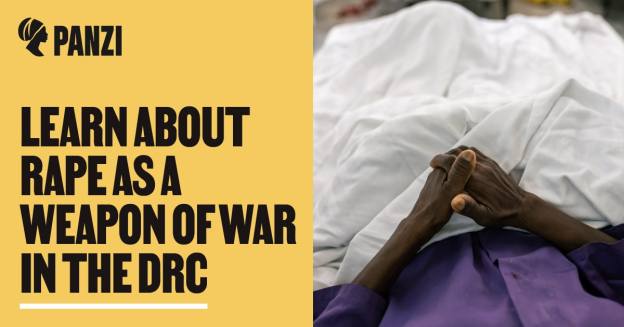
Kanzira Kihanga, a woman who lives in Congo, says she wasn’t surprised to learn in May 2025 that she was infected by the virus that causes AIDS. The 21-year-old believes she contracted the virus after back-to-back rapes by armed men. After the first attack, she went to a clinic but was only given half a dose of the PEP medication.* Two weeks later, she was raped again as she walked to the clinic to pick up the remainder of the dosage.

*Post-exposure prophylaxis (PEP) refers to HIV medicines that are taken after a possible exposure to prevent HIV infection.

Excerpt from Nicholas Bariyo, Congo Braces for HIV Surge After U.S. Funding Stops, WSJ, July 4, 2025

The Scramble for Congo 21st Century Style

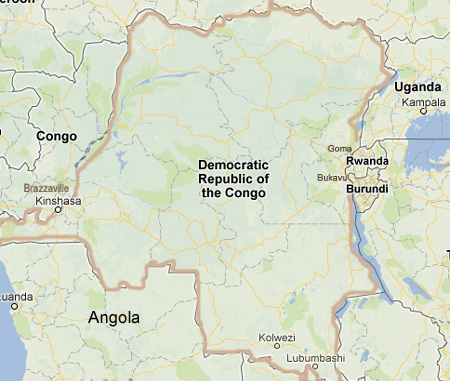
During the 19th century’s Scramble for Africa, European countries raced to secure territory and wealth across the continent. Now, African powers are grabbing resources from a neighbor crippled by infighting and ill-equipped to defend itself. Caught in the middle is the Democratic Republic of Congo, a country the size of Western Europe whose forests conceal a wealth of gold, diamonds and coltan, a key component in smartphones and computers. These mineral riches are turning what was already a region plagued by militia violence into a battleground, as Rwanda and its local allies seize coltan supplies while Uganda and its proxies move to take over gold mines to the northeast, according to United Nations and Ugandan officials…Ugandan President Yoweri Museveni and Rwandan President Paul Kagame are pouring troops and weapons into Congo, while their Congolese allies, who control strategic border crossings, secure smuggling routes to move more minerals to the global markets.

In 2024, Rwanda-backed M23 rebels seized the coltan-mining town of Rubaya, where fighters bring in around $800,000 each month by taxing traders. Rebel fighters have doubled diggers’ wages to encourage them to keep working, and they rely on forced labor to widen roads to accommodate trucks transporting coltan into Rwanda along with gold. According to the U.N., some 4,000 Rwandan soldiers are fighting inside Congo, a report that Rwandan authorities have denied.

Excerpt from While War Rages, Congo’s Neighbors Smuggle Out Its Gold and Mineral Wealth, WSJ, Apr. 7, 2025

How Murder, Torture and Rape Fuel the Technological Revolution

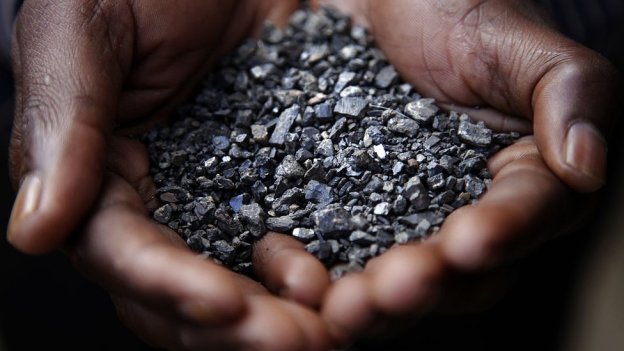
Congo is the world’s leading producer of coltan, from which tantalum is extracted. Tantalum is in hot demand because of its growing use in consumer products, from smartphones to laptops and it is critical for the defense industry (e.g., Apple iPhones, SpaceX rockets, IBM computers).

Coltan is mined in the country’s restive east, a region that has been engulfed in a decadeslong war between rebel groups and the Congolese army…A powerful militia backed by neighboring Rwanda has taken over swaths of eastern Congo, driving some two million people from their homes as fighters kill, torture and rape civilians. The militia, known as M23, has also seized control of Congo’s coltan production and transport, according to United Nations investigators, supply-chain experts, researchers and local traders. 

Now, a network of smuggling routes is increasingly being used to move ore illegally from militia-controlled mines in eastern Congo to neighboring Rwanda. From there, it is sold as Rwandan, and hence “conflict-free,” to smelters around the world, but primarily in China. 

M23 fighters levy taxes on informal coltan miners, who dig the ore from the ground, mostly by hand. The fighters also tax the movement of coltan, providing the militia with revenue to purchase weapons and other supplies. Overall, the trade generates around $300,000 a month for the fighters, according to Bintou Keita, the head of the U.N. mission in Congo….U.S. lawmakers have sought to prevent minerals commonly mined in eastern Congo—tin, tungsten, tantalum and gold—from financing conflict in the region. Legislation embedded in the 2010 Dodd-Frank Act requires U.S.-listed companies to disclose their use of the minerals, known as the 3TGs, as well as steps they are taking to prevent inadvertently financing armed groups. It doesn’t, however, oblige companies to remove potentially tainted materials from their supply chains…

Other armed groups are also profiting from the illegal coltan trade, including an alliance of militias that is helping the Congolese military fight M23, according to rights groups and U.N. researchers. The alliance, known as the Wazalendo, which U.N. investigators say is armed by Congo’s military, includes groups that are under international sanctions for war crimes. M23 and the Wazalendo are both recruiting child soldiers, raping women and girls, looting, murdering civilians and committing other atrocities, according to rights groups and U.N. investigators. Like M23, the Wazalendo are collecting illegal taxes on coltan at roadblocks along transportation routes, as well as from some mining sites. 

Excerpt from Alexandra Wexler, How This Conflict Mineral Gets Smuggled Into Everyday Tech,  WSJ, Oct. 6, 2024
Mining and Child Prostitution

Years ago, education officials in the remote mining town, Mahdia Guyana, installed metal bars on the windows of the high school’s dormitory partly to keep girls and boys from being preyed upon in a town known for parties, nightclubs and brothels frequented by local gold miners.

But the grates and padlocked doors meant to protect students instead helped seal their fate as fire tore through the girls facility one night in late May 2023, killing 20, mostly indigenous girls from far-flung hamlets served by the school. Their bodies were so badly incinerated that authorities in this impoverished South American nation had to send DNA samples to New York to identify the victims. The tragedy rocked the small, South American country where poverty and child sexual exploitation remain entrenched in its lawless mining regions…

For decades, the gold deposits around Mahdia have drawn members of indigenous communities, young men from Guyana’s Atlantic coast, as well as Brazilian and Venezuelan wildcat miners who pay indigenous councils a 10% cut of their haul, according to Cornel Edwards, a 70-year-old toshao, or local chieftain. Some of those men have long flocked to Mahdia for booze and sex after toiling in mud pits hunting for gold, local government and residents say…

Children being lured into dangerous mining work and child prostitution in lawless mining regions are common in other countries in South America, including Ecuador and Colombia, according to a U.S. Labor Department report from 2021. In 2017, Unicef published a tool kit for industrial mining firms, offering guidelines on how to train workers at large-scale as well as smaller companies that buy gold from individual miners on the risks of children forced into sex work in mining areas.

Excerpts from Kejal Vya, Deadly School Fire Casts Light on Sexual Exploitation in Guyana Mining Town, WSJ, July 23, 2023

The De-humanization of a Nation

Rebels and government troops in Congo committed atrocities including mass rape, cannibalism and dismembering civilians, according to testimony published by a team of UN human rights experts who said the world must pay heed.

The team investigating conflict in the Kasai region of Democratic Republic of Congo told the UN Human Rights Council they suspected all sides were guilty of war crimes and crimes against humanity.   Their detailed 126-page report catalogued gruesome attacks committed in the conflict, which erupted in late 2016, involving Kamuina Nsapu and Bana Mura militias and Congo’s armed forces, the FARDC.

The testimony included boys forced to rape their mothers, little girls told witchcraft would allow them to catch bullets, and women forced to choose gang-rape or death.  “One victim told us in May 2017 she saw a group of Kamuina Nsapu militia, some sporting female genitals (clitorises and vaginas) as medals,” the report said.   “Some witnesses recalled seeing people cutting up, cooking and eating human flesh, including penises cut from men who were still alive and from corpses, especially FARDC and drinking human blood.”

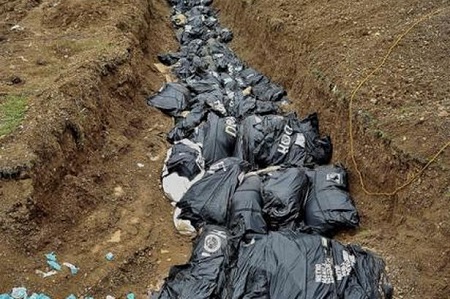
Lead investigator Bacre Waly Ndiaye told the Council in one incident, at least 186 men and boys from a single village were beheaded by Kamuina Nsapu, many of whose members were children forced to fight, unarmed or wielding sticks and were convinced magic made them invulnerable.   Many child soldiers were killed when FARDC soldiers machine-gunned them indiscriminately, he said. “The bodies were often buried in mass graves or were sometimes piled in trucks by soldiers to be buried elsewhere.”   There were initially thought to be about 86 mass graves, but after investigating the team suspects there may be hundreds, he said.

Excerpts from DR Congo war atrocities, Reuters, July 4, 2018

Rape in Congo